
World News
Missile Test Reveals Advances in China’s Sea-Based Nuclear Arsenal

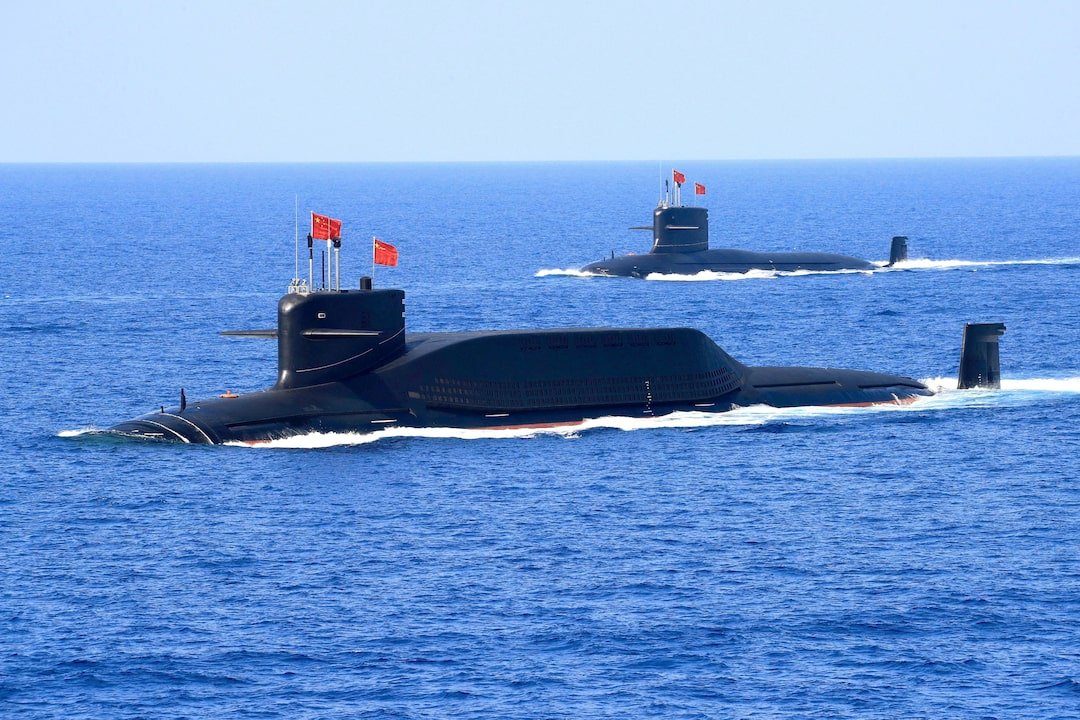
A recent Chinese missile test has drawn international attention after analysts said it highlighted some of the most sensitive elements of China’s submarine-based nuclear deterrent, underscoring Beijing’s ongoing efforts to strengthen its strategic military capabilities amid growing geopolitical competition.
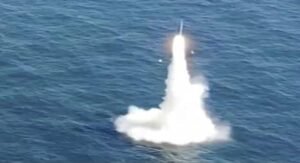
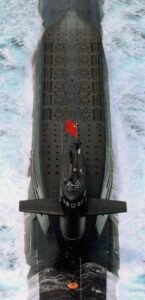
The test reportedly involved a submarine-launched ballistic missile (SLBM), a key component of China’s nuclear triad, which consists of land-based missiles, strategic bombers and nuclear-armed submarines. Military experts say the demonstration provides a rare glimpse into capabilities that are typically kept highly secret because of their importance to national defense and nuclear deterrence.
Submarine-launched ballistic missiles are regarded as one of the most survivable elements of any nuclear arsenal. Unlike land-based systems, submarines can remain hidden underwater for extended periods, making them difficult for adversaries to detect and destroy. This capability helps ensure that a country retains the ability to respond to a nuclear attack, a concept known as a second-strike capability.
Defense analysts believe the test is part of China’s broader military modernization program, which has accelerated significantly over the past decade. Beijing has invested heavily in advanced naval platforms, missile technology, cyber capabilities and space-based systems as it seeks to expand the operational reach of the People’s Liberation Army Navy.
The missile launch is also being viewed within the context of increasing strategic competition between China and the United States, particularly in the Indo-Pacific region. Security experts say both countries are closely monitoring developments in each other’s military capabilities as tensions persist over issues including Taiwan, the South China Sea and regional security arrangements.
According to defense specialists, China’s fleet of ballistic missile submarines has become a central pillar of its deterrence strategy. Recent years have seen the deployment of newer vessels with improved stealth characteristics, greater endurance and longer-range missile systems capable of reaching targets far from Chinese shores.
While Chinese authorities have provided limited official details about the test, state-linked commentators have portrayed the country’s strategic modernization efforts as necessary for national security and regional stability. Beijing has consistently maintained that its nuclear policy remains defensive in nature and that it adheres to a no-first-use doctrine.
The development has nevertheless attracted scrutiny from neighboring countries and Western defense planners. Analysts say advances in submarine-based deterrence can influence regional military calculations because they enhance a nation’s ability to project strategic power while reducing vulnerability to pre-emptive attacks.
Arms control experts note that China’s nuclear arsenal remains smaller than those of the United States and Russia, but they also point to evidence that Beijing is expanding and modernizing its strategic forces at a pace not seen in previous decades. This evolution has become an increasingly important factor in global security discussions.
The missile test is expected to fuel further debate among policymakers about deterrence, military modernization and strategic stability in the Asia-Pacific region. As major powers continue to invest in advanced weapons systems, experts warn that maintaining communication channels and confidence-building measures will remain essential to reducing the risk of miscalculation.
For China, the demonstration serves as another indication of its determination to strengthen a credible and survivable nuclear deterrent, a capability that military planners consider critical to the country’s long-term security strategy.