
World News
U.S., Canada and Mexico Begin Difficult Talks to Renew North American Trade Pact

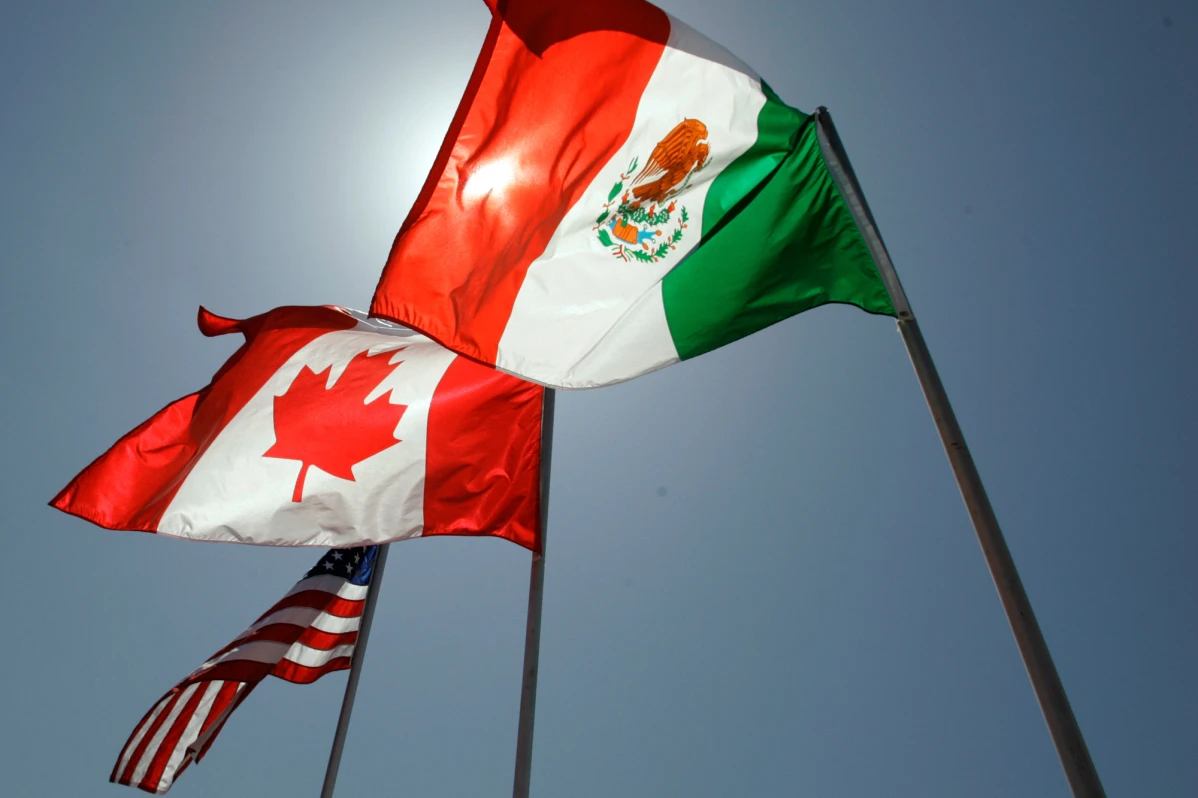
The United States, Canada and Mexico have formally begun negotiations over the future of the United States-Mexico-Canada Agreement (USMCA), launching what analysts expect will be months of difficult discussions over one of the world’s largest free trade agreements.
The negotiations come during the pact’s first mandatory six-year review, a process built into the agreement when it was signed in 2020. Rather than immediately extending the deal for another 16 years, the United States has opted to seek significant changes, triggering a period of annual reviews that could continue until the agreement expires in 2036 if the three countries fail to reach a consensus.
The USMCA governs approximately $1.9 trillion in annual trade among the three North American economies, making it one of the most important regional trade agreements in the world. Every day, billions of dollars’ worth of automobiles, agricultural products, machinery, energy supplies and consumer goods cross the borders separating the three nations.

The Trump administration argues that the agreement has not done enough to reduce U.S. trade deficits or encourage domestic manufacturing. U.S. officials are seeking stricter rules requiring a greater percentage of vehicles and industrial products to be manufactured in North America and, in some cases, specifically within the United States, to qualify for tariff-free treatment. Washington also wants stronger measures to prevent Chinese products from entering the U.S. market through Canada or Mexico.

Canada and Mexico, however, have expressed concerns that many of the proposed changes could disrupt integrated North American supply chains that have developed over decades. Canadian officials are also pushing for the removal of U.S. tariffs affecting key exports, while Mexico has emphasized protecting its automotive sector, which relies heavily on cross-border manufacturing with the United States.

Another source of tension is Canada’s role in the negotiations. Initial discussions have largely centered on bilateral talks between the United States and Mexico, prompting concerns in Ottawa that Canada could be sidelined before formal trilateral negotiations gain momentum. Canadian Prime Minister Mark Carney has nevertheless expressed confidence that any final agreement will require the participation and approval of all three countries.

Business groups across North America are urging negotiators to preserve stability after a year marked by shifting tariff policies and trade disputes. Manufacturers, farmers and logistics companies warn that prolonged uncertainty could discourage investment, delay expansion projects and increase costs for businesses that depend on seamless cross-border commerce. The automotive industry, in particular, fears that tighter content requirements could raise vehicle production costs and ultimately lead to higher prices for consumers.
Trade experts note that the review process does not mean the agreement is ending immediately. The USMCA remains fully in force while negotiations continue, and the three governments have up to 2036 to agree on an extension or revised framework. However, the decision not to grant an immediate renewal has introduced a new layer of uncertainty into North American trade relations.

The coming months are expected to feature intense negotiations over automotive manufacturing, agriculture, digital trade, dispute resolution mechanisms and market access. The outcome will shape the future of economic integration across North America and could have far-reaching implications for businesses, workers and consumers throughout the region.