
World News
NASA Launches High-Stakes Mission to Save Swift Telescope from Falling Back to Earth

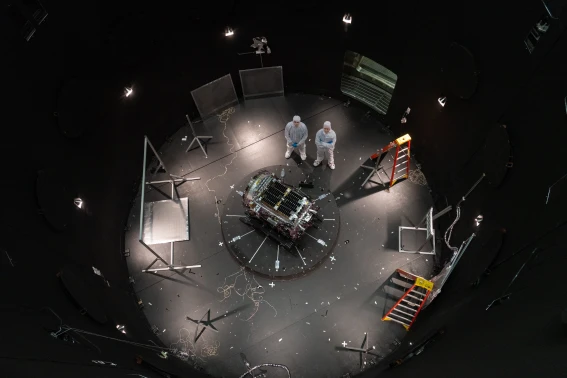
NASA is embarking on one of the most ambitious space rescue missions in its history, launching a groundbreaking operation to save the aging Neil Gehrels Swift Observatory from falling back into Earth’s atmosphere after more than two decades of revolutionary scientific discoveries.
The mission, valued at approximately $30 million, represents the first time the United States will attempt to rescue an existing scientific spacecraft already in orbit using a robotic servicing vehicle. If successful, the operation could revolutionize how aging satellites and telescopes are maintained in space, potentially extending the lives of billions of dollars’ worth of orbital infrastructure.
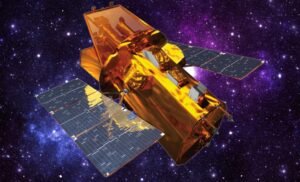
Swift, launched in 2004, was originally designed to operate for only two years. Instead, it has spent more than 20 years studying some of the universe’s most violent and energetic events, including gamma-ray bursts, exploding stars, neutron star collisions, and black holes. Throughout its mission, the observatory has detected more than 2,000 gamma-ray bursts and played a key role in helping scientists understand how precious elements such as gold and platinum are created during violent cosmic collisions.
Despite remaining scientifically healthy, Swift faces an unexpected threat. Increased solar activity during the current solar cycle has caused Earth’s upper atmosphere to expand, creating stronger atmospheric drag on satellites orbiting at relatively low altitudes.
Unlike many modern spacecraft, Swift was never equipped with propulsion engines capable of raising its orbit. As atmospheric drag steadily slows the observatory, it continues losing altitude and is on course to re-enter Earth’s atmosphere later this year unless action is taken. Scientists estimate that by October the telescope could reach a critical altitude beyond which recovery would become nearly impossible.
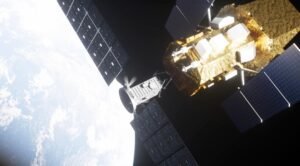
To prevent that outcome, NASA contracted Arizona-based startup Katalyst Space Technologies to develop an innovative rescue spacecraft known as Link.
The spacecraft features three robotic arms designed to carefully approach and capture Swift—an exceptionally difficult task because the telescope was never designed to be serviced in orbit and lacks docking equipment.
After rendezvousing with the observatory, Link will slowly boost Swift from its current orbit of roughly 224 miles (360 kilometers) to approximately 373 miles (600 kilometers), where atmospheric drag is much weaker. Engineers estimate the process could take several weeks following launch.
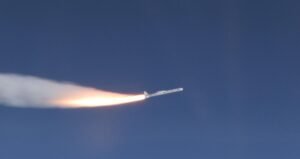
The rescue mission is expected to launch aboard the final flight of Northrop Grumman’s Pegasus XL rocket from the Marshall Islands.
Following launch, Link will spend several weeks testing its systems before beginning the delicate approach toward Swift. Engineers must precisely match the telescope’s speed and orientation before deploying its robotic arms to capture the observatory safely.
Any significant malfunction, or additional solar storms that increase atmospheric drag could jeopardize the rescue effort. NASA officials acknowledge the mission carries considerable risk, but believe Swift’s scientific value justifies the attempt.
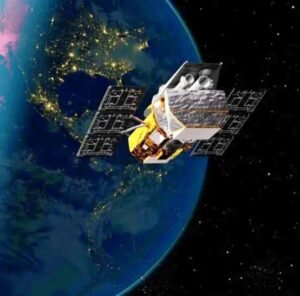
Beyond saving a single telescope, NASA sees the operation as a demonstration of technologies that could transform future spaceflight.
Instead of replacing expensive satellites once their orbits deteriorate, future robotic spacecraft may routinely repair, refuel, reposition and upgrade valuable orbital assets.
If the Swift rescue succeeds, similar missions could eventually service other major observatories; including the Hubble Space Telescope, and commercial satellites, reducing costs while extending the lifespan of critical space infrastructure.
Although over 20 years old, Swift remains one of NASA’s most productive astrophysics observatories. Its unique ability to rapidly detect and point toward gamma-ray bursts allows astronomers worldwide to observe some of the universe’s earliest and most powerful explosions almost immediately after they occur.

Scientists continue to rely on Swift to investigate black holes, neutron stars, supernovae, gravitational-wave events and other transient cosmic phenomena that reveal how the universe evolves.
Saving the observatory would not only preserve years of future scientific discoveries but also mark the beginning of a new era in orbital servicing technology.
As NASA races against the clock, the mission is being closely watched by the global space community. Success would represent a historic milestone, proving that aging spacecraft need not be abandoned once their orbits begin to decay. Instead, they may receive a second life through robotic intervention, opening the door to a future where repairing spacecraft in orbit becomes as routine as servicing aircraft on Earth.