
World News
Netanyahu Defies Trump’s Gaza Plan, Says Israel Won’t Withdraw Until Hamas Disarms

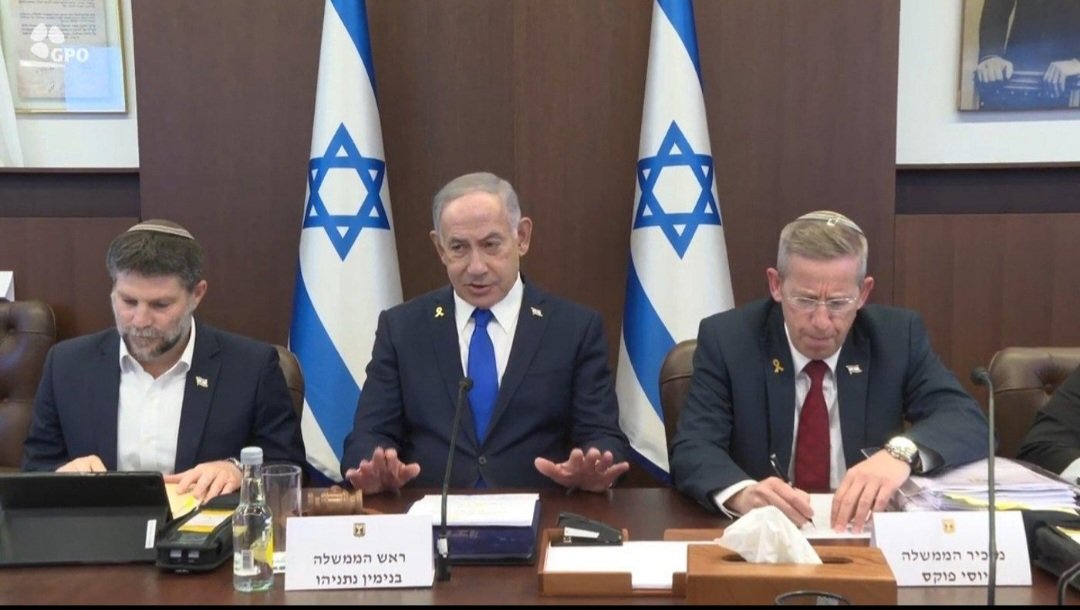
Israeli Prime Minister Benjamin Netanyahu has rejected the latest U.S.-backed roadmap for ending the Gaza conflict, insisting that Israeli forces will not withdraw from their current positions in the territory until Hamas is fully disarmed.
Netanyahu’s position, announced Sunday, places a major obstacle in the path of President Donald Trump’s latest attempt to move the Gaza conflict toward a permanent political settlement. Reuters reported that Netanyahu said Israel had rejected the 15-point document and would not proceed with an Israeli withdrawal unless Hamas underwent what he called “genuine disarmament.”
The rejection comes only days after Trump announced that Hamas had agreed to a roadmap under which the group would disarm and Israel would eventually withdraw from Gaza. Hamas has said it is prepared to proceed, but only if Israel halts its military operations and withdraws its troops.
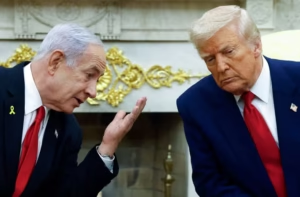
Speaking at the start of a cabinet meeting, Netanyahu said Israel would not withdraw from its current lines in Gaza until Hamas had been completely disarmed.
He made clear that Israel’s definition of disarmament extends beyond heavy weapons.
Netanyahu said Hamas must surrender heavy and light weapons and other arms, describing the requirement as genuine disarmament rather than what he characterized as a symbolic or incomplete process.
The Israeli leader also said Israel would continue acting to prevent threats against its forces and citizens.
His remarks amount to a significant qualification of the diplomatic roadmap announced by Trump and have exposed a potentially serious disagreement between Washington and Jerusalem.
The latest dispute follows Trump’s announcement last week that Hamas had agreed to a plan for disarmament and an eventual Israeli withdrawal.
The agreement is part of a broader U.S.-backed framework designed to move the conflict into a new phase after a ceasefire that had reduced the intensity of fighting.
Under the roadmap, Hamas would surrender its weapons, while Israel would stop military operations and withdraw from Gaza in stages. A new technocratic Palestinian administration would take responsibility for governing the territory, while an international security force would assist with maintaining order.
The plan also envisages reconstruction of Gaza after years of devastating conflict.

Trump’s administration has presented the arrangement as a pathway toward ending the war and establishing a new political and security structure in the territory.
But Netanyahu’s latest statement shows that Israel does not accept the sequencing of those steps as currently proposed.
At the heart of the disagreement is a fundamental question: Should Hamas disarm before Israel withdraws, or should Israel withdraw and halt military operations before Hamas gives up its weapons?
Israel insists that Hamas must first be genuinely disarmed.

Hamas has taken the opposite position.
According to the Associated Press, Hamas has said it is willing to disarm under the roadmap, but expects Israel to halt attacks and withdraw from Gaza as part of the process.
That creates a potentially difficult diplomatic stalemate.
If Israel refuses to withdraw until Hamas gives up its weapons, Hamas could argue that surrendering its principal means of defence before an Israeli withdrawal leaves it exposed.
If Hamas refuses to disarm before Israel withdraws, Israel can argue that leaving Gaza while the group retains its weapons would recreate the security threat that prompted the war.

Hamas has sought to portray itself as willing to participate in the U.S.-backed process.
The group has said it is prepared to put its weapons under the control of a new technocratic administration, according to recent reports.
However, Hamas has linked that commitment to an end to Israeli attacks and the withdrawal of Israeli troops.
The group’s position is significant because the Trump administration has made Hamas disarmament one of the central conditions for the next stage of the peace process.
The latest disagreement therefore does not simply concern whether Hamas will surrender its weapons. It concerns how, when and under whose supervision that disarmament would take place.
The U.S.-backed roadmap envisages an international security presence in Gaza as part of the transition.
The proposed force would help provide security while a new Palestinian technocratic administration assumes responsibility for governing the territory.
The arrangement is intended to create a mechanism through which Hamas would give up its weapons without Israel remaining indefinitely responsible for Gaza’s security.
The broader plan also envisages international oversight and reconstruction efforts, although important details surrounding the deployment and authority of any international force remain unresolved.
Netanyahu’s comments are particularly significant because Israel and the United States have traditionally been close allies, and Trump’s administration has strongly supported Israel throughout the conflict.
Yet Reuters described Netanyahu’s latest stance as a rare public display of friction with the Trump administration.
Netanyahu said Israel was discussing the proposal with the Americans and acknowledged that some elements were acceptable to his government.
But he also made clear that Israel was prepared to reject provisions it believed conflicted with its security requirements.
That puts the Trump administration in a difficult position.
Washington now has to persuade its Israeli ally to accept a sequencing arrangement that Netanyahu believes could leave Israel vulnerable.
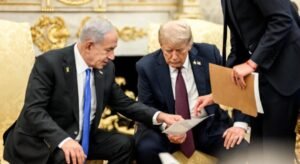
The Israeli prime minister went further than the question of Hamas disarmament.
Netanyahu said that, as long as he remains prime minister, no Palestinian state would be established in Gaza or the West Bank, according to reports of his remarks.
That position could become another major obstacle to any long-term political settlement.
The question of Palestinian statehood has remained one of the most contentious issues surrounding the conflict, with the Palestinian leadership and many international governments supporting a two-state solution.
Trump’s broader Gaza framework has focused heavily on security, governance and reconstruction, but the question of the territory’s eventual political status remains deeply contested.
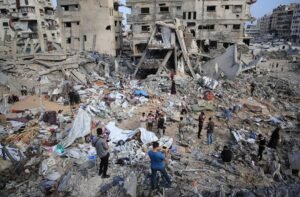
The diplomatic dispute is unfolding against the backdrop of enormous destruction in Gaza.
Large sections of the territory have been destroyed or severely damaged during the conflict, while hundreds of thousands of Palestinians have faced repeated displacement.
The proposed peace framework therefore goes beyond the question of military withdrawal.
It also seeks to establish a system for rebuilding Gaza, restoring essential services and creating a new governing structure.
But reconstruction cannot proceed fully without agreement on security and governance.
That is why the disagreement over Hamas’ weapons has become such a critical obstacle.
The coming days are likely to focus on whether U.S. negotiators can bridge the gap between Israel’s demand for prior disarmament and Hamas’ insistence that Israeli military operations and troop presence must end as part of the process.
The Trump administration has invested considerable political capital in the roadmap, making Israeli acceptance of the proposal an important test of Washington’s ability to influence its closest Middle Eastern ally.
For Netanyahu, however, the issue is directly tied to Israel’s national security.
His government argues that Hamas must no longer possess the military capability to threaten Israel before Israeli forces can safely withdraw.
Hamas, meanwhile, faces the prospect of surrendering its weapons while Israeli forces remain inside Gaza.
That mutual distrust is the central problem threatening the plan.
Trump’s latest initiative was designed to transform the Gaza ceasefire into a broader political settlement.
But Netanyahu’s rejection demonstrates that the agreement remains far from implementation.
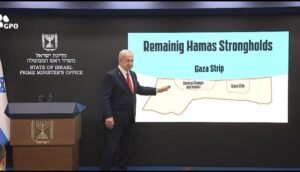
The two sides now face a familiar dilemma: Israel wants security guarantees before withdrawing, while Hamas wants an Israeli withdrawal and cessation of attacks before fully disarming.
Unless mediators can find a way to break that deadlock, the next phase of the peace process could remain stalled.
For Palestinians in Gaza, the stakes are enormous. For Israel, the issue is tied to the government’s core security objectives. And for Trump, the dispute represents a major test of his administration’s claim that it can deliver a lasting end to the conflict.