
World News
‘Not Aimed at Iran’: Turkey Defends New Defence Pact With Saudi Arabia, Pakistan

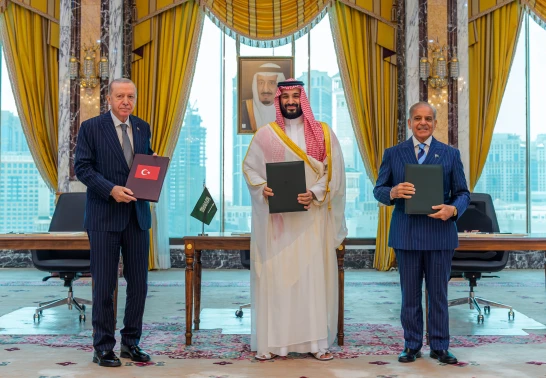
Turkey has sought to ease concerns over the newly signed defence agreement with Saudi Arabia and Pakistan, insisting that the pact is not directed against Iran or any other country, despite being unveiled at a time of heightened tensions across the Middle East.
Turkish Foreign Minister Hakan Fidan said Saturday that the agreement does not identify any country as a common enemy and that the three signatories would only regard a state as a target if it attacks them.
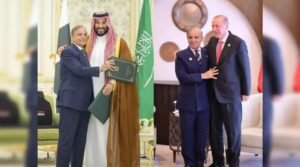
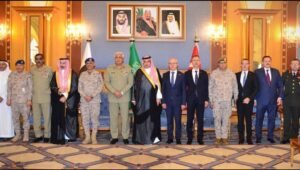
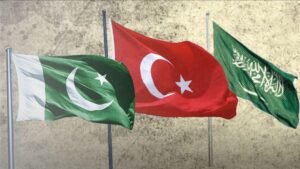
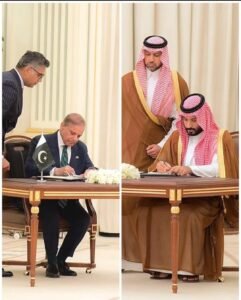
The statement came a day after Turkish President Recep Tayyip Erdoğan, Saudi Crown Prince Mohammed bin Salman and Pakistani Prime Minister Shehbaz Sharif signed the Mecca Joint Defence Agreement in the Saudi holy city of Mecca. Under the agreement, an armed attack against any one of the three countries is to be treated as an attack against all three.
Speaking to Turkey’s state-run Anadolu Agency, Fidan sought to directly address speculation that the new security arrangement was created primarily to counter Iran.
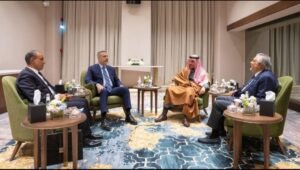
He said there was nothing in the agreement that identifies Iran or another country as a common threat.
Fidan’s position was that countries that do not attack Turkey, Saudi Arabia or Pakistan should not consider themselves targets of the new arrangement.
The Turkish minister’s comments are significant because the pact was signed amid an extremely volatile regional security environment, including the continuing fallout from the conflict involving Iran and concerns over attacks on Gulf states.
The agreement establishes a collective-defence principle under which an attack on one member is considered an attack on all three.
Fidan compared the mechanism technically to Article 5 of the NATO treaty, which establishes collective defence among NATO members.
However, there are important differences in how the new arrangement would operate.
According to Fidan, a country under attack would first have to formally request assistance and specify what kind of support it requires.
The response could range from intelligence sharing and logistical assistance to ammunition or the deployment of military forces, depending on the circumstances and severity of the threat.
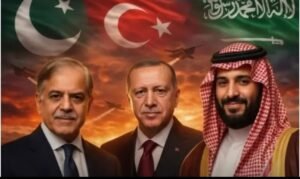
That means the pact does not automatically specify that all three countries would send combat forces whenever one member is attacked.
Instead, the response would be determined according to the nature of the attack and the assistance requested.
The agreement combines three countries with significantly different but complementary strategic capabilities.
Turkey is a NATO member with one of the alliance’s largest militaries and a rapidly expanding defence industry.
Pakistan is a nuclear-armed state with extensive military experience and a long history of defence cooperation with Saudi Arabia.
Saudi Arabia, meanwhile, has enormous financial resources and is one of the Middle East’s most important military powers and energy producers.
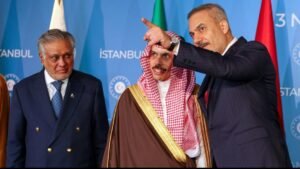
The agreement therefore creates a potentially influential security partnership spanning the Middle East, South Asia and the wider Muslim world.
The pact is not limited to a promise of mutual assistance during an attack.
Fidan said the three countries intend to deepen practical military cooperation through:
Joint military training
Intelligence sharing
Logistics coordination
Joint threat assessments
Greater military interoperability
Defence-industry cooperation
Sharing and development of military technologies
The countries will also establish political and military committees involving foreign and defence ministers as well as military chiefs.
A permanent secretariat is expected to be established in Saudi Arabia to help coordinate the partnership.
This could gradually transform the agreement from a political declaration into a more structured regional security mechanism.
Despite Turkey’s insistence that Iran is not the target, the timing of the agreement has inevitably raised questions about Tehran.
The pact comes amid heightened tensions surrounding Iran and the wider Gulf region. Saudi Arabia has faced security threats connected to the broader regional conflict, while Iran has been at the centre of escalating confrontation involving the United States, Israel and several regional actors.
Reuters reported that the agreement comes amid a broader security crisis in the Middle East, but the three signatories have repeatedly described it as defensive rather than directed at a particular state.
The perception in Tehran may nevertheless be different from Ankara’s official description.
Some Iranian lawmakers have already reacted negatively to the pact.
Iranian parliamentary figures questioned whether the agreement would actually provide Saudi Arabia with greater security.
One Iranian lawmaker described the arrangement as essentially a “paper agreement”, while another warned Saudi leaders that relying on Turkey and Pakistan would not necessarily guarantee the kingdom’s security.
Iranian Foreign Minister Abbas Araghchi did not directly name the pact in a social media message but called on regional countries to rely on themselves and pursue stronger regional cooperation.
He also stressed Iran’s military preparedness.
The reactions demonstrate that, regardless of Ankara’s stated intentions, Tehran is watching the new security arrangement closely.
Fidan stressed that the pact was not hastily created in response to the latest confrontation involving Iran.
According to the Turkish foreign minister, preparations for the agreement had been underway for approximately two years and eight months.
That would put the origins of the arrangement well before the latest escalation in regional tensions.
Turkey had also previously advocated a broader regional security architecture that would involve countries working together rather than relying exclusively on outside powers.
Fidan has argued that regional security should be built on trust and cooperation rather than domination by any single country. Earlier Turkish statements described the goal as creating a regional solidarity platform, rather than another military bloc.
The agreement may not remain limited to three countries.
Fidan said Turkey wants the framework to expand and suggested that Egypt could become a future participant.
He described Egypt as a natural partner and said discussions were continuing over technical issues surrounding its possible involvement.
Egypt, Saudi Arabia, Pakistan and Turkey have already held ministerial-level discussions as part of a broader four-country grouping focused on regional security and diplomacy.
The possibility of Egyptian participation would significantly broaden the geographical reach of the emerging security arrangement.
The agreement could also signal a growing desire among regional powers to develop their own security arrangements rather than depending entirely on the United States or other external powers.
Fidan argued that external powers entering the region do not necessarily solve its security problems and can sometimes make those problems more complicated.
That argument reflects a broader trend in the Middle East, where countries have increasingly sought to diversify their strategic relationships.
Saudi Arabia, for example, maintains close ties with Washington while simultaneously deepening relations with China, Turkey, Pakistan and other regional powers.
The new pact could therefore be viewed as part of Riyadh’s broader effort to create additional security options.
The agreement also builds on a long history of military cooperation between Pakistan and Saudi Arabia.
Pakistan has provided military personnel, training and other defence support to Saudi Arabia for decades.
The two countries signed a Strategic Mutual Defence Agreement in September 2025, under which aggression against one was to be treated as an attack on both. Pakistan previously described that agreement as purely defensive and not aimed at any third country.
The new trilateral arrangement effectively brings Turkey into a security relationship that already had deep Saudi-Pakistani foundations.
Reuters has reported that Pakistani military personnel and equipment have also been deployed to Saudi Arabia under the existing mutual-defence arrangement, illustrating the practical dimension of the two countries’ security relationship.
Turkey’s participation adds another important dimension.
Ankara has developed a substantial domestic defence industry, particularly in drones, naval systems, armoured vehicles and other military technologies.
Turkey is also a NATO member, meaning its armed forces have decades of experience operating within a multinational military alliance.
Fidan said defence-industry cooperation was one of the issues discussed by the three leaders in Mecca, including ways the countries could benefit from each other’s military technology.
That cooperation could eventually lead to more joint production, procurement, training and technological exchanges.
The significance of the agreement has been underscored by developments occurring almost immediately after its signing.
On Sunday, Reuters reported that Yemen’s Iran-aligned Houthi rebels claimed a drone attack on a Saudi Aramco facility in Jazan, shortly after the defence agreement was concluded.
The fire at the facility was reportedly extinguished without casualties. The Houthis claimed responsibility, while Saudi Arabia rejected the justification they gave for the attack.
The incident highlights the difficult security environment facing Saudi Arabia and could provide an early test of how the new defence mechanism functions in practice.
It remains unclear how Turkey and Pakistan would respond to an attack of this nature under the new agreement.
Despite comparisons with NATO’s Article 5, the agreement should not automatically be interpreted as the creation of a NATO-style military alliance.
Fidan himself described the collective-defence provision as technically similar to Article 5, but the pact’s practical arrangements remain less defined.
There are no publicly detailed rules requiring an automatic military response, and the form of assistance would depend on the circumstances of each attack.
The three countries also maintain separate bilateral relationships and other international commitments.
Reuters described the agreement as an important symbolic demonstration of unity and deterrence, while noting that it does not contain detailed military commitments.
The immediate significance of the pact is less about the creation of a new military bloc and more about regional countries seeking greater control over their own security.
For Saudi Arabia, it provides additional strategic partnerships beyond its traditional reliance on the United States.
For Pakistan, it strengthens its role in Gulf security while expanding defence ties with Turkey.
For Turkey, the agreement increases Ankara’s strategic influence in the Gulf and provides another platform for promoting its defence industry and regional diplomacy.
For Iran, meanwhile, the pact represents a development that Tehran will inevitably monitor closely, even as Ankara insists that Iran is not the intended target.
The Mecca agreement therefore carries significance beyond its wording.
Its three members insist that it is defensive, inclusive and not directed against Iran or another state.
But its collective-defence clause, the military capabilities of its members and the possibility of expansion to countries such as Egypt could eventually give the arrangement considerable weight.
Whether it becomes a durable regional security institution or remains primarily a political and deterrence framework will depend on how the three governments implement the agreement; particularly if one of them comes under serious military attack.
For now, Turkey is making one message clear: the pact is intended to strengthen the security of its members, not to declare a new enemy.