
World News
Leaking Oil Tanker Sinks Further Off Oman as Spill Spreads Across Protected Marine Reserve

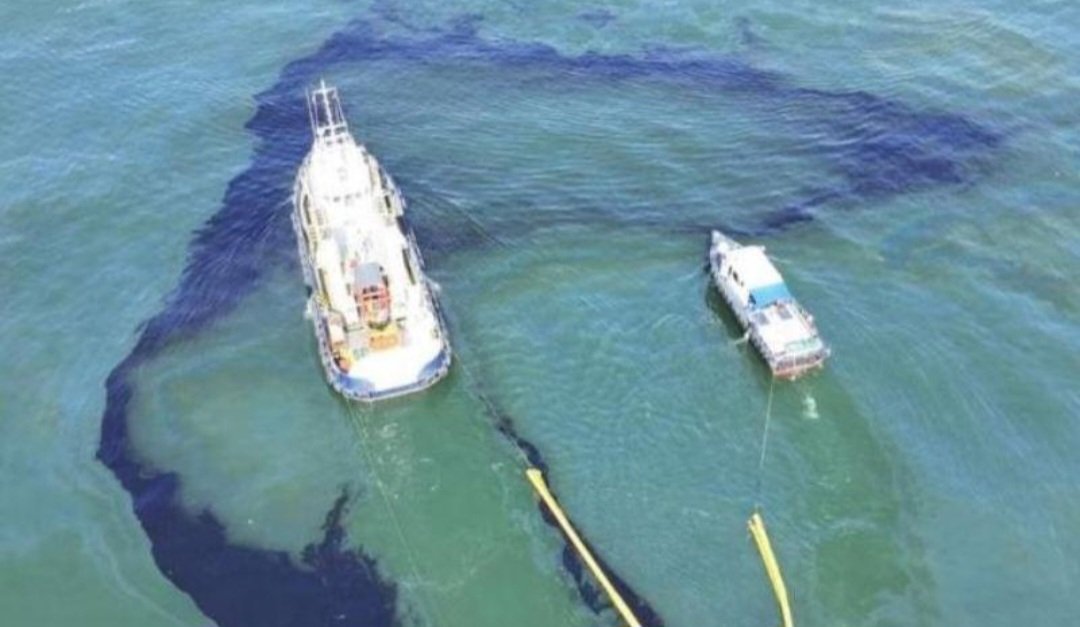
A sanctioned oil tanker stranded off the coast of Oman is sinking deeper into the sea as crude oil continues to leak from the vessel, with satellite imagery showing that the resulting slick has expanded dramatically in recent days.
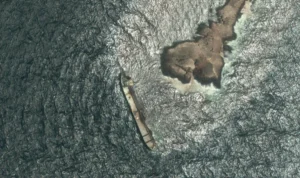
The Caroline Bezengi, a 274-metre Suezmax tanker carrying close to 1 million barrels of crude oil, has been grounded near Qibliyah Island in Oman’s Dhofar region for weeks. New satellite images reviewed by the Associated Press show that much more of the vessel is now submerged than in late July.
The worsening condition of the tanker has raised fears of a major environmental disaster in an area that forms part of the Arabian Sea marine reserve, an important habitat for endangered marine species.
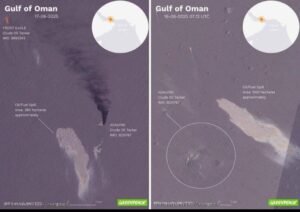
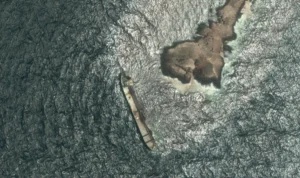
The latest imagery, dated August 5, shows the Caroline Bezengi grounded against the rocky coastline and partly submerged, with an oil sheen extending northeast from the vessel and around the nearby island.
AP’s comparison of satellite images indicates that the tanker is noticeably deeper in the water than it was in an image taken on July 31.
Environmental experts say the deteriorating condition of the vessel is reflected in the rapidly expanding oil slick.
According to Wim Zwijnenburg of the Dutch environmental organisation PAX, the oil sheen covered almost 800 square kilometres (309 square miles) as of August 7.
Greenpeace Germany gave a slightly different estimate based on its own satellite analysis: the slick grew from approximately 45 square kilometres on July 26, to about 150 square kilometres on August 2, and roughly 600 square kilometres by August 4.
The difference in estimates reflects different imagery, dates and methods used to measure the oil on the water, but both assessments point to the same conclusion: the spill has expanded dramatically.
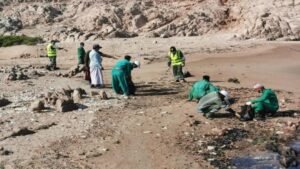
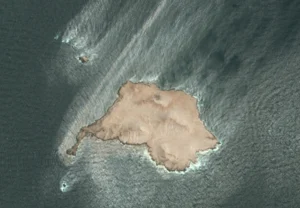
The crude has already reached the shores of Qibliyah Island, where the tanker is stranded.
That is particularly worrying because the Hallaniyat Islands are part of a protected marine environment.
The affected waters provide habitat for a range of wildlife, including seabirds and the Arabian Sea humpback whale, one of the world’s rarest whale populations.
Environmental groups warn that continued leakage could cause extensive damage to coastal habitats, marine organisms and fisheries.
The danger is amplified by the location of the tanker. It is grounded on a rocky coastline, exposing the vessel to waves and strong winds that could further damage its hull.
The crisis began on June 8, when the tanker reported difficulties while sailing near Yemen’s southern coast.
According to Reuters, the crew reported problems near the Yemeni port of Mukalla, with initial assessments indicating that an explosion had occurred on board.
The ship subsequently stopped transmitting its public Automatic Identification System signal.
Satellite imagery later helped establish that the vessel had ended up grounded near Qibliyah Island off southern Oman.
The exact cause of the initial incident has not been conclusively established.
Early reports and maritime-security sources have referred to an explosion, but there has been no definitive public determination of whether it resulted from an accident, mechanical failure or an external attack.
The tanker has attracted additional attention because it is regarded as part of Russia’s so-called shadow fleet; a network of vessels used to transport Russian oil despite Western sanctions and restrictions.
The Caroline Bezengi had loaded crude at Novorossiysk, a major Russian Black Sea port, before beginning its latest voyage. Shipping and geospatial tracking data indicate it was carrying Russian oil.
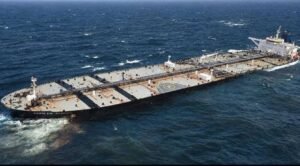
The vessel has been sanctioned by the United Kingdom and European Union, as well as Canada and Switzerland, over its involvement in transporting Russian oil.
The ship is reported to have been operating under a Cameroon flag, while its listed owner, Rentoor Shipmanagement Ltd., and manager, Villar Shipmanagement Ltd., appear to be based in China, according to Reuters.
The ownership and insurance arrangements surrounding sanctioned vessels can complicate emergency salvage operations, particularly when a vessel is abandoned or its operators are difficult to contact.
The worsening spill has also raised questions over whether sufficient action was taken to remove the vessel before the leak became more serious.
The Omani Ministry of Transport, Communications and Information Technology had ordered the vessel’s owners to remove the tanker and its cargo by July 23.
By early August, however, the vessel remained grounded. AP reported that it was unclear whether the owners had responded to the order.
The delay has become a major concern for environmental groups because every additional day the vessel remains exposed to waves and weather increases the possibility of structural failure.
Omani authorities have now acknowledged the incident and said they are responding to the environmental threat.
In a statement reported by Oman’s state news agency, authorities said they were monitoring the area using satellite imagery, field surveys and technical modelling.
Officials said response teams were prepared to implement measures necessary to address possible effects on marine life and navigation safety.
However, details about the scale of the salvage operation remain unclear.
As of the latest reports, it was not clear whether authorities had been able to physically reach the tanker or whether a comprehensive operation to remove the remaining oil had begun.
The timing is particularly problematic.
July and August are the peak monsoon season in the region.
Strong winds, waves and rough seas can make salvage operations more difficult while simultaneously placing additional stress on a vessel already sitting on rocks.
Experts have warned that worsening weather could accelerate the tanker’s deterioration and spread oil further along the coastline and across surrounding waters.
That creates a race against time for authorities and any salvage contractors involved.
Greenpeace Germany has described the situation as an imminent threat of a potentially unprecedented oil disaster.
The organisation has called for urgent action to contain the spill and has urged Oman to seek international assistance if necessary.
The concern is not simply the amount of oil already in the water.
The tanker may still contain a substantial quantity of crude.
If the hull breaks apart or additional tanks are breached, a much larger volume could escape into the Arabian Sea.
That could turn the current spill into a significantly more serious ecological catastrophe.
The incident also demonstrates the growing importance of satellite imagery in monitoring maritime accidents.
The tanker stopped transmitting publicly trackable AIS signals in June, making conventional monitoring more difficult.
Satellite images subsequently helped researchers identify the vessel’s location and track changes in the oil slick.
Earlier analysis of Copernicus Sentinel-1 and Sentinel-2 imagery identified an oil slick near Qibliyah Island, while later high-resolution imagery showed the tanker itself stranded against the coastline.
Environmental organisations and commercial satellite companies have continued monitoring the area as the spill expands.
The progression of the spill illustrates how quickly the situation has deteriorated.
Date. Approximate spill area
July 26. 45 sq km
August 2. 150 sq km
August 4. 600 sq km
August 7. Nearly 800 sq km
The figures come from different satellite analyses and therefore should not be treated as perfectly comparable measurements. Nevertheless, the trend is unmistakable: the area affected by the oil has grown many times over in less than two weeks.
Interestingly, PAX’s Zwijnenburg said the oil sheen was less visible in newer imagery on Saturday, apparently because weather conditions had diluted and dispersed it.
That does not necessarily mean the environmental threat has disappeared. Dispersed oil can become more difficult to see from satellites while continuing to affect marine and coastal ecosystems.
Removing a large, damaged crude tanker from rocks is technically challenging even under normal circumstances.
The Caroline Bezengi is roughly 274 metres long and has a deadweight capacity of more than 159,000 tonnes.
Any salvage operation would need to consider:
- The vessel’s increasingly unstable position
- Remaining crude oil onboard
- Rough monsoon seas
- Damage to the hull
- The protected status of the surrounding marine environment
- Safe removal or transfer of the remaining cargo
- Prevention of further leakage during the operation
The longer the tanker remains grounded, the more difficult those challenges could become.
The incident has also revived concerns over the environmental risks associated with Russia’s shadow fleet.
Western governments have sanctioned numerous older tankers accused of helping Russia transport oil while avoiding restrictions imposed after Moscow’s invasion of Ukraine.
Environmental and maritime-safety advocates have repeatedly warned that ageing vessels operating through opaque ownership structures and complex insurance arrangements can create additional risks when accidents occur.
Reuters previously reported that experts were concerned the Caroline Bezengi could break apart because of its condition and the forces acting on it.
The immediate priority is to prevent the tanker from deteriorating further and to contain the oil already in the sea.
Omani authorities face pressure to clarify the status of the salvage operation and demonstrate how they intend to protect the marine reserve.
Environmental organisations are calling for urgent international cooperation, while satellite analysts continue to monitor the vessel and the expanding slick.
The situation could still worsen significantly if the tanker breaks apart.
For now, the satellite evidence provides a troubling picture: a large crude-oil tanker is sitting deeper in the water, oil has reached a protected island, and the affected sea area has expanded dramatically.
The next few days could determine whether the incident remains a serious spill or develops into a major environmental disaster for Oman’s southern coastline.