
World News
Hormuz Negotiations Gain Momentum as Yemen Conflict Intensifies


The Middle East remains gripped by uncertainty as diplomatic efforts to ease tensions around the strategic Strait of Hormuz gather momentum, even as one of the deadliest Houthi offensives in recent years has intensified fighting in Yemen and fresh security challenges emerge across the region.
Iran announced that it is in the final stages of reaching an agreement with neighbouring Oman on a new framework for navigation through the Strait of Hormuz, one of the world’s most critical maritime trade routes. The waterway, through which a significant share of global oil and liquefied natural gas exports passes, has remained at the centre of regional tensions following months of conflict involving Iran, the United States and Israel.
While details of the proposed arrangement have not been fully disclosed, reports indicate the agreement could establish new shipping corridors jointly managed by Iran and Oman. However, implementation remains uncertain as negotiations are reportedly tied to wider discussions involving sanctions relief and the easing of restrictions affecting Iranian ports.
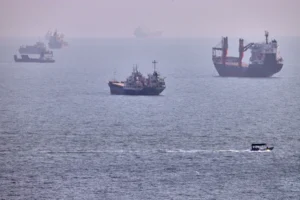
Despite optimism surrounding the talks, the global shipping industry has reacted cautiously. Maritime operators warn that proposals requiring vessels to pay transit fees or comply with Iranian regulatory demands could violate international shipping conventions and expose companies to sanctions. Insurance providers have also indicated they may refuse coverage for ships complying with such arrangements, raising questions about whether the proposed framework would be commercially viable.
Meanwhile, the conflict in Yemen has taken a deadly turn after Iran-backed Houthi rebels launched coordinated assaults on government military positions in Marib and Hadramout provinces. Yemeni officials said at least 30 government soldiers were killed and around 50 others wounded in what has been described as one of the largest Houthi attacks since the 2022 truce.
Military sources said the attacks involved artillery, drones and coordinated ground assaults, highlighting the Houthis’ continued operational capabilities despite years of conflict. The renewed violence has heightened fears that Yemen’s fragile peace process could collapse entirely, potentially dragging neighbouring countries deeper into the conflict.

Elsewhere in the region, violence continued along Israel’s northern border, where renewed clashes with Hezbollah resulted in the deaths of two Israeli soldiers. The incident came despite ongoing diplomatic efforts aimed at restoring calm and advancing negotiations over a possible ceasefire.
Regional security concerns were also reflected in Iraq, where authorities pledged tougher action against armed groups operating outside state control, while Uganda formally approved plans to contribute troops to a proposed multinational force intended to support post-war stabilization efforts in Gaza, although the deployment has yet to materialize.
Analysts say the simultaneous diplomatic progress over the Strait of Hormuz and escalating violence across Yemen and other conflict zones underscore the fragile state of security in the Middle East. While a breakthrough on shipping could help stabilize global energy markets, continued fighting among regional actors threatens to undermine broader efforts to restore peace.