
World News
Scientists Warn of Long-Term Space Debris Risks After Rocket Part Believed to Hit the Moon

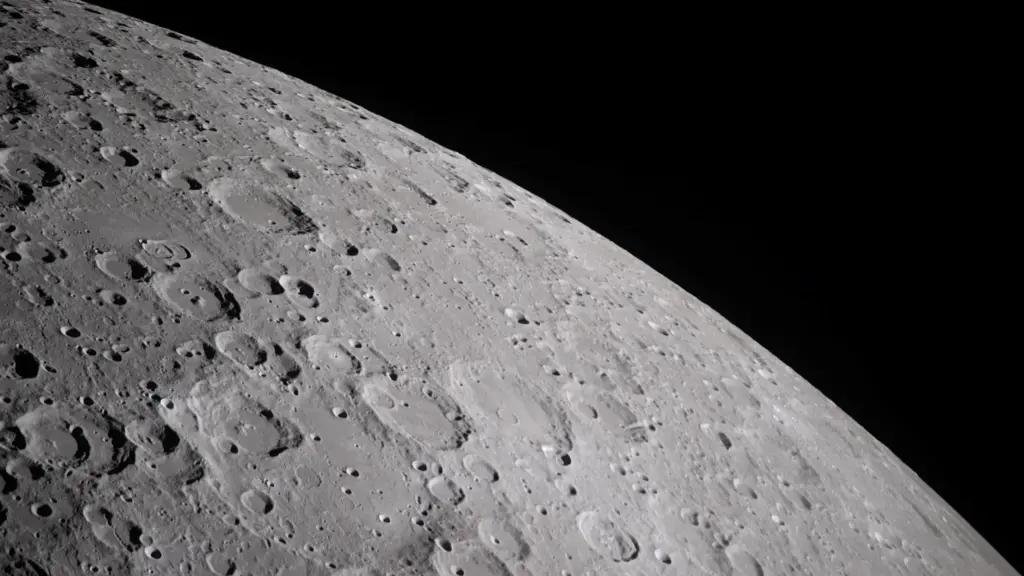
Scientists have renewed calls for stricter international management of space debris after a discarded section of a SpaceX Falcon 9 rocket is believed to have slammed into the Moon, highlighting the growing challenge posed by abandoned spacecraft and rocket components beyond Earth’s orbit.


The object, a four-tonne Falcon 9 upper-stage rocket booster roughly the size of a school bus, is believed to have struck the Moon at a speed of about 8,690 kilometres per hour (5,400 mph). The rocket stage had been drifting through cislunar space since completing its mission in January 2025, when it launched Firefly Aerospace’s Blue Ghost lunar lander and Japan’s ispace Resilience mission. Unable to return to Earth’s atmosphere because of its trajectory, it eventually entered a collision course with the Moon under the influence of gravity and solar forces.
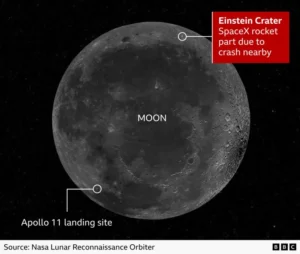
Researchers believe the impact occurred near Einstein Crater, close to the boundary between the Moon’s near and far sides. Because the site lies near the lunar limb and was not directly visible from Earth at the time of impact, there was no immediate visual confirmation. Scientists expect images from NASA’s Lunar Reconnaissance Orbiter and South Korea’s Danuri lunar spacecraft to help verify the impact and determine the size of the newly formed crater in the coming days.
Although the collision poses no danger to Earth or its population, astronomers say it underscores a growing environmental problem in space. Thousands of inactive satellites, spent rocket stages and fragments from previous missions are now orbiting Earth, while increasing numbers of missions to the Moon are expanding the amount of debris in cislunar space. Experts warn that without clearer international rules on disposal and tracking, future missions could face greater risks.
Scientists say the accidental impact also presents a rare scientific opportunity. By analysing the crater and the cloud of dust and rock ejected by the collision, researchers hope to improve their understanding of lunar geology, impact physics and the behaviour of debris on the Moon’s surface. The event could also help refine techniques for locating future impacts and support preparations for NASA’s Artemis programme, which aims to return astronauts to the Moon and establish a long-term human presence there later this decade.

Space agencies and industry experts are increasingly calling for improved debris-management strategies, including designing missions that safely dispose of rocket stages after launch, preventing spacecraft from being left in unstable orbits and strengthening international cooperation on space traffic management. They argue that as government agencies and private companies dramatically increase lunar exploration, the risk of accidental impacts and collisions will continue to grow unless preventive measures are adopted.
The incident follows previous lunar impacts involving discarded spacecraft, including a Chinese rocket stage that struck the Moon in 2022 and several intentional NASA impacts carried out during past scientific missions. However, researchers note that the growing frequency of unplanned collisions reflects the rapid expansion of commercial and governmental space activity, making sustainable management of space debris an increasingly urgent global issue.