
World News
U.S. Supreme Court Strikes Down Hawaii Law Requiring Permission to Carry Guns in Stores and Hotels

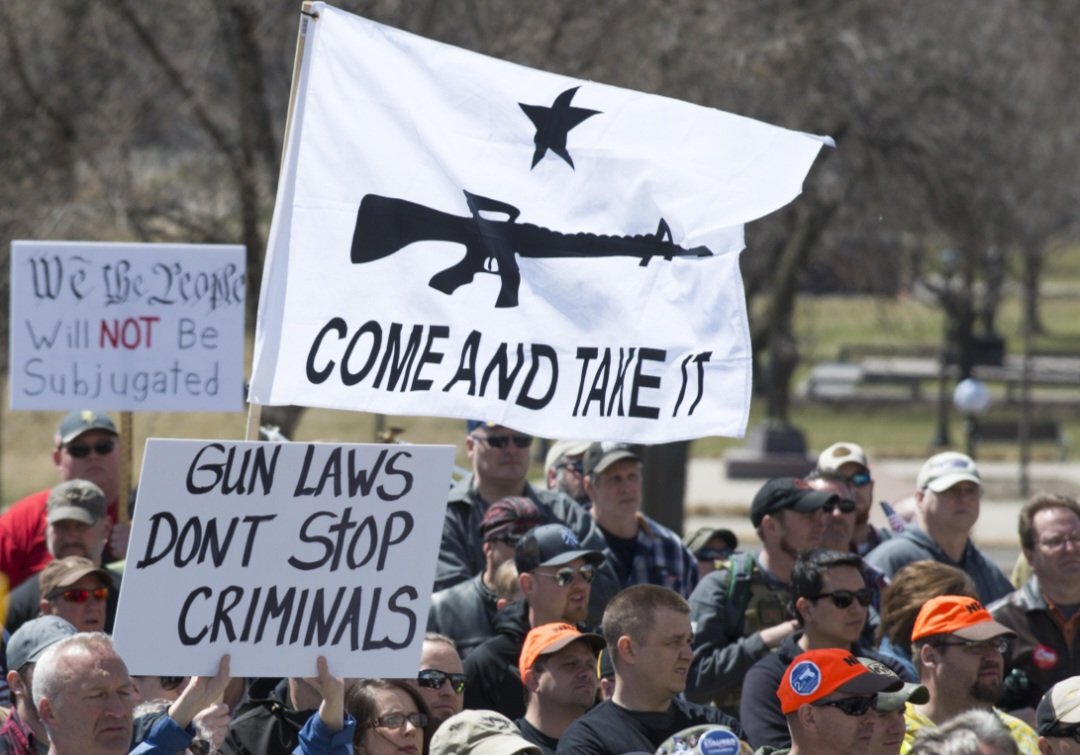
The U.S. Supreme Court has struck down a Hawaii law that required licensed gun owners to obtain explicit permission before carrying firearms into privately owned businesses open to the public, including stores, hotels, restaurants, shopping centers, and gas stations. The ruling marks the latest major expansion of Second Amendment rights by the nation’s highest court.
In a 6-3 decision, the court ruled that Hawaii’s law violated constitutional protections for gun owners by making firearm carry illegal on most private property open to the public unless business owners specifically granted permission. The majority opinion was written by Justice Samuel Alito and was joined by the court’s other conservative justices.
The challenged law, enacted in 2023 and signed by Hawaii Governor Josh Green, was designed as part of the state’s response to the Supreme Court’s landmark 2022 decision in New York State Rifle & Pistol Association v. Bruen, which significantly expanded the right to carry firearms in public for self-defense.
Critics dubbed Hawaii’s measure the “vampire rule” because, like the folklore surrounding vampires, firearm carriers needed an invitation, or explicit permission to enter private property while armed. Under the law, concealed-carry permit holders could not legally bring firearms into businesses unless owners posted signs or otherwise clearly indicated that firearms were allowed.
The lawsuit was brought by a Honolulu-based gun-rights organization and several Hawaii residents who possessed concealed-carry permits. They argued that the law effectively made it impossible for lawful gun owners to carry firearms during routine daily activities and therefore infringed upon rights protected by the Second Amendment.
In its ruling, the Supreme Court agreed with the challengers, concluding that Hawaii had failed to demonstrate that such restrictions were consistent with the nation’s historical tradition of firearm regulation; a legal standard established in the Bruen decision. The majority found that the state could not broadly presume that all private property owners wished to prohibit firearms and then place the burden on gun owners to obtain permission.
However, the court emphasized that individual business owners still retain the right to prohibit firearms on their premises. The decision means that carrying firearms in businesses open to the public will generally be allowed unless owners explicitly ban them through signs or other notices.

The ruling was opposed by the court’s three liberal justices: Sonia Sotomayor, Elena Kagan, and Ketanji Brown Jackson; who argued that the law was a reasonable effort to protect private property rights and public safety.
The decision is expected to have implications beyond Hawaii. Similar laws have been enacted in several other states, and legal experts say the ruling could prompt new challenges to firearm restrictions in places such as New York, California, New Jersey, and Maryland.
Gun-rights advocates celebrated the decision as a significant victory for constitutional freedoms, arguing that lawful permit holders should not be forced to seek permission every time they enter a business. Gun-control organizations, meanwhile, expressed concern that the ruling could make it easier for firearms to be carried in crowded public settings, increasing potential risks to public safety.
The case, known as Wolford v. Lopez, is the latest in a series of Supreme Court decisions reshaping firearm laws across the United States. Since the Bruen ruling, courts nationwide have been reassessing numerous gun regulations, leading to ongoing legal battles over the scope of Second Amendment protections.