
World News
Trump’s Arrival Sets Stage for Tense NATO Talks on Defense, Ukraine and Security

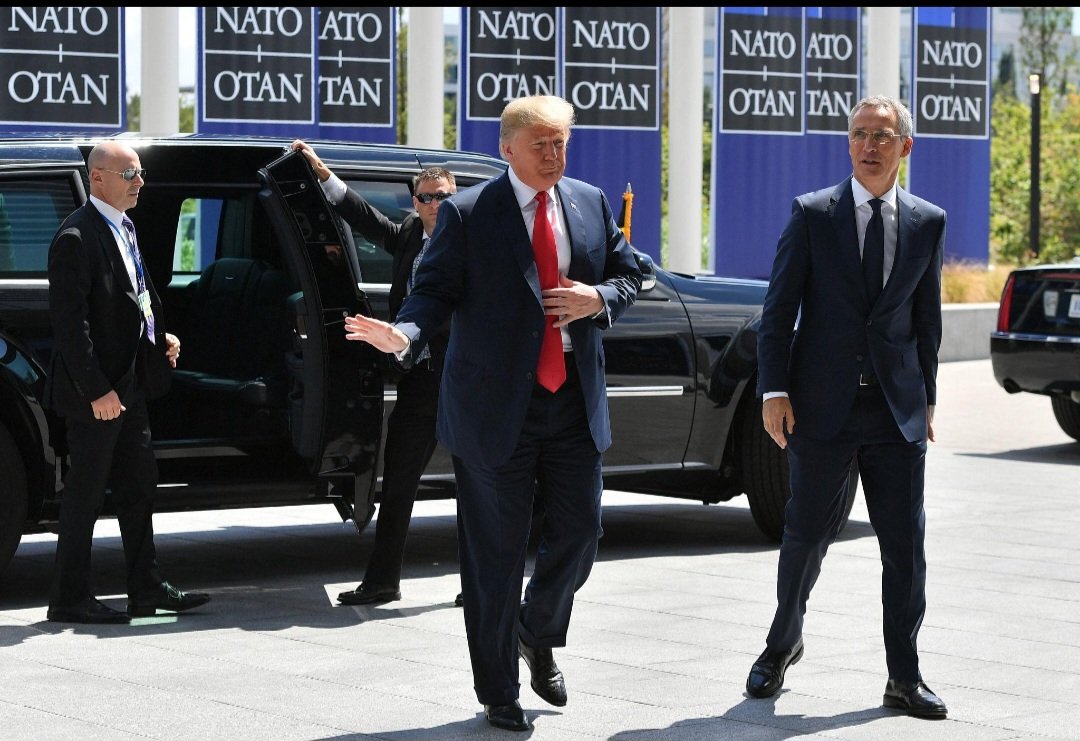
U.S. President Donald Trump arrived in Ankara on Tuesday for the opening of the NATO summit, where alliance leaders are seeking to demonstrate a stronger commitment to collective defense amid mounting geopolitical tensions and persistent pressure from Washington for Europe to shoulder more of the security burden.
The two-day summit brings together leaders of NATO’s 32 member states at a time when the alliance faces significant security challenges, including Russia’s war against Ukraine, instability in the Middle East and growing concerns over China’s expanding military influence. Hosted by Turkish President Recep Tayyip Erdoğan, the gathering is expected to focus heavily on boosting defense spending, expanding military production and strengthening NATO’s long-term deterrence capabilities.
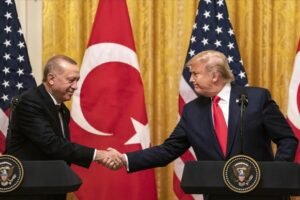
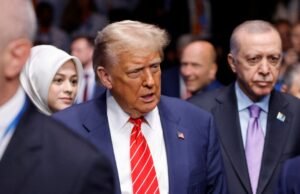
Before formal summit sessions began, Trump held talks with Erdoğan, during which the two leaders discussed bilateral defense cooperation, regional security and the possible resumption of U.S. sales of F-35 fighter jets to Türkiye. Trump also announced the lifting of certain U.S. sanctions on Türkiye, a move welcomed by Ankara but viewed cautiously by several NATO allies.
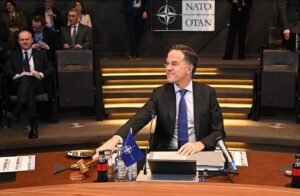
Determined to demonstrate their commitment to burden-sharing, European leaders unveiled more than $50 billion in new defense agreements ahead of the summit. The deals include purchases of advanced drones, aircraft and missile systems, reflecting NATO’s push to modernize its armed forces and respond to evolving threats. NATO Secretary General Mark Rutte described the investments as part of a broader transformation of the alliance’s defense posture, calling for what he termed a “revolution” in military production.
Trump has repeatedly argued that European allies should contribute far more to their own defense and has renewed calls for NATO members to spend 5% of their gross domestic product (GDP) on defense well above the alliance’s longstanding 2% target. Although many member states have increased military budgets in recent years, several governments remain short of Trump’s proposed benchmark.
Ukraine remains another central issue on the summit agenda. NATO leaders are expected to reaffirm military and financial support for Kyiv as Russia continues its offensive. Ukrainian President Volodymyr Zelenskyy is expected to meet with several alliance leaders to press for additional air defense systems, ammunition and long-term security guarantees.
The summit also reflects broader uncertainty over the future of transatlantic relations. Trump’s criticism of several key European allies; including Britain, France and Germany, over their level of support for recent U.S. military actions in Iran has exposed divisions within the alliance. He has also suggested that the United States could further reduce its military presence in Europe if allies fail to increase defense spending.
Despite those differences, NATO leaders are expected to conclude the summit with a joint declaration reaffirming the alliance’s commitment to collective defense under Article 5, while emphasizing closer cooperation on defense technology, weapons production and regional security. Officials hope the meeting will project unity and reassure member states that NATO remains prepared to respond to an increasingly complex global security environment.