
World News
US Insists Strait of Hormuz Remains Open as It Exchanges Strikes With Iran

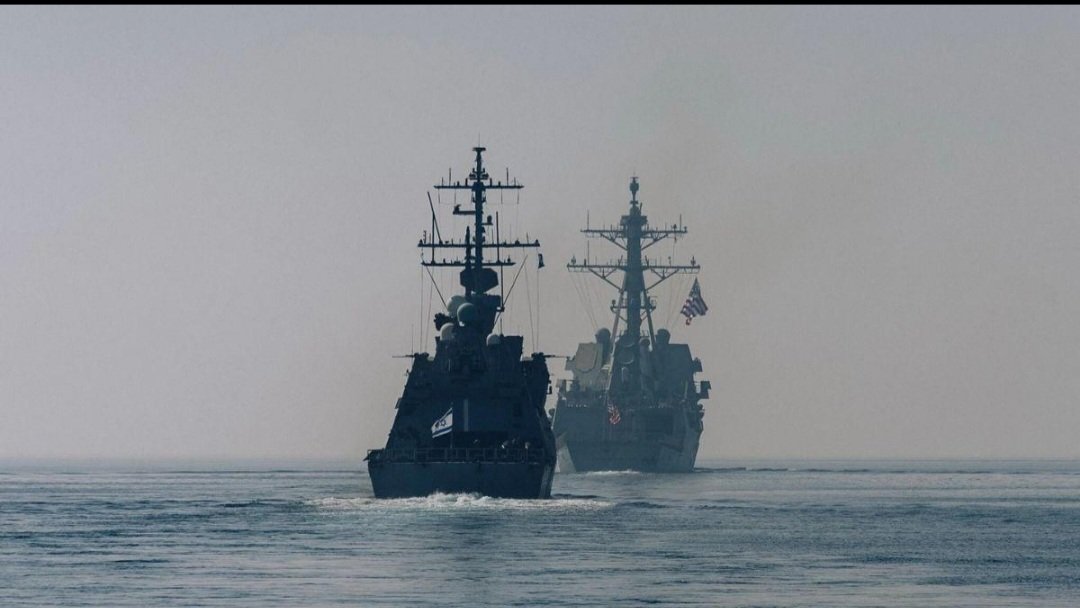
The United States has insisted that the Strait of Hormuz remains open to commercial shipping despite Iran’s declaration that it has closed the strategic waterway, as both countries exchanged fresh military strikes in one of the most dangerous escalations in the Gulf region in recent years. The conflicting claims have heightened concerns over global energy supplies and maritime security, with governments and shipping companies closely monitoring developments.
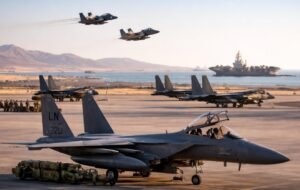
The latest confrontation began after U.S. forces launched a new round of airstrikes on Iranian military targets, saying the operation was in response to an attack by Iran’s Islamic Revolutionary Guard Corps (IRGC) on a commercial container ship transiting the Strait of Hormuz. According to U.S. officials, the strikes targeted missile launchers, drone facilities, communications infrastructure and other military sites to reduce Iran’s ability to threaten international shipping.
Shortly afterward, U.S. Central Command (CENTCOM) declared that the Strait of Hormuz remained open and that American naval forces would continue safeguarding freedom of navigation. President Donald Trump also maintained that commercial traffic could continue using the waterway despite Tehran’s assertions to the contrary. The U.K.’s maritime authorities similarly indicated that a southern shipping route through the strait remained navigable, although they warned of heightened risks from mines and military activity.
Iran, however, rejected the U.S. position and reiterated that the Strait of Hormuz was closed “until further notice.” Iranian authorities claimed a vessel had attempted to use what they described as an unauthorized route through the waterway and said Revolutionary Guard forces fired warning shots before broader military tensions escalated. Tehran insists that navigation through the strategic passage falls under Iranian control and has demanded international recognition of its authority over shipping in the area.
The confrontation quickly spread beyond the strait. Iran launched missiles and drones toward several Gulf countries hosting U.S. military forces, including Qatar, the United Arab Emirates, Kuwait, Bahrain, Jordan, and Oman. Most of the incoming projectiles were intercepted by air-defense systems, though authorities reported injuries and damage in some locations. The attacks drew swift condemnation from Gulf governments, several of which accused Tehran of destabilizing the region.
The Strait of Hormuz is one of the world’s most critical maritime chokepoints, with roughly one-fifth of global oil and liquefied natural gas shipments typically passing through the narrow waterway. Any disruption to shipping there has immediate implications for international energy markets, prompting higher oil prices and raising concerns over supply chains and inflation worldwide.
The renewed hostilities have also placed diplomatic efforts under severe strain. Recent talks aimed at preserving a temporary U.S.-Iran understanding over maritime security have effectively collapsed, while mediators from Gulf states continue to urge both sides to return to negotiations. Analysts warn that further attacks on commercial vessels or military installations could trigger a broader regional conflict involving additional countries.
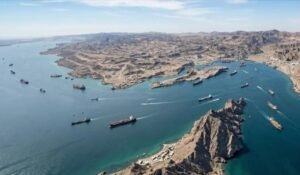
Despite Washington’s insistence that international shipping remains possible, many commercial operators have adopted a more cautious approach, with some rerouting vessels or delaying transits until the security situation becomes clearer. As military operations continue and rhetoric hardens on both sides, the Strait of Hormuz remains at the center of a geopolitical crisis with significant consequences for regional stability and the global economy.