Opinion
Dangote Refinery Pricing: A Free Market Without Competition Harms the Economy


A deregulated market delivers efficiency only when competition exists. A monopoly without effective regulation does the opposite. It transfers wealth from consumers to the dominant producer.
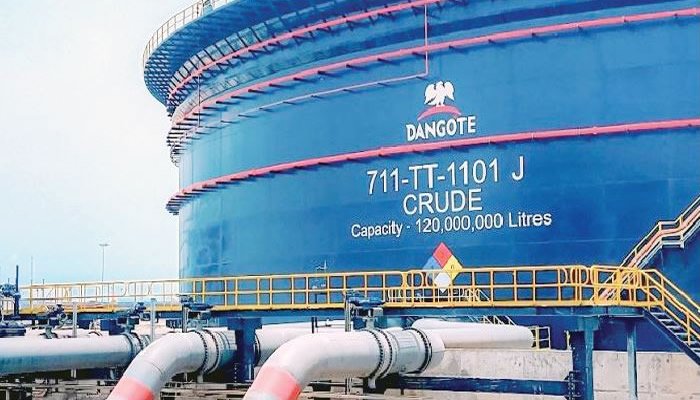
We love the Dangote Refinery. It has been Nigeria’s saving grace. Without it, the economy could have been crippled during the US-Iran war as petroleum exports tightened and the import dependent NNPCL would have been left stranded.
But as the dominant player, Dangote owes Nigerians greater transparency in its product costing and pricing.
Dangote Refinery has not publicly disclosed its full refining cost per barrel. However, available market data points to exceptionally high margins.
The Case for Super Profits
1. Gross refining margins are exceptionally high
A barrel of crude yields approximately 159 litres of refined products. At a PMS gantry price of ₦1,075/litre, this translates into gross revenue of about ₦170,925 or approximately US$124 per barrel (at ₦1,380/US$).
With Brent crude trading around US$71 before the resumption of the US-Iran conflict, the implied gross refining margin is approximately US$53 per barrel, well above normal global refining margins. This excludes higher priced products such as diesel (₦1,500/litre), Jet A1 (₦1,300/litre) and LPG, which further increase overall refinery revenues.
2. Dangote’s current pricing exceeds the NNPCL benchmark
In September 2024, NNPCL published a pricing template based on:
Brent crude: US$81/barrel
Exchange rate: ₦1,637.59/US$
PMS ex depot price: ₦898.78/litre
Today, both key variables favour consumers:
Crude oil has fallen to about US$71 (12.3% lower).
The naira has appreciated to about ₦1,380/US$ (15.7% stronger).
Applying these improvements to the NNPCL template suggests an equivalent gantry price of roughly ₦663/litre. Instead, Dangote is selling at ₦1,075/litre, over ₦400 higher.
3. Pre war pricing contradicts current pricing
Before the US Iran conflict in February 2026, Dangote’s PMS gantry price was ₦774/litre when Brent crude was about US$70/barrel.
Today, crude has returned to roughly US$71, yet the gantry price remains ₦1,075/litre, more than ₦300 higher despite crude prices returning to pre war levels.
The conclusion is difficult to avoid: regardless of the methodology used, gross refining margin, the NNPCL pricing template or historical pricing, Dangote is earning substantially higher margins than before the conflict.
Common Arguments and Why They Fall Short
1. Inventory purchased at higher prices
This is a legitimate short term argument. However, Dangote raised prices within days of crude prices increasing during the war. More than two months after crude returned to pre war levels, prices remain over ₦300 above where they stood before the conflict.
If higher cost inventory justified the increase, lower cost inventory should now justify a corresponding reduction. Inventory effects should balance over time, not permanently sustain elevated prices.
2. Premium paid for Nigerian crude
Dangote has argued that he pays a premium for crude. Even if true, that premium existed before the war when PMS sold for ₦774/litre. It cannot explain a ₦300/litre increase after crude prices have returned to similar levels.
4. Higher operating costs and taxes
Operating costs, taxes and regulatory charges did not suddenly emerge after the conflict. Those costs also existed when petrol sold at ₦774/litre. They therefore do not explain why petrol now sells for ₦1,075/litre with crude at virtually the same price.
What Government Should Do
1. Regulate monopoly pricing
Dangote did not create the monopoly. Government policy did. But every mature economy regulates dominant market players to prevent excessive pricing.
Regulators including NMDPRA, FCCPC and SON should undertake a full cost review of the refinery, establish the actual cost of refining a barrel of crude, and prescribe reasonable margin bands that protect both investors and consumers.
2. Regulate marketers’ margins
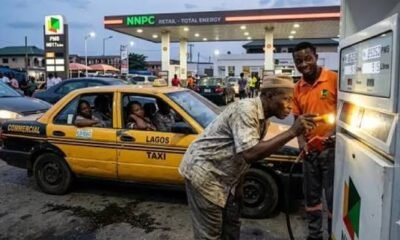
NNPCL’s 2024 pricing template allowed a marketing margin of ₦41.48/litre. Today, marketers commonly add about ₦200/litre after purchasing at ₦1,075 it is sold at the pump at N1,270. Such a nearly fivefold increase deserves regulatory scrutiny.
3. Restore competition
Removing fuel subsidies before restoring Nigeria’s public refineries effectively left the market dependent on a single supplier.
Government should urgently:
Restore competition by privatising or transparently concessioning the four state owned refineries.
Halt opaque rehabilitation arrangements that have produced little measurable progress.
Introduce competitive private investment through open bidding.
4. Address structural demand
Petrol demand is inflated because millions of Nigerians generate their own electricity using petroleum products (petrol or diesel). Expanding reliable grid power would significantly reduce fuel consumption.
5. Government should also accelerate:
Railway development for passenger and freight transport.
Expansion of CNG, solar and other alternative energy sources.
Reducing demand through better infrastructure is one of the most sustainable ways to lower petroleum prices.
Conclusion
Markets work best when competition disciplines prices. Where competition is absent, regulation must protect consumers from monopoly pricing while allowing investors to earn fair returns.
The objective is not to prevent Dangote Refinery from making profits. It is to ensure those profits are reasonable, transparent and consistent with a competitive market, not the result of monopoly power.
Note: This interview was granted before the latest crude oil cost escalation to $86 today 14th July 2026.
Nick Agule (nick.agule@yahoo.co.uk) is an energy expert.