Featured
Reinforcing the Republic: Why More Divisions Matter


By Lemmy Ughegbe, Ph.D
The creation of four new divisions of the Nigerian Army is more than a military announcement. It is a strategic statement. It is an acknowledgement that the security architecture designed for yesterday’s Nigeria must evolve to confront today’s threats and tomorrow’s uncertainties.
Military organisations are not static; they adapt to changing realities as new threats demand new doctrines and expanding theatres require stronger command. Growing populations, emerging technologies and new forms of warfare compel nations to reassess whether existing formations remain adequate.
President Bola Ahmed Tinubu’s approval of four additional divisions, increasing the Army’s total from eight to twelve, should be understood within that broader strategic context. It is one of the most significant structural reforms undertaken by the Army in recent years, reflecting an appreciation that Nigeria’s security environment has grown increasingly complex.
For decades, the Nigerian Army was organised principally to defend the nation’s territorial integrity against conventional military threats; internal security operations existed but did not dominate operational planning as they do today.
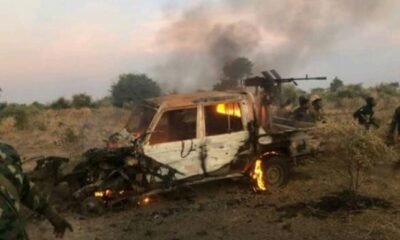
That reality has changed dramatically. Nigeria now confronts multiple and often simultaneous security challenges. Terrorism in the North East, banditry across the North West, kidnapping for ransom, violent criminal gangs, communal conflicts, attacks on critical national infrastructure, piracy in the Gulf of Guinea, oil theft in the Niger Delta and other forms of organised violence have collectively transformed the country’s security landscape.
These threats are geographically dispersed, operationally diverse and increasingly interconnected. An Army structured for fewer operational demands comes under strain when required to respond simultaneously across several theatres. That is where military organisation becomes critical.
To many civilians, a new division may seem like merely another headquarters. In reality, it is one of the Army’s principal operational formations, enhancing command and control, improving coordination among subordinate units, shortening response times and enabling leadership to exercise more effective oversight over large geographical areas.
In practical terms, additional divisions bring decision-making closer to areas of operation, improve flexibility and reduce the burden on formations that may already be overstretched.
Seen from that perspective, the expansion from eight to twelve divisions is not simply about numbers; it is about strengthening organisational capacity to meet expanding security responsibilities. That deserves recognition.
Nigeria is not alone in this recalibration; other nations facing evolving threats have reached similar conclusions.
China’s 2016 decision to replace its seven military regions with five joint theatre commands is instructive. Beijing concluded that a Cold War era structure could no longer deliver the cross-service coordination modern joint operations demand, and redesigned command to sit closer to the battlefield, precisely the logic behind Nigeria’s new divisions.
The United States underwent a comparable reckoning after the attacks of September 2001, when it created an entirely new command devoted solely to homeland defence, since its existing architecture, built around external threats, had none. Sometimes unfamiliar threats require new formations rather than adjustments to old ones.
Colombia’s experience may be most relevant. Confronted by a decades-long insurgency, Bogota reorganised its army around mobile counter-guerrilla brigades, eventually building the largest military in Latin America, and that sustained expansion helped push FARC out of strongholds it had held for a generation.
However, military history also teaches another important lesson. No nation has ever achieved lasting security merely by increasing the number of military formations. Organisation is essential. Capability is indispensable.
New divisions must be supported by adequate recruitment, rigorous training, modern equipment, reliable logistics, sustainable funding and troop welfare. Without those elements, structural expansion risks becoming an exercise in administrative growth rather than operational effectiveness. Colombia’s own build-up showed this risk starkly, with brigades multiplying faster than the funding needed to sustain them.
The modern battlefield is also increasingly shaped by intelligence. Today’s conflicts are not won solely by superior firepower. They are won by superior information, timely analysis and effective inter-agency coordination.
Military operations therefore achieve their greatest success when they are complemented by the efforts of intelligence services, law enforcement agencies and local communities. The Department of State Services, the Defence Intelligence Agency, the National Intelligence Agency, the Nigeria Police Force and other security institutions all have indispensable roles within an integrated national security framework.
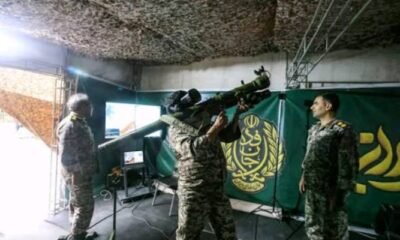
Equally important is technology. Contemporary warfare increasingly depends on surveillance drones, satellite imagery, cyber capabilities, artificial intelligence, precision targeting and secure communications. Expanding the Army’s structure should therefore be matched by sustained investment in technological superiority to maintain an advantage over increasingly adaptive non-state actors.
There is also the human dimension. Behind every division are men and women who leave their families to defend communities they may never have visited. Their commitment deserves more than commendation: decent accommodation, prompt payment of entitlements, quality healthcare, opportunities for professional development and the assurance that the nation values their sacrifices.
Morale remains one of the most decisive factors in military effectiveness. A motivated soldier is often more effective than a larger but poorly supported force.
Ultimately, however, Nigerians will judge this reform by outcomes, not organisational charts or ceremonial inaugurations. Will farmers return safely to their fields? Will highways become less dangerous? Will fewer communities experience attacks? Will kidnapping decline? Will investors regain confidence? Will families once again travel across the country without fear? Those are the questions that truly matter.
Security sector reform is not an event; it is a continuous process of adaptation to changing realities. In approving four additional divisions, the Federal Government has recognised that Nigeria’s security challenges require stronger institutional capacity, an important first step.
The greater challenge now lies in matching organisational expansion with operational excellence. Reinforcing the Republic is not simply about creating more divisions; it is about strengthening the Republic’s capacity to protect its people, defend its sovereignty and preserve the constitutional order.
Twelve divisions may provide a stronger framework. Their enduring value, however, will not be measured by the number of headquarters established or formations created. It will be measured by something far more meaningful. A Nigeria where communities are safer. Where businesses flourish without fear. Where children can travel to school in confidence. Where farmers cultivate their land in peace. And where every citizen feels the reassuring presence of a nation capable of protecting both its territory and its people.
Dr Lemmy Ughegbe, FIMC, CMC
Email: lemmyughegbeofficial@gmail.com
WhatsApp ONLY: +2348069716645