
World News
Spain Hits Back at Italy With Border Controls as Ceuta Migrant Row Escalates

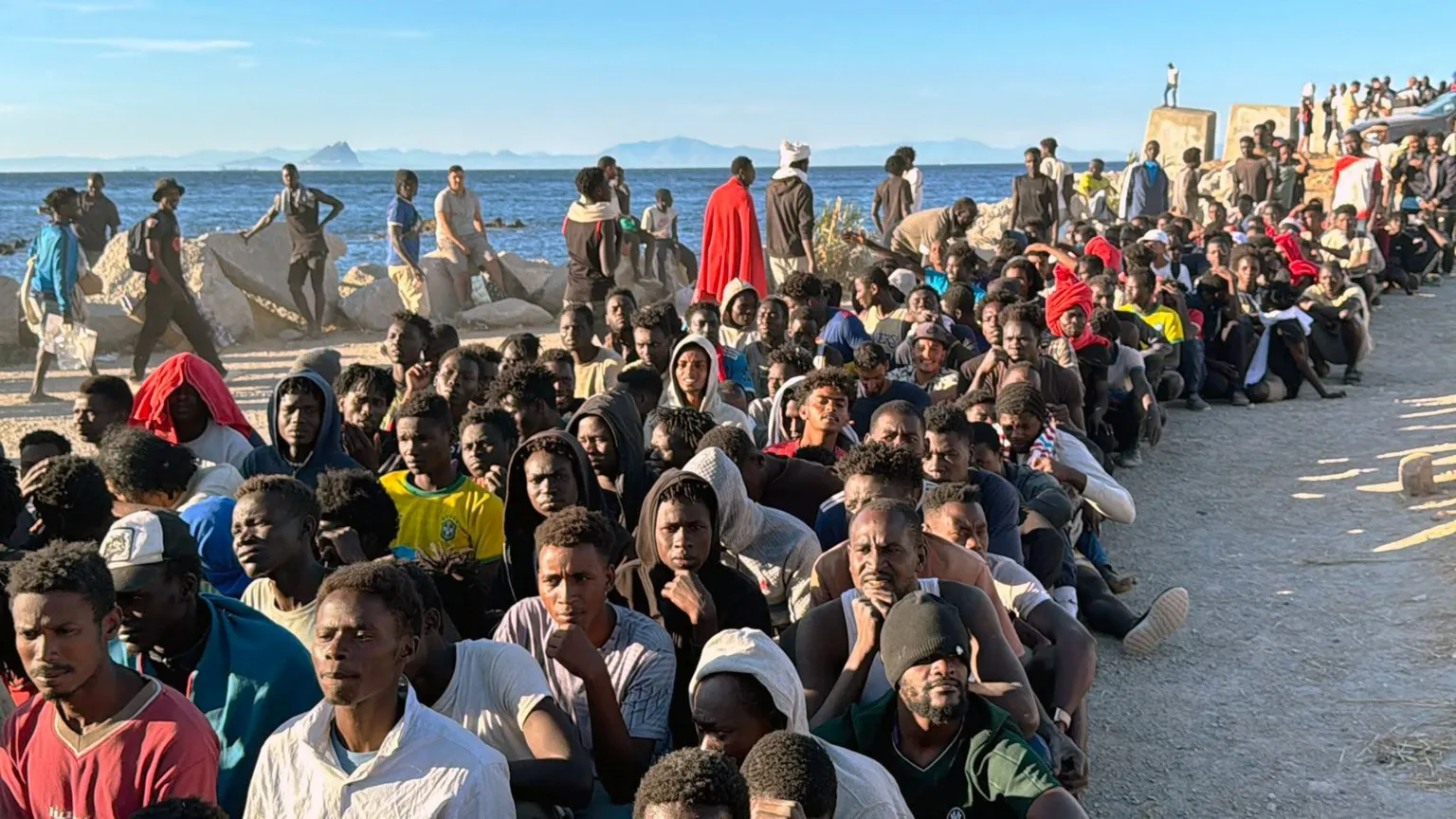
Spain has announced temporary border controls on travellers arriving from Italy, escalating an increasingly bitter dispute between the two European Union members over the mass migrant influx into Spain’s North African enclave of Ceuta.
The Spanish government said the new checks will take effect from midnight on Saturday and remain in place until September 7. Authorities will conduct passport, nationality and visa checks on passengers arriving from Italy by air and sea.the
Madrid described the measure as a response to what it called “persistent irregular migratory pressure” and said it was acting after Italy introduced its own controls on travellers arriving from Spain.
The confrontation has exposed growing tensions within the EU over responsibility for protecting the bloc’s external borders and managing irregular migration.
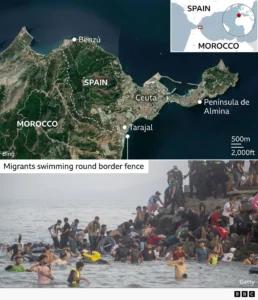
The latest diplomatic clash follows an extraordinary migration episode in Ceuta, the Spanish enclave located on Africa’s northern coast and surrounded by Morocco.
In late July, tens of thousands of migrants crossed into Ceuta from Morocco by land and sea in a sudden rush that overwhelmed the enclave’s reception facilities and security forces.
Spanish authorities said more than 50,000 people entered the territory, while later estimates put the number at around 72,000 arrivals over the course of the crisis. Many of those who entered subsequently returned to Morocco, either voluntarily or after being turned back by Spanish authorities.
The crossings also resulted in deaths. Spanish authorities reported that dozens of migrants died during the attempt to reach the enclave, with some drowning and others being crushed or falling while trying to negotiate the border infrastructure.
The scale of the incident has placed enormous pressure on Ceuta’s limited reception capacity, particularly for unaccompanied minors who cannot simply be returned and require accommodation and state protection.
Italy responded to the crisis by temporarily suspending aspects of its border-free travel arrangements with Spain.
Rome argued that the extraordinary movement of migrants into Ceuta could potentially have wider implications for migration flows within Europe and said additional controls were necessary as a precaution.
Italy’s measures mean travellers moving between the two countries can face identity and document checks despite both countries being members of the Schengen area, where internal border controls are normally absent.
The Italian government has defended the decision as a national-security measure. Prime Minister Giorgia Meloni’s administration has faced strong domestic political pressure to maintain strict controls on irregular migration.
Madrid, however, strongly objected to Rome’s decision.
Spanish officials argued that Italy’s restrictions were unjustified and discriminatory, particularly because there was no evidence that the migrants who entered Ceuta were preparing to travel onward to Italy.
Spanish officials also pointed out that Ceuta is geographically separated from mainland Spain and is itself outside the Schengen free-movement area.
Spain initially demanded that Italy remove its restrictions, warning that it could respond with reciprocal measures if Rome refused.
Italy declined to lift the controls, prompting Madrid to announce its own restrictions on travellers arriving from Italy.
The Spanish government’s decision effectively turns the dispute into a reciprocal border confrontation between two EU partners.
Although the controls are temporary, the episode has raised questions about the resilience of Europe’s border-free travel system at a time when migration pressures are increasing.
The dispute has broader implications because the Schengen area is built around the principle that people can move between participating countries without routine internal border checks.
Member states can, however, temporarily reintroduce controls under exceptional circumstances, particularly when they cite serious threats to public order or internal security.
Italy’s decision to introduce controls following the Ceuta crisis was criticised by some analysts as primarily political, given the absence of evidence that migrants in Ceuta were attempting to reach Italy.
The Spanish retaliation could therefore deepen concerns that national governments are increasingly prepared to use border controls as political and migration-management tools.
While the diplomatic dispute between Madrid and Rome unfolds, Ceuta continues to deal with the humanitarian consequences of the mass arrivals.
The enclave’s migrant reception facilities were overwhelmed during the influx. Hundreds of people were reported waiting outside the main reception centre after its 512 available beds were filled.
Authorities have also been working on the transfer of unaccompanied migrant children from Ceuta to mainland Spain because of the enclave’s limited capacity to accommodate them.
The situation has placed pressure on Spain’s central government and regional authorities to find longer-term solutions for those who remain in the territory.
The dispute has also drawn attention from European authorities.
EU officials have called for a coordinated response to the migration crisis and stressed the importance of cooperation between Spain, Morocco and other member states.
EU Migration Commissioner Magnus Brunner has argued that Europe should use available diplomatic and economic leverage to secure stronger cooperation from Morocco in tackling irregular migration and migrant-smuggling networks.
European officials have also highlighted the role of organised smuggling groups in facilitating dangerous journeys into Ceuta.
The European Commission faces the difficult task of balancing the right of member states to protect their borders with the principle of free movement that underpins the Schengen system.
The crisis has also placed Spain’s relationship with Morocco under renewed scrutiny.
Morocco plays a crucial role in controlling migration routes toward Ceuta and Spain’s other territory in North Africa, Melilla.
Spanish authorities have credited cooperation with Morocco with helping to reverse much of the migrant surge, while critics have accused Madrid of failing to adequately protect its external border.
The Spanish government, meanwhile, has rejected suggestions that the crisis demonstrates a failure of its migration policy and has defended its cooperation with Rabat.
Spain’s latest border measures are scheduled to remain in force until September 7, but their political significance could last much longer.
The immediate dispute is between Madrid and Rome, but the underlying issue is much broader: who should bear responsibility when one EU member state experiences a sudden and overwhelming migration influx?
For Spain, the priority is managing the continuing humanitarian pressure in Ceuta while maintaining cooperation with Morocco.
For Italy, the concern is preventing irregular migration pressures from spreading through the European travel network.
And for the European Union, the episode represents another major test of the Schengen system and of the bloc’s ability to develop a common migration policy rather than leaving individual member states to respond independently.
Unless Madrid and Rome reach a diplomatic understanding, the reciprocal border measures could further strain relations between two major EU countries and add another layer of uncertainty to Europe’s already contentious migration debate.