
Health
WHO Sets Three-Month Target to Bring Congo Ebola Outbreak Under Control

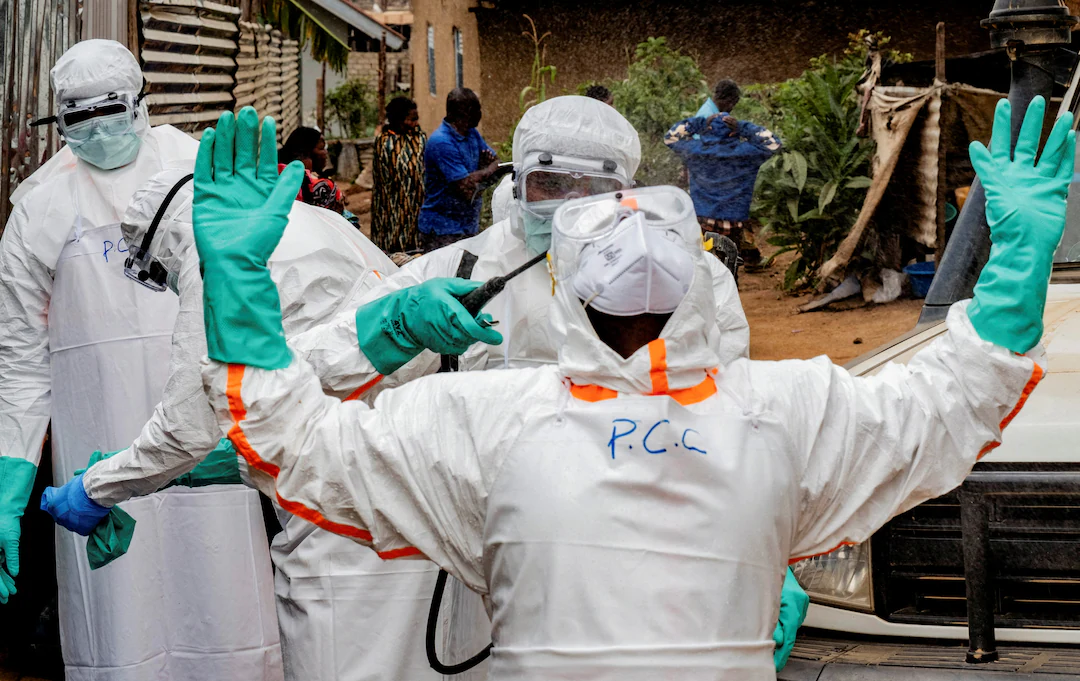
The World Health Organization (WHO) says there is still a possibility of bringing the worsening Ebola outbreak in the Democratic Republic of Congo under control within three months, but warned that the response will require urgent funding, stronger surveillance and sustained international support.
The warning comes as the outbreak has become the deadliest Ebola epidemic in the country’s history and the second-deadliest recorded globally.
According to the latest figures cited by Reuters, at least 2,325 people have died and 4,945 confirmed cases have been recorded in the Democratic Republic of Congo. The outbreak has also expanded into a sixth province, further complicating efforts to contain transmission.
WHO officials said the three-month target remains achievable if sufficient resources are made available and response measures are rapidly strengthened. However, the agency acknowledged that the virus is currently spreading faster than containment efforts can track.
One of the biggest challenges is the large number of infections for which health officials cannot establish a clear link to known cases. Between 70 and 80 per cent of newly reported cases reportedly have no identifiable transmission link, suggesting that significant transmission is occurring outside existing surveillance networks.
The outbreak is being driven by the Bundibugyo strain of Ebola, a relatively rare variant for which there is currently no approved vaccine or specific treatment. WHO says clinical trials and research into potential vaccines are ongoing.
The response has also been hampered by armed conflict, insecurity, difficult terrain, weak health infrastructure and shortages of personnel and funding. These factors have made it harder for health teams to reach affected communities, identify cases quickly and trace people who may have been exposed.
WHO estimates that about $115 million is required for the response and says roughly 60 per cent of the needed funding has so far been secured. The organisation is calling for additional resources to expand surveillance, treatment capacity, laboratory testing and community engagement.
The latest crisis is a sharp escalation from the situation reported by WHO at the end of July. At that point, the agency had recorded 3,605 confirmed cases and 1,587 deaths across five provinces, describing the outbreak as the largest Ebola outbreak ever reported in the Democratic Republic of Congo.
WHO has stressed that controlling the outbreak will depend not only on medical interventions but also on cooperation from affected communities. Community engagement, early reporting of symptoms, contact tracing, infection prevention and safe burials remain central to efforts to interrupt transmission.
The agency’s three-month outlook therefore represents a containment target rather than a guarantee that the outbreak will be over by then. Continued transmission, particularly through unidentified chains of infection, could make the timeline considerably more difficult to achieve.
For now, health authorities and international partners are racing to expand the response before the virus spreads further across the country and beyond its current areas of transmission.