
Health
Ebola Outbreak in Congo Spreads to Seventh Province as Cases Top 7,000

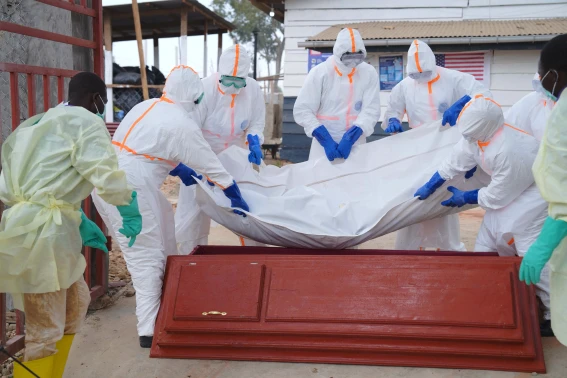
The Ebola outbreak in the Democratic Republic of Congo has spread to a seventh province, raising fresh concerns about the virus moving beyond its eastern epicentre and into other parts of the country.


The latest development was reported in Sud-Ubangi Province in northwestern Congo, where health authorities confirmed a case of the rare Bundibugyo virus, the strain responsible for the current outbreak. The case involved a 23-year-old man who later died.
According to reports, the man had travelled extensively before his death. He reportedly left South Kivu, travelled through Rwanda and Uganda, moved into Ituri, the current epicentre of the outbreak, and subsequently travelled through Tshopo and Mongala before reaching Sud-Ubangi. Authorities are conducting investigations and contact tracing following the discovery.
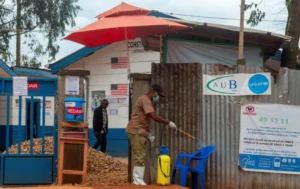
The confirmation makes Sud-Ubangi the seventh province affected by the outbreak and the first in western Congo, a significant geographical expansion from the areas previously affected in the country’s east.
The province’s location has heightened concerns because it borders the Central African Republic and the Republic of Congo, creating a potential route for further regional transmission if the outbreak is not contained.
As of September 11, Congolese authorities had reported 7,022 cases and 3,398 deaths, according to the latest figures cited by Reuters and The Associated Press. The outbreak is now regarded as the second-largest Ebola outbreak ever recorded globally, behind the 2014–2016 West African epidemic, which killed more than 11,000 people.
The World Health Organization’s most recent formal disease-outbreak bulletin, issued on September 10 and based on data through September 7, had still listed six affected provinces and recorded 6,757 confirmed cases and 3,267 deaths in Congo. The subsequent Sud-Ubangi case was reported after that WHO update.
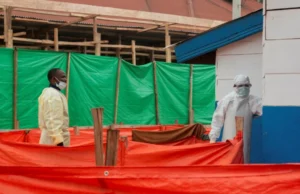
The outbreak has been particularly difficult to control because of armed conflict, population displacement, shortages of healthcare workers and funding, and frequent movement of people between communities and across borders. WHO has described the risk within Congo as very high, while warning that neighbouring countries face a high risk of cross-border spread.
The current outbreak is caused by the Bundibugyo species of Ebola, for which there is no licensed vaccine specifically approved for routine use and no specific antiviral treatment. WHO says the commonly used Ervebo vaccine’s effectiveness against Bundibugyo virus remains unknown and recommends its use against the strain only within research protocols.
Nevertheless, Congo has begun vaccinating healthcare and frontline workers with Ervebo while clinical trials are underway to determine effective vaccines and treatments for the Bundibugyo strain. WHO reported that more than 2,000 frontline workers had been vaccinated by September 6.
The expansion into Sud-Ubangi adds another challenge to an already strained response and has increased fears that the outbreak could spread further across Congo’s borders.