Health
WHO: No Vaccine or Specific Treatment for Ebola Strain Confirmed in Nigeria

The World Health Organisation (WHO) has confirmed that the Ebola virus detected in Nigeria is the Bundibugyo strain, for which no approved vaccine or specific treatment is currently available.
The confirmation came during an emergency meeting of health officials following the detection of the country’s first reported case of the strain, raising concerns over the need for intensified surveillance, contact tracing and infection prevention measures.
The Director of the Public Health Laboratory Service at the Nigeria Centre for Disease Control and Prevention (NCDC), Olajumoke Babatunde, said the strain was identified after three rounds of molecular testing.
“We did three levels of tests, but all molecular. The strain was Bundibugyo,” Babatunde said.
The development comes as fresh details emerged about the patient’s travel history, with an aviation official indicating that she arrived in Nigeria on October 3, 2026, aboard Ethiopian Airlines Flight ET333 from Uganda.
The flight landed at the Nnamdi Azikiwe International Airport, Abuja.
The patient, described by an official as a diplomat, reportedly received treatment at a private hospital in Abuja before the infection was confirmed. She has since been transferred to a designated isolation facility.
An official also disclosed that the patient’s condition had deteriorated into multiple organ failure. However, her nationality was not disclosed.
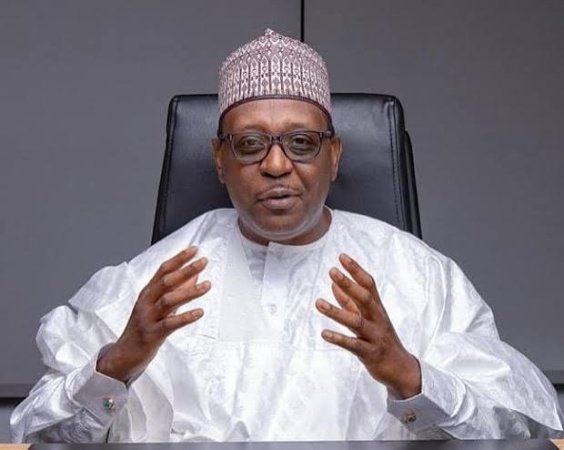
The Coordinating Minister of Health and Social Welfare, Professor Muhammad Ali Pate, had earlier confirmed the case, prompting health authorities to intensify efforts to identify and monitor people who may have been exposed to the virus.
The Federal Government said a multi-agency response involving the Federal Ministry of Health, NCDC and the FCT Health and Environmental Services Secretariat had commenced.
Authorities have identified 44 close contacts, including healthcare workers, fellow patients, caregivers and people linked to the woman’s travel route.
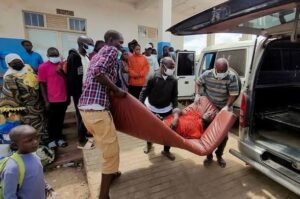
Health facilities and port health surveillance units across the country have also been placed on high alert.
Meanwhile, Uganda has requested detailed travel and clinical records from Nigeria to help establish where the patient contracted the virus and determine whether additional contact tracing is necessary.
In a statement issued in Kampala, the Director-General of Health Services at Uganda’s Ministry of Health, Professor Charles Olaro, said the woman’s transit through Uganda did not, by itself, establish that she contracted the infection there.
Preliminary information from Ugandan authorities indicated that the woman had travelled to the eastern Democratic Republic of the Congo for business and transited through Uganda in early October without showing symptoms. She reportedly developed symptoms after arriving in Nigeria.
Uganda said it was awaiting further information from the Nigerian government to guide its investigations and strengthen screening and other public health measures at points of entry.
The request follows Uganda’s declaration as Ebola-free by the WHO in August, after an outbreak that recorded 20 cases, most of them linked to people who had travelled from the Democratic Republic of the Congo.
In Nigeria, the Senate and House of Representatives have urged the Federal Government to release funds urgently to relevant agencies to support efforts to contain the outbreak.
The Bundibugyo strain belongs to the Ebola virus disease group. Although no specific vaccine or treatment is currently available for this strain, patients can receive supportive medical care to manage symptoms and complications.
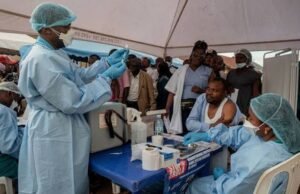
Health authorities continue to emphasise early detection, isolation, contact tracing and strict infection prevention measures as key elements of the response.