
Health
Kenya Confirms Eighth Ebola Case as Regional Outbreak Spreads

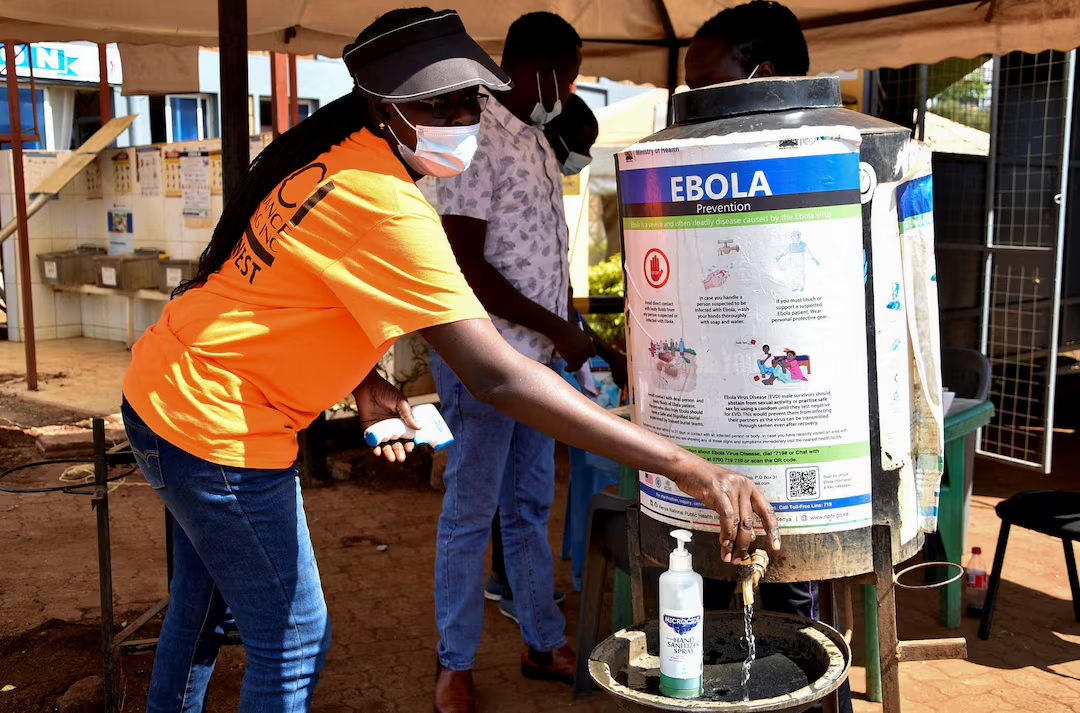
Kenya has confirmed its eighth case of Ebola as health authorities intensify efforts to contain the disease amid a widening regional outbreak linked to the Democratic Republic of the Congo (DR Congo).
The latest infection involves a 49-year-old man who worked as a patient attendant, cleaning utensils and linens. He developed a fever, headache and muscle pain before testing positive for the virus while under quarantine, according to Kenya’s Director-General for Health, Patrick Amoth.
The patient is believed to have been exposed to Kenya’s first confirmed case, a 40-year-old man who travelled from DR Congo through Uganda and arrived in Nairobi on October 3. He was admitted to hospital and died on October 5, prompting authorities to begin tracing people who might have come into contact with him.
Kenyan health officials identified 130 contacts linked to the initial case, with 128 remaining in quarantine as of October 18. Those under monitoring include relatives, healthcare workers and other people who may have been exposed to the virus. Authorities have reported no evidence of community transmission so far, although investigations and surveillance are continuing.
The latest case follows a series of infections involving close relatives of the first patient and healthcare workers who treated him. Health authorities have increased screening at border points, established an emergency hotline and introduced additional checks for travellers arriving from countries considered at high risk.
The situation is unfolding alongside a severe Ebola outbreak in DR Congo, where the Bundibugyo strain has spread to an eighth province, North Ubangi, according to reports published on October 18 and 19. The outbreak, which began in May, has caused thousands of infections and deaths, making it one of the most serious Ebola emergencies recorded in the country.
The World Health Organization has been supporting response operations in Kenya and neighbouring Uganda, including contact tracing, laboratory testing and infection-prevention measures. Uganda had previously reported infections linked to the outbreak before declaring itself Ebola-free in August.
The Bundibugyo strain is a distinct type of Ebola virus for which there is currently no approved vaccine or specific treatment. Patients receive supportive medical care, while prevention efforts focus on identifying infections early, isolating patients and tracing contacts.
Ebola spreads primarily through direct contact with the blood or other bodily fluids of an infected person, or contaminated materials. Health officials have urged people to follow public-health guidance and seek medical attention if they develop symptoms after a possible exposure.
With Kenya’s confirmed cases rising and infections continuing to spread within DR Congo, authorities across the region face the challenge of containing transmission while strengthening surveillance and protecting healthcare workers and communities.