
Health
World’s First Live AI-Assisted Brain Surgery Successfully Removes Tumour

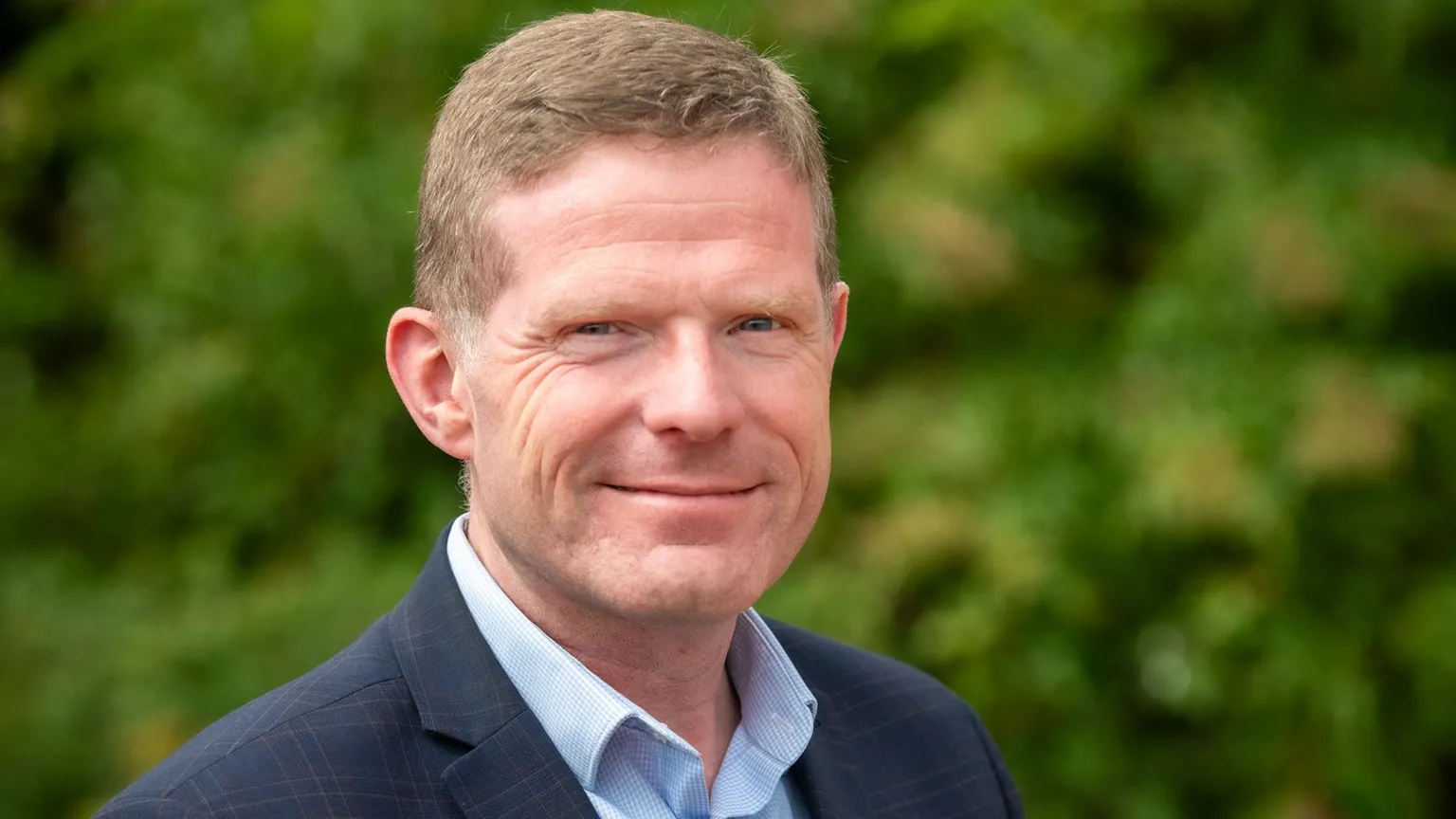
A 48-year-old British man has become the first patient in the world to have a brain tumour removed with the assistance of artificial intelligence working in real time during surgery.
Rhys Hibbert, from Bedfordshire, underwent the groundbreaking procedure at the National Hospital for Neurology and Neurosurgery (NHNN), part of University College London Hospitals (UCLH), in May 2026 as part of a clinical trial.
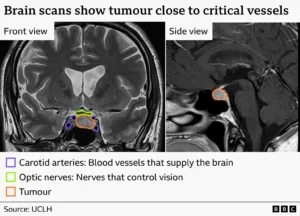
The operation involved the removal of an approximately 11-millimetre tumour from Hibbert’s pituitary gland. Doctors said the tumour was threatening his eyesight and could eventually have caused blindness as his symptoms worsened.
Unlike conventional systems that rely mainly on scans taken before surgery, the UCL-developed AI analysed live video footage from inside the operation as the surgeons worked. It highlighted critical structures, including blood vessels and nerves controlling vision, helping the medical team identify areas that needed to be avoided.
The technology uses colour coding, or segmentation, to distinguish tiny anatomical structures in the brain. This is particularly important during pituitary surgery, where the gland, blood vessels and nerves responsible for vision are packed closely together.
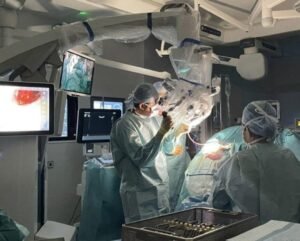
Doctors said a movement of just a millimetre in the wrong direction could potentially result in severe complications, including blindness, stroke or death. The AI therefore served as an additional source of information, while the surgeons remained fully in control of the operation.
The procedure was led by consultant neurosurgeon Professor Hani Marcus, working alongside Danyal Khan, a UCL PhD candidate and neurosurgical resident leading the research.
The AI system was developed at UCL and trained using hundreds of surgical videos. Researchers say it can identify important anatomy, surgical instruments and interactions between instruments and tissue in real time, with the broader aim of improving safety during complex operations.
For Hibbert, the results were immediate. He said his vision had dramatically improved when he woke from surgery, and within a week he was walking independently without glasses or walking sticks.
“It feels like I’ve got a 360-degree panoramic view of everything around me,” he said, describing the improvement after having experienced worsening peripheral vision for more than a year.
Hibbert’s tumour was discovered in December 2024 after he collapsed during a walk and suffered a seizure. His condition was initially managed without surgery, but worsening hormone problems and vision loss eventually led him to opt for an operation.
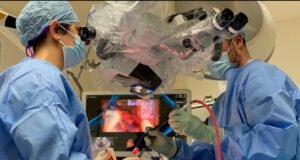
He also volunteered to become the first patient to undergo the procedure with AI operating live alongside the surgical team.
The trial was funded by the National Institute for Health and Care Research (NIHR) and Google, with support from the NIHR Biomedical Research Centre at UCLH, the Royal College of Surgeons, the Engineering and Physical Sciences Research Council and Wellcome.
The breakthrough marks a significant step in the development of AI-assisted medicine, although researchers and health officials stress that the technology is designed to support, not replace surgeons.
The UK government has also highlighted the need for appropriate safeguards as AI becomes increasingly integrated into healthcare.
For Hibbert, the experience represents more than a technological milestone. He said he was “humbled” to have taken part in research that could help doctors develop safer treatments for future patients.