
World News
US Urges G20 Nations to ‘Grow Their Way Out’ of Record Global Debt

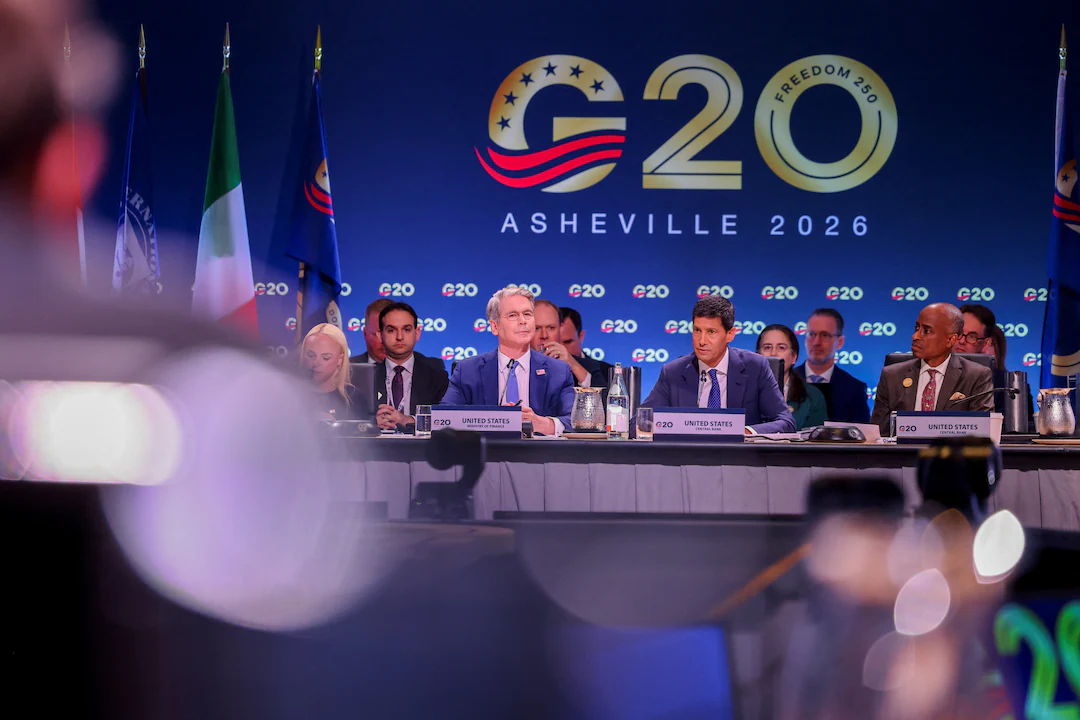
The United States has placed economic growth at the centre of its G20 agenda, urging finance ministers and central bankers from the world’s largest economies to pursue policies that can help ease mounting concerns over record global debt and financial stability.
The two-day G20 finance ministers and central bank governors’ meeting opened Monday in Asheville, North Carolina, against a backdrop of rising government debt, energy-market disruption, trade tensions and uncertainty over the economic impact of the artificial-intelligence investment boom.
US Treasury Secretary Scott Bessent told participants that stronger economic growth was the most effective way for countries to deal with their growing debt burdens.

“The world is awash in debt post-GFC, post-COVID, and the only way for us to get out of this is to grow our way out of this,” Bessent said, referring to the 2007–2009 global financial crisis.
The push for faster growth comes as global debt has climbed to an estimated $353 trillion, raising questions about financial stability and the ability of governments to service their obligations without placing additional pressure on bond markets.
Investors have also been reassessing risks surrounding government debt, including US Treasury securities traditionally viewed as among the world’s safest assets.
Bessent, however, sought to downplay concerns about turmoil in US debt markets, arguing that the American economy’s continued growth gives Washington a stronger position than many other advanced economies despite large budget deficits.

“What’s important, too, is that we are growing,” he said ahead of the meeting.
The Trump administration is using its G20 presidency to advocate for policies aimed at freeing businesses from what it considers excessive regulatory and administrative restrictions.
According to the US Treasury, Washington’s 2026 G20 priorities include modernising financial regulation, addressing global economic imbalances, improving debt transparency and facilitating debt restructuring, as well as strengthening cross-border payments and financial literacy.
Bessent said the US Treasury had identified several obstacles to stronger growth, including excessive regulation, poorly designed tax and financial incentives, insufficient public and private investment, fragmented domestic markets and shortages in workforce skills and mobility.
The economic discussions are taking place under significant geopolitical pressure.
The war involving Iran has disrupted energy supplies and shipping through the Strait of Hormuz, creating additional inflation and growth risks for economies around the world.
Washington is also seeking support from G20 members for measures aimed at isolating Iran economically, while urging countries to address global trade imbalances.
China’s huge trade surplus is a particular concern for the United States. Bessent argued that Beijing should move away from an export-driven model and encourage stronger domestic consumption.
Another major issue facing policymakers is the surge in investment linked to artificial intelligence.
US Federal Reserve Chairman Kevin Warsh, attending his first international economic policy meeting since taking office in May, described the current environment as a global investment surge.
The boom in AI infrastructure has helped support US economic growth, but it has also absorbed large amounts of global savings and contributed to higher Treasury yields, adding another layer of complexity to the debate over government borrowing costs.
The US Treasury says the G20 finance track will continue discussions on these issues throughout the year, with the finance ministers’ and central bankers’ meeting in Asheville running from August 31 to September 1. The G20 leaders’ summit is scheduled for December in Miami.
As finance chiefs confront record debt, trade disputes, energy shocks and rapidly changing technology, Washington is betting that faster economic growth rather than austerity alone, can provide a way out of the world’s mounting debt problem.