
World News
Iran Warns: Supporting New US Sanctions Will Be an ‘Act of War’

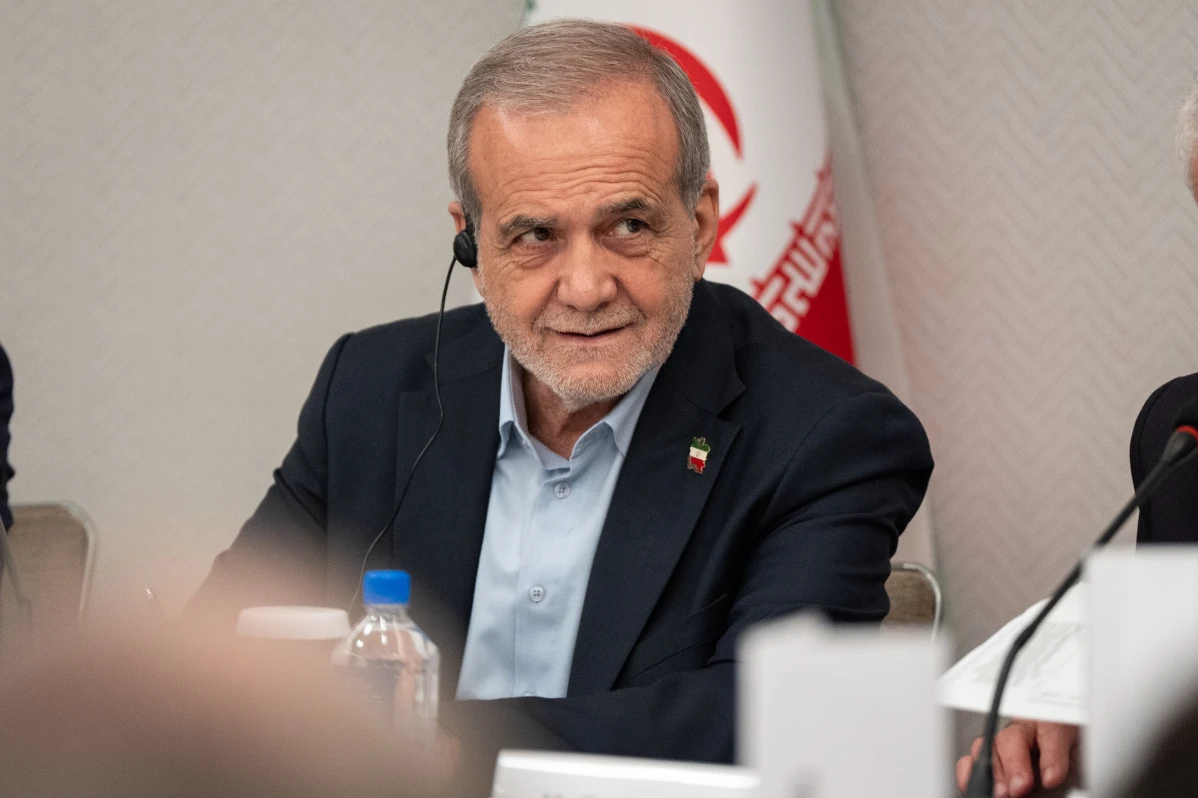
Iran has warned countries against supporting new US economic sanctions, saying any participation in Washington’s campaign against Tehran would be treated as an “act of war” as tensions continue to rise across the Middle East.
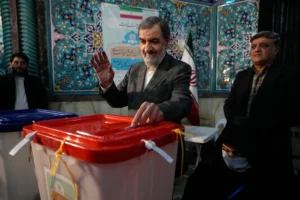
Mohsen Rezaei, the newly appointed head of Iran’s Supreme National Security Council, issued the warning on Sunday as the United States prepared to announce sweeping new economic measures against Iran.
US Treasury Secretary Scott Bessent is expected to unveil the sanctions, which Washington has described as the toughest economic measures yet imposed on Tehran. The US has also warned countries that continue providing economic lifelines to Iran that they could face consequences.
Rezaei said Iran would consider any country that participates in or supports what Tehran calls the US “economic war” against the Iranian people to be engaging in an act of war.
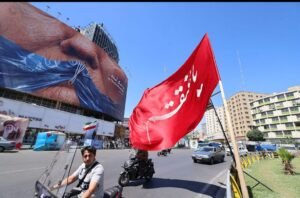
He also warned that Iran could respond by targeting oil-shipping routes outside the Strait of Hormuz if neighbouring countries joined the US pressure campaign.
Iranian Foreign Minister Abbas Araghchi separately dismissed the expected sanctions as a sign of US desperation, arguing that previous military and economic pressure had failed to force Tehran into submission.
He called for Washington to engage Iran respectfully and pursue a negotiated settlement. Iranian President Masoud Pezeshkian has also continued to advocate a diplomatic solution to the conflict.
The standoff has already placed enormous pressure on Iran’s economy, which was facing sanctions, inflation and other structural problems before the latest conflict.
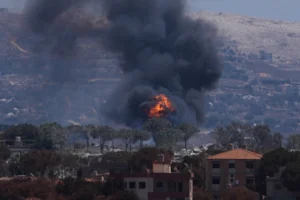
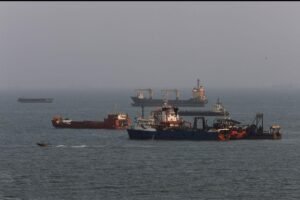
The situation has also affected international energy markets. Shipping through the strategically important Strait of Hormuz has fallen sharply, with Iran threatening to prevent unauthorised oil tankers from passing through the waterway.
Iran has further warned that it could halt oil exports from the Gulf entirely if the economic confrontation escalates.
Diplomatic efforts are continuing despite the increasingly aggressive rhetoric.
Pakistan’s army chief, Field Marshal Asim Munir, is scheduled to visit Tehran as Islamabad seeks to help revive efforts to end the conflict between Iran and the United States.
According to Pakistani and Iranian officials, Munir’s discussions are expected to include the proposed US sanctions, regional security and ongoing diplomatic efforts.

Egypt is also attempting to revive negotiations between Washington and Tehran.
Egyptian Foreign Minister Badr Abdelatty held discussions with his Iranian counterpart, Abbas Araghchi, on efforts to return the two sides to the negotiating table. The talks also covered ongoing Iranian-Omani discussions.
The Strait of Hormuz remains at the centre of the confrontation because of its importance to global energy supplies.
Iran has facilitated the passage of some ships carrying Iraqi oil, according to Iraqi and Iranian officials, although details about the number of vessels involved remain unclear.
Meanwhile, France and Saudi Arabia are discussing alternative trade and energy routes that could reduce dependence on the strait. Proposals include expanding the use of Omani ports, increasing oil pipeline capacity and developing new rail connections between the Middle East and Europe.
Elsewhere in the region, Israel carried out strikes in Syria and Gaza.
A drone strike in the southwestern Syrian village of Beit Jin reportedly wounded a person. Syria condemned the attack as a violation of its sovereignty, while the Israeli military said it had targeted a person involved in preparing attacks against Israel.
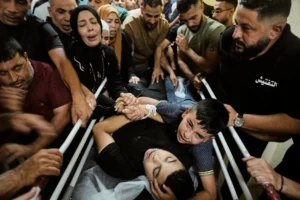
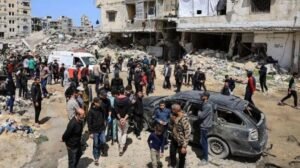
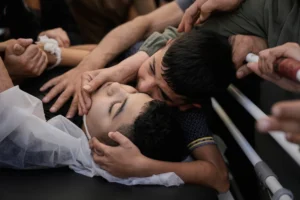
In Gaza, an Israeli strike on the backyard of a house in central Gaza killed one Palestinian and wounded another, according to health officials at Al-Aqsa Martyrs Hospital. The Israeli military said the target was Sharif al-Hasanat, whom it described as a Hamas commander.
With sanctions, oil shipments, military threats and diplomatic manoeuvring all unfolding simultaneously, the latest developments have added to fears that the Middle East crisis could widen further despite ongoing attempts to restore negotiations.