
World News
US Unleashes ‘Greatest Financial Offensive Ever’ Against Iran, Bessent Says

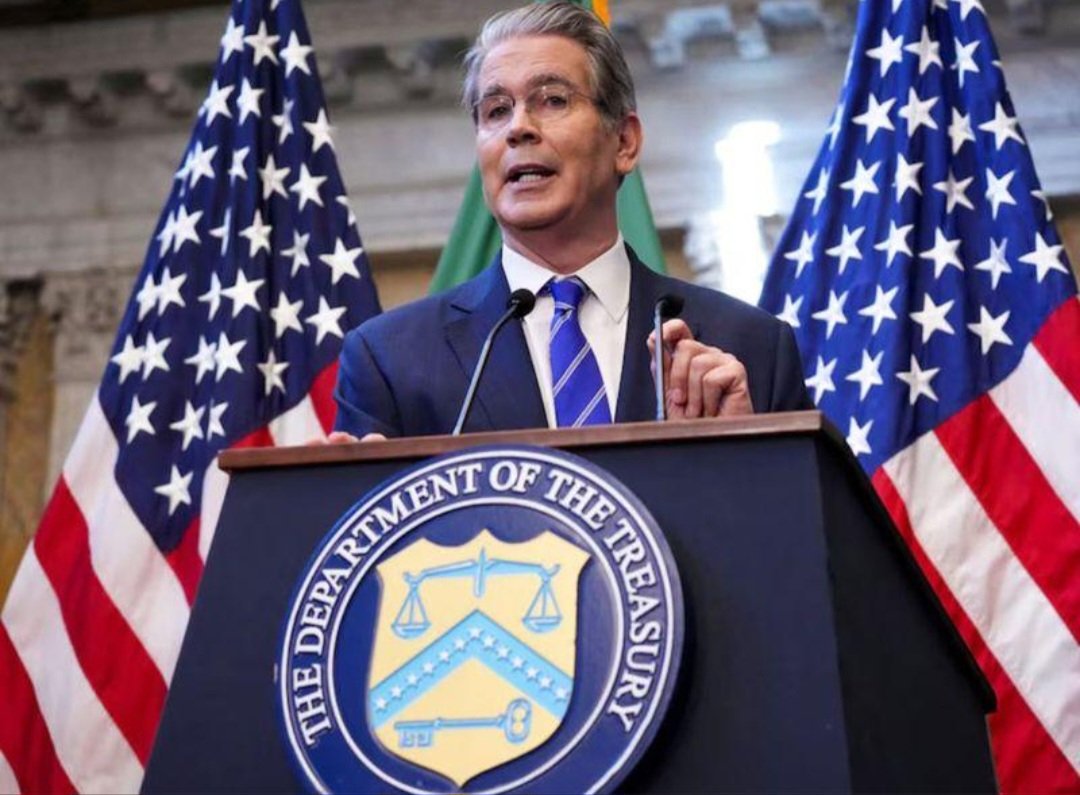
The United States is preparing to launch what Treasury Secretary Scott Bessent has described as the “single greatest financial offensive ever marshalled against an adversary”, as Washington intensifies economic pressure on Iran amid the continuing conflict between the two countries.
Bessent said the new campaign, dubbed “economic D-Day” by the Trump administration, is designed to sever Iran’s remaining financial lifelines and isolate Tehran from the international economy.

In an opinion article published in the Financial Times, Bessent said the United States was entering the “endgame” in its campaign against Iran and warned countries and businesses that continue supporting Tehran’s economy that they could face consequences.
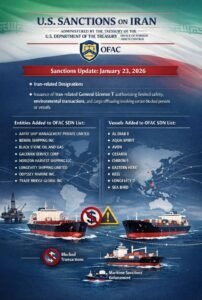
The Treasury Department is expected to expand the use of secondary sanctions, targeting countries, companies and financial institutions that continue doing business with Iran.
A source familiar with the plans told Reuters that Washington intends to make clear that countries must choose between maintaining economic ties with Iran and retaining access to the US dollar-based financial system.
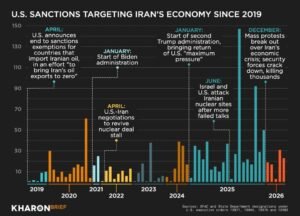
The measures are expected to focus particularly on Iran’s oil trade and the networks Tehran has used to circumvent years of American sanctions.
China, which remains a major buyer of Iranian oil, is likely to be among the countries most closely watching the new measures. Washington has previously sanctioned Chinese entities involved in Iranian oil purchases, but tougher action against Chinese banks could have wider consequences for US-China relations.
Tehran has responded defiantly to the US threat.
Mohsen Rezaei, secretary of Iran’s Supreme National Security Council, warned that Iran could halt all oil exports from the Gulf if what he described as an economic war against the country continues.
He also said countries that participate in or support the US sanctions campaign would be considered enemies by Iran.
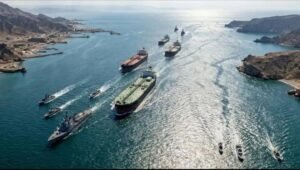
The warning has raised concerns over the already tense situation around the Strait of Hormuz, a crucial global energy route through which a significant share of the world’s oil trade normally passes.
Traffic through the waterway has already been severely disrupted by the conflict, putting additional pressure on global energy markets.
The economic pressure is already being reflected in Iran’s financial markets.
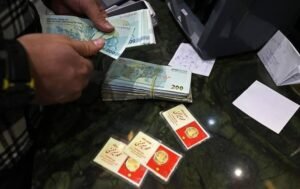
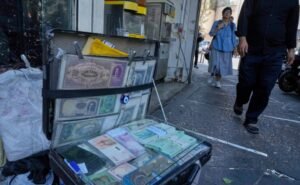
The Iranian rial fell to a record low against the US dollar on Monday, trading at roughly 1.99 million rials to $1, according to MarketWatch. The currency has been battered by inflation, the prolonged conflict and uncertainty over the country’s ability to maintain access to foreign currency and international trade.
The new sanctions could add further pressure to Iran’s economy by restricting access to international banking, oil revenues and other sources of foreign exchange.
The Trump administration is seeking to make the sanctions campaign broader than previous US measures by putting pressure not only on Iran itself but also on countries and companies that provide Tehran with economic support.
Bessent has urged countries dealing with Iran to reconsider their relationships with Tehran, warning that continued support could jeopardise their access to global capital and the US financial system.
The approach represents a shift toward economic pressure after months of military confrontation. The US and Israel have severely damaged parts of Iran’s military and nuclear infrastructure, while Iran retains missile and drone capabilities and continues to threaten US interests and regional shipping.
China is particularly important to the US strategy because it has remained Iran’s most significant oil customer.
Beijing has rejected unilateral US sanctions and argued that pressure and sanctions cannot resolve the conflict. Tougher measures against Chinese companies or financial institutions could therefore trigger another major dispute between Washington and Beijing.
For now, Washington appears determined to increase the cost of doing business with Tehran and force Iran’s remaining economic partners to choose between maintaining ties with Iran and preserving access to the US-led financial system.
The result could have consequences well beyond Iran, particularly for oil prices, shipping through the Gulf and relations between the United States and major economic powers.