
General News
Bagudu To Media: Probe Budget Insertions, Help Nigerians Understand Tinubu’s Reforms

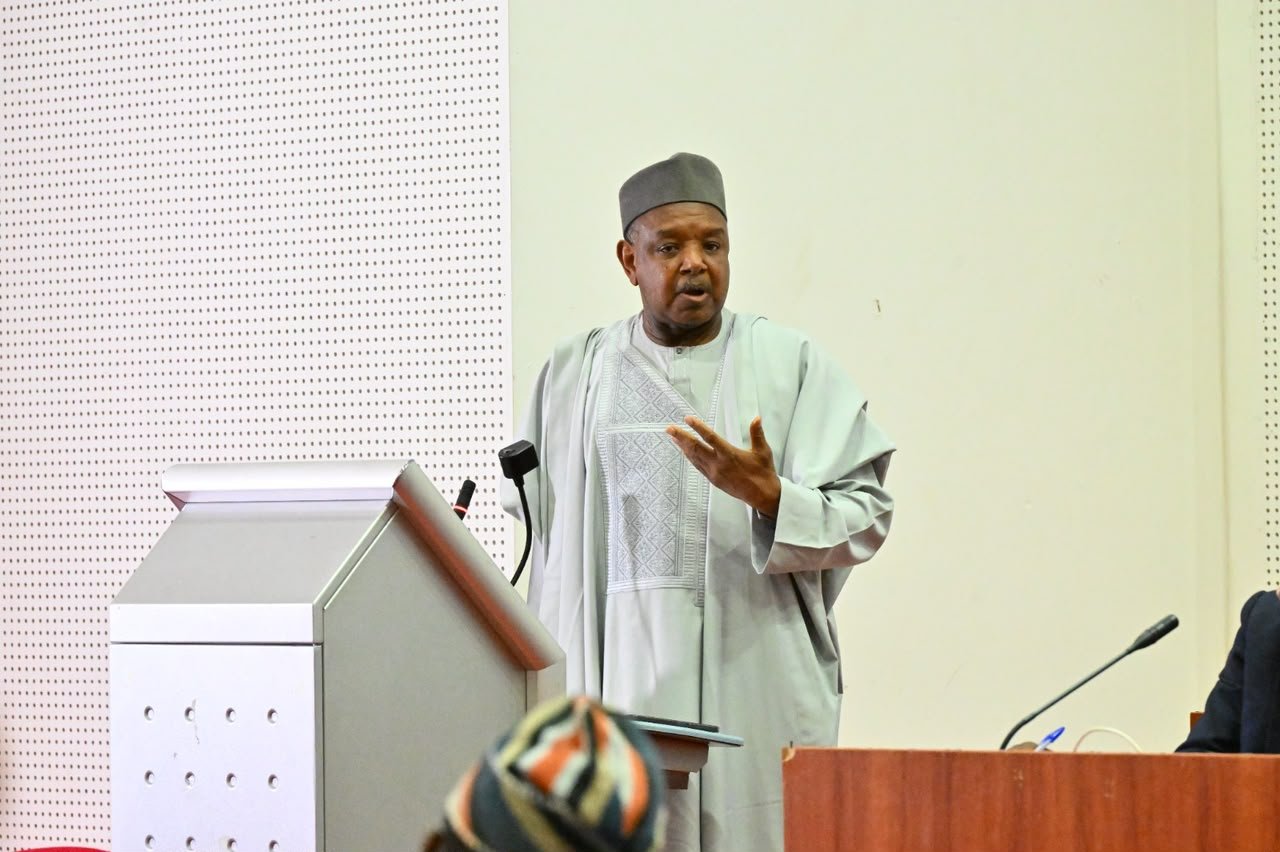
The Minister of Budget and Economic Planning, Senator Abubakar Atiku Bagudu, has urged journalists to intensify scrutiny of the national budget while providing Nigerians with the context needed to understand the Federal Government’s economic and development priorities.
Bagudu made the call at the Senate Press Corps Capacity Building Workshop, themed, “Leveraging Legislative Oversight and Media Collaboration to Safeguard the National Budget from Unlawful Insertion.”
He said journalists should move beyond simply flagging controversial budget provisions and investigate their origins, purposes, beneficiaries and compliance with the constitutional budget process.
According to the minister, proper scrutiny requires journalists to ask critical questions before concluding that an allocation amounts to an unlawful insertion.
“Human processes and human errors” were inevitable, he said, making vigilance by both the media and legislative oversight institutions essential.
Bagudu cited allocations for water projects in underserved communities and equipment for fishing communities as examples of provisions that could appear questionable without adequate understanding of the local needs they were designed to address.
He nevertheless stressed that the need for scrutiny remained important, urging the media to hold public institutions accountable through evidence based reporting.
The minister also called for a wider national conversation on the size of Nigeria’s budget, revenue mobilisation and the level of public investment required to address the country’s development needs.
He said Nigeria’s relatively limited fiscal space, compared with its population and development challenges, raised fundamental questions about how the country could mobilise more resources to finance development.
Bagudu said the debate was particularly relevant to President Bola Ahmed Tinubu’s Renewed Hope Agenda and the administration’s ambition of building a $1 trillion economy, within the broader framework of Nigeria’s Agenda 2050.
“Should we continue with a budget that leaves our populace with one of the smallest budgets, or should we consider how we can mobilise more resources?” he asked.
The minister further reminded journalists of the constitutional powers of the National Assembly in the budget process, saying the legislature has ultimate authority over the national budget within Nigeria’s constitutional democracy.
He called for greater public understanding of the respective roles of the Executive and legislature, particularly in the formulation, consideration and approval of annual budgets.
Bagudu also cautioned against treating recurrent expenditure as inherently less important than capital spending.
He said expenditure on security, education, healthcare, human capital and public sector personnel could contribute directly to development, depending on the outcomes achieved.
On debt servicing, he said government’s obligations must be honoured because failure to do so could increase borrowing costs and eventually affect private sector operators.
The minister also addressed the issue of budget transparency, saying the public’s right to information must be balanced with considerations of national security and strategic interests.
He urged journalists to maintain rigorous oversight without losing sight of the broader development challenges confronting the country.
“How careful are we to ensure that, while insisting on holding public officials to account, we do not lose sight of the bigger picture?” Bagudu asked.
He said the media could play a central role in helping Nigerians understand the difficult choices involved in financing development, particularly in sectors such as education, security, roads and water.
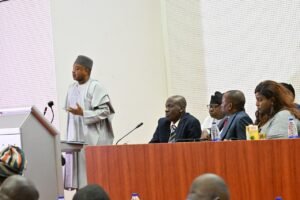
Bagudu maintained that achieving meaningful economic transformation would require sustained government action as well as public understanding and participation, urging the media to keep the country’s development priorities at the centre of its coverage.