
Disaster/Tragedy
Faulty Signals and Poor Communication Behind Deadly Jakarta Train Collision

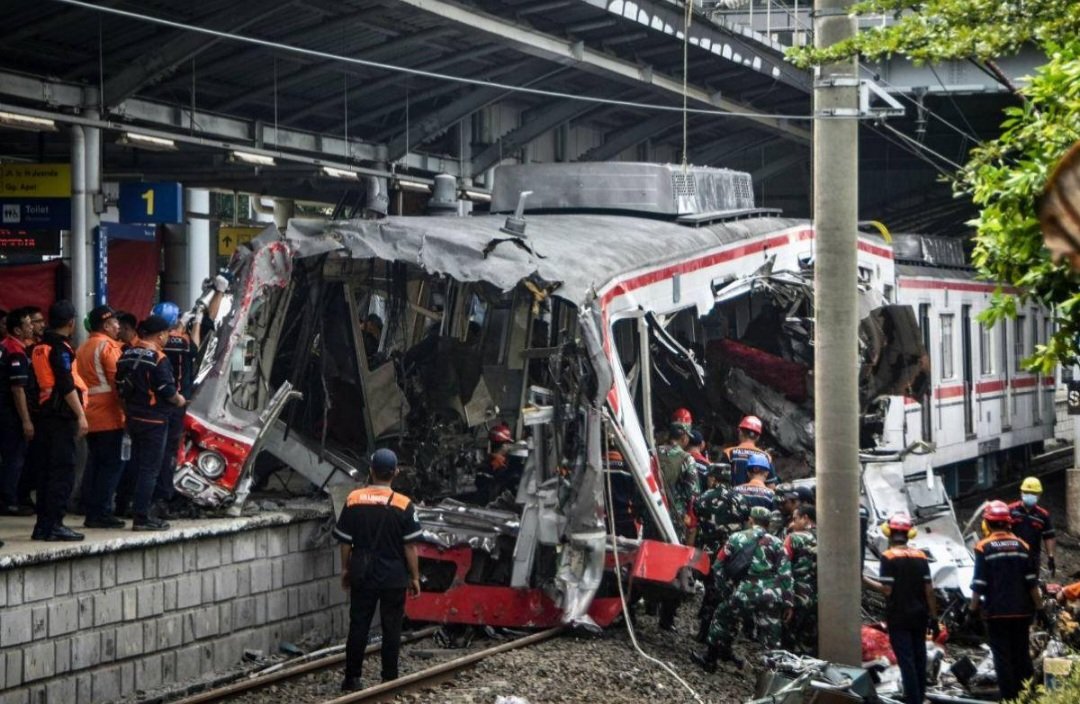
Signal-system failures and communication problems were the main causes of a deadly train collision near Indonesia’s capital Jakarta in April that killed 16 people and injured 107, investigators have found.
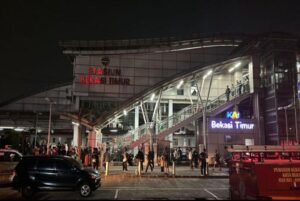
The collision occurred on April 27 in Bekasi, just outside Jakarta, when a long-distance passenger train collided with a commuter train near Bekasi Timur station.
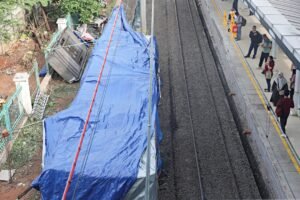
According to Indonesia’s Transportation Safety Committee, known as KNKT, the commuter train had stopped after an earlier incident involving an electric taxi at a nearby crossing. The long-distance train subsequently approached the area after receiving a green departure signal.
Investigators found a signalling fault between Bekasi and Bekasi Timur stations meant the driver of the long-distance train did not receive a yellow warning signal indicating that the next signal was red.
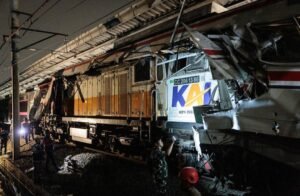
The report said the absence of that warning allowed the train to continue towards the occupied section of track, contributing to the collision. Investigators also found that the signalling problem had not been identified during an earlier design review and had continued into daily operations.
Communication failures compounded the problem. It took three minutes and 20 seconds for the railway operation control centre to receive information from the commuter train driver about the earlier incident involving the taxi. The control centre also had difficulty hearing the driver’s transmission clearly.
The Indonesian investigation found that emergency information was not communicated through a standardised procedure between two control centres. Drivers also used individual calls rather than the emergency-call system, meaning an emergency notification was not automatically displayed to the relevant controller. Poor microphone quality further affected communications.
Investigators identified other contributing factors, including inadequate training for the long-distance train driver in situations requiring emergency braking. The report also cited poor visibility of railway signals because of surrounding light pollution and light scattering through damaged or impaired windshields.
The investigation found that the driver initially applied full-service braking because of concerns that emergency braking at high speed on a curve could increase the risk of derailment. Emergency braking was applied later. KNKT recommended additional tactical emergency-braking training for train crews.
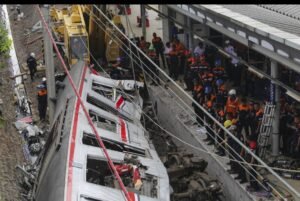
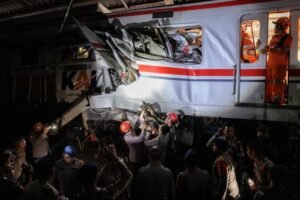
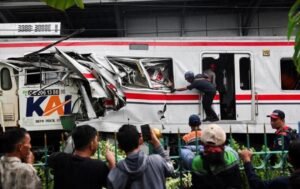
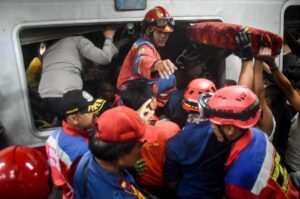
The collision occurred after the commuter train had been stopped following the taxi incident. Rescue teams had to cut through severely damaged carriages to reach passengers after the crash. Earlier reports said many of those killed were in a women-only carriage that bore the brunt of the impact.
The final investigation comes months after the crash, which prompted Indonesian President Prabowo Subianto to order a full investigation. The findings now point to a combination of technical, communication and operational shortcomings rather than a single failure.
The findings are expected to increase scrutiny of railway safety procedures, signalling infrastructure and emergency communication systems on Indonesia’s busy rail network. KNKT has recommended measures aimed at preventing similar failures and improving the ability of train crews and control centres to respond to emergencies.