
International
Boams, Flight Disruptions Rock Riyadh as Houthi-Saudi Conflict Escalates

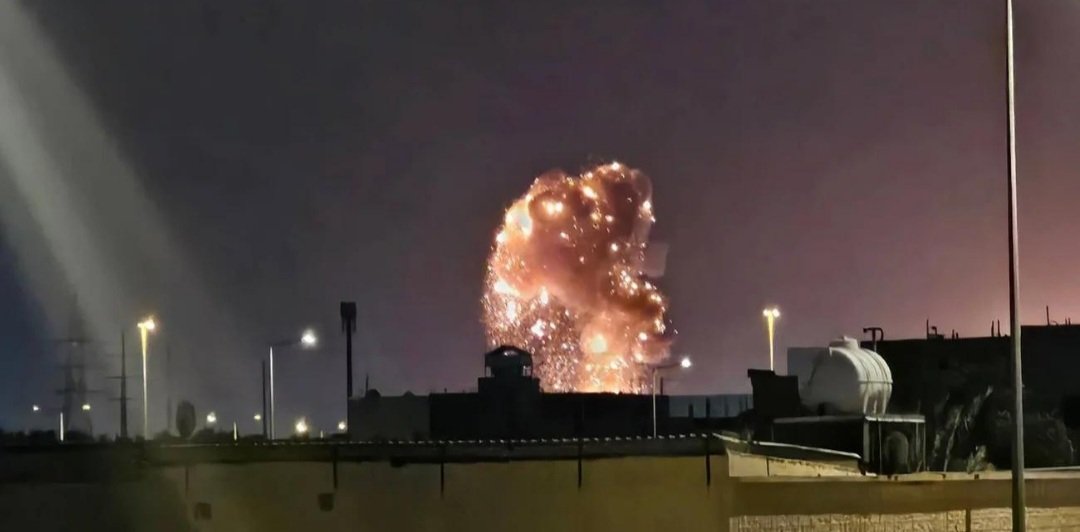
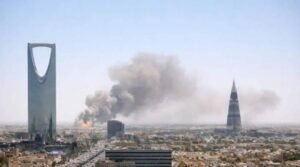
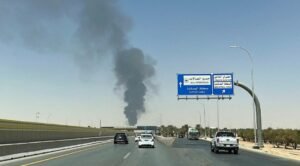
Several explosions were heard across Saudi Arabia’s capital, Riyadh, on Thursday as the conflict between Saudi-backed forces and Yemen’s Iran-aligned Houthi movement intensified, with the disturbances also disrupting operations at the city’s main international airport.
Witnesses reported loud blasts in Riyadh, including a major explosion at King Khalid International Airport. The Houthis claimed they had launched a ballistic missile at the airport, saying it struck its intended target and disrupted operations. Saudi authorities had not immediately confirmed that the latest blast was caused by a Houthi missile.
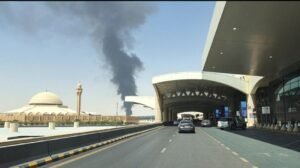
The incident nevertheless caused significant disruption to air travel. Flight-tracking service FlightRadar24 reported that Riyadh’s airport had effectively closed, with no takeoffs for about 90 minutes and no landings for more than 80 minutes at one point. The Financial Times reported that more than 100 flights had been cancelled by Thursday, with 169 of 378 scheduled departures cancelled by mid-afternoon.
Air India and Air India Express also suspended flights to and from Riyadh until at least October 10 after an Air India flight travelling from Delhi to the Saudi capital was forced to turn back because of the security situation.
The latest developments came only a day after Saudi authorities said Houthi attacks on King Khalid International Airport and Abha International Airport had killed three people and injured 36 others. A Sudanese citizen was killed in the Riyadh attack, while two women, one Moroccan and one Algerian, were killed in the strike on Abha airport, according to Saudi aviation authorities.
The Houthis have also warned international airlines against continuing to operate through Saudi airspace, describing it as an area of military operations. The threat has added to concerns about the safety of commercial aviation as the fighting spreads beyond Yemen.
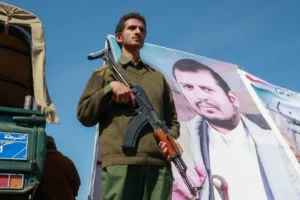
The renewed confrontation follows the collapse of a ceasefire that had largely kept the Saudi-Houthi conflict contained since 2022. The Houthis have expanded their presence along Yemen’s Red Sea coast and around the strategically important Bab el-Mandeb Strait, while Saudi-backed Yemeni government forces have launched a major counteroffensive to regain territory.

Saudi Arabia has sought assistance from regional allies as the fighting intensifies. Reuters reported that Riyadh has asked countries including Turkey and Pakistan for defensive or logistical support, while Syria is considering whether to provide assistance. The wider conflict is taking place against the backdrop of the continuing US-Iran war, increasing fears that the fighting could draw more countries into the confrontation.
The escalation is also raising concerns over energy and maritime security. The Bab el-Mandeb is a major shipping route linking the Red Sea with the Gulf of Aden and provides an important alternative route for Gulf energy exports while traffic through the Strait of Hormuz remains severely affected by the wider regional conflict.
More than 200,000 people have been displaced inside Yemen since the renewed fighting began, according to figures cited by Reuters, adding to an already severe humanitarian crisis.