
World News
Putin Courts African Leaders as Governments Pursue Their Own Strategic Interests

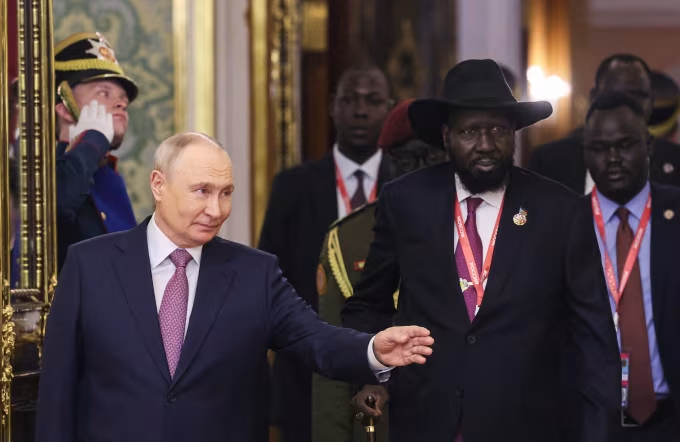
Russian President Vladimir Putin is seeking to strengthen Moscow’s influence across Africa, presenting Russia as a reliable alternative to Western powers. However, African governments are approaching the relationship with their own political, economic and security priorities rather than committing exclusively to the Kremlin.
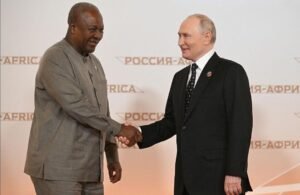
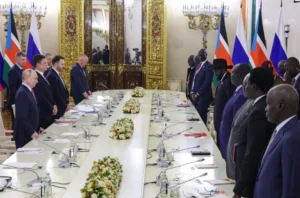
The competing interests were evident at the third Russia-Africa Summit held in Moscow on October 28 and 29, where delegations from 48 African countries participated, including 22 represented by heads of state.
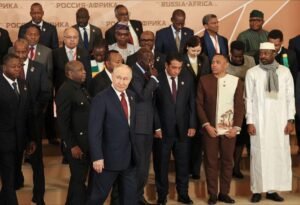
Putin used the gathering to promote Russia as a partner that respects African sovereignty and offers cooperation without what he described as the exploitative practices of former colonial powers.
He accused Western countries of exploiting Africa’s natural resources and using debt to restrict the continent’s development, while presenting Russian cooperation as a relationship based on mutual benefit, technology transfer and local job creation.
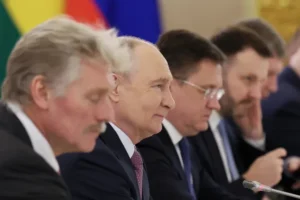
The Russian president also called for stronger African representation in international institutions, including the International Monetary Fund and the World Bank, while promising expanded cooperation in trade, agriculture, energy, technology and security.
The summit forms part of Moscow’s broader effort to strengthen international partnerships as its war in Ukraine continues and Western sanctions remain in place.
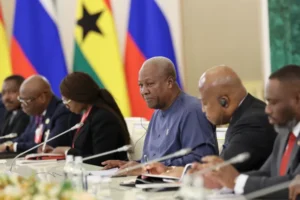
However, analysts say African leaders are not simply choosing between Russia and the West. Instead, many governments are pursuing what experts describe as diversified non-alignment, maintaining relationships with different global powers to secure investment, military assistance, agricultural supplies and diplomatic support.
Tighisti Amare, director of the Africa Programme at Chatham House, told CNN that African governments have different reasons for engaging Moscow. While some are seeking security assistance, others are interested in energy investment, agricultural supplies and diplomatic cooperation.
Will Brown, an Africa policy specialist at the European Council on Foreign Relations, also argued that African governments are using growing competition among international powers to improve the offers they receive from established partners.
Russia has expanded its security presence in parts of the Sahel, particularly Mali, Burkina Faso and Niger, where military-led governments have turned towards Moscow after relations with some Western partners deteriorated.
The Kremlin’s military presence has grown through the Africa Corps, a force operating under Russia’s Defence Ministry that assumed much of the role previously played by the Wagner Group.
Russia has also pursued security partnerships with other African countries, offering military training, equipment and defence cooperation. At the Moscow summit, Putin said Russia had military and military-technical cooperation agreements with 45 African countries.
Nevertheless, the results of these partnerships have varied. Although Russian forces have supported some governments facing armed insurgencies and political instability, security challenges have persisted in several countries where Moscow has expanded its presence.
The economic relationship also reveals a gap between Russia’s ambitions and its current position on the continent.
Putin said Russia’s trade with Africa reached approximately $27 billion in 2025 and announced a new target of exceeding $50 billion. However, the figure remains considerably below the continent’s trade with China and the European Union.
China-Africa trade reached approximately $348 billion in 2025, while trade between the EU and Africa stood at about $395 billion, highlighting the scale of competition facing Moscow.
Agriculture remains one of Russia’s strongest areas of engagement. Putin highlighted grain and fertiliser supplies to African countries, presenting them as contributions to food security. Energy cooperation is another area of interest, including Russia’s involvement in Egypt’s El Dabaa nuclear power plant through state-owned nuclear company Rosatom.
However, analysts say that turning summit declarations into lasting economic benefits will require actual investment, clear implementation plans, infrastructure and skills development.
There are also concerns surrounding Russia’s military recruitment activities. Amnesty International has documented cases of African nationals allegedly being deceived or coerced into joining Russian forces and sent to fight in Ukraine. Moscow has denied involvement in unlawful recruitment, maintaining that foreign nationals can voluntarily enlist.
The summit concluded with a joint declaration and a new 2027–2029 Russia-Africa action plan covering areas including trade, security, energy, agriculture, healthcare, education and technology.
While the agreements provide a framework for closer cooperation, their success will depend on whether the commitments translate into funded projects and measurable outcomes.
For African governments, the growing interest of Russia and other international powers presents opportunities to negotiate partnerships that serve national interests. But it also requires careful consideration of the economic, diplomatic and security consequences of those relationships.
Putin may be seeking stronger African backing as Moscow faces international pressure, but the calculations of African leaders suggest that their engagement with Russia is part of a wider effort to preserve strategic flexibility and extract practical benefits from competing global powers.