
International
Gloria Steinem, Feminist Icon and Co-Founder of Ms. Magazine, Dies at 92

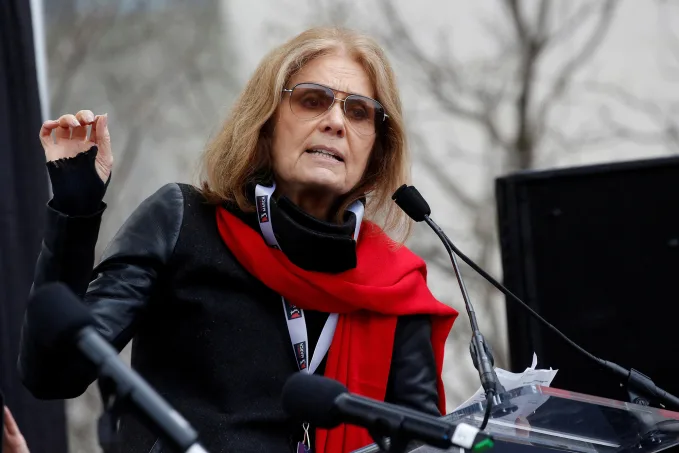
Gloria Steinem, the pioneering journalist, author and activist who became one of the most recognizable leaders of the modern feminist movement, has died at the age of 92.
Steinem died peacefully at her home in New York City on September 2, 2026, surrounded by people close to her, according to a statement from her foundation. No cause of death was disclosed.
For more than six decades, Steinem used journalism, public speaking and political organizing to campaign for women’s equality, reproductive rights, economic opportunity and an end to discrimination against women.
Her death marks the passing of one of the defining figures of the U.S. women’s movement of the 20th century.

Born in Toledo, Ohio, in 1934, Steinem initially established herself as a journalist. Her career took a major turn in 1963 when she went undercover at a Playboy Club and wrote about the working conditions and treatment of women employed there.
The resulting article, “A Bunny’s Tale,” brought her national attention and helped establish her as a journalist willing to expose sexism and discrimination.
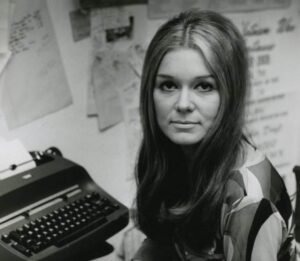
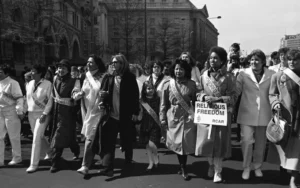
By the late 1960s and early 1970s, Steinem had become increasingly involved in the women’s liberation movement. She travelled extensively across the United States, speaking at universities, community centres, rallies and political gatherings.
Her ability to combine journalism with activism helped make feminism a mainstream political and social issue.
One of Steinem’s most enduring contributions was Ms. magazine, which she co-founded in 1971 alongside other feminist writers and activists.
The publication gave women a platform to discuss subjects that were often ignored or inadequately covered by mainstream media, including reproductive rights, workplace discrimination, domestic violence and gender inequality.
Ms. later became more than a magazine, developing into an important institution within the women’s movement.
Steinem also helped establish the National Women’s Political Caucus and the Ms. Foundation for Women, further expanding her influence beyond journalism.
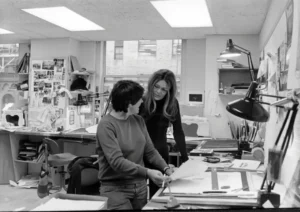
Steinem became particularly prominent in campaigns for reproductive freedom and gender equality.
She also advocated for greater political participation by women and spoke about issues ranging from sexual harassment and workplace discrimination to violence against women.
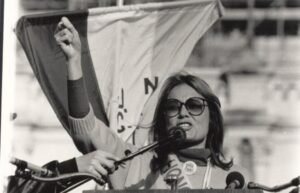
Her activism continued long after the peak of second-wave feminism. She remained involved in public debates and women’s rights campaigns well into her 80s, including appearing at the massive 2017 Women’s March in Washington.
Steinem’s influence eventually earned recognition from the highest levels of American public life.

In 2013, President Barack Obama awarded her the Presidential Medal of Freedom, one of the country’s highest civilian honours.
She also authored several books, including My Life on the Road, reflecting on her decades of travelling, activism and encounters with women and communities across America.

Despite her fame, Steinem frequently emphasized collective activism rather than portraying herself as the sole leader of the feminist movement.
Tributes began emerging following news of her death, with fellow activists and public figures remembering Steinem as a transformative figure whose work helped change how women were represented in American politics, journalism and society.
Former U.S. Secretary of State Hillary Clinton described Steinem as a powerful force whose work helped open doors for generations of women.
Ms. Magazine also paid tribute to its co-founder, describing her life as one that transformed journalism, feminism and the possibilities women could imagine for themselves.

Steinem’s death comes at a time when many of the issues she spent decades campaigning over reproductive rights, gender equality, political representation and workplace discrimination, remain subjects of intense debate in the United States and beyond.
For supporters, her legacy is not simply the list of organisations she helped establish or campaigns she joined, but the generations of women she encouraged to speak, organise and demand a greater voice in public life.