Security
Nigeria and Türkiye Forge Strategic Defence Partnership at Antalya Diplomacy Forum 2026

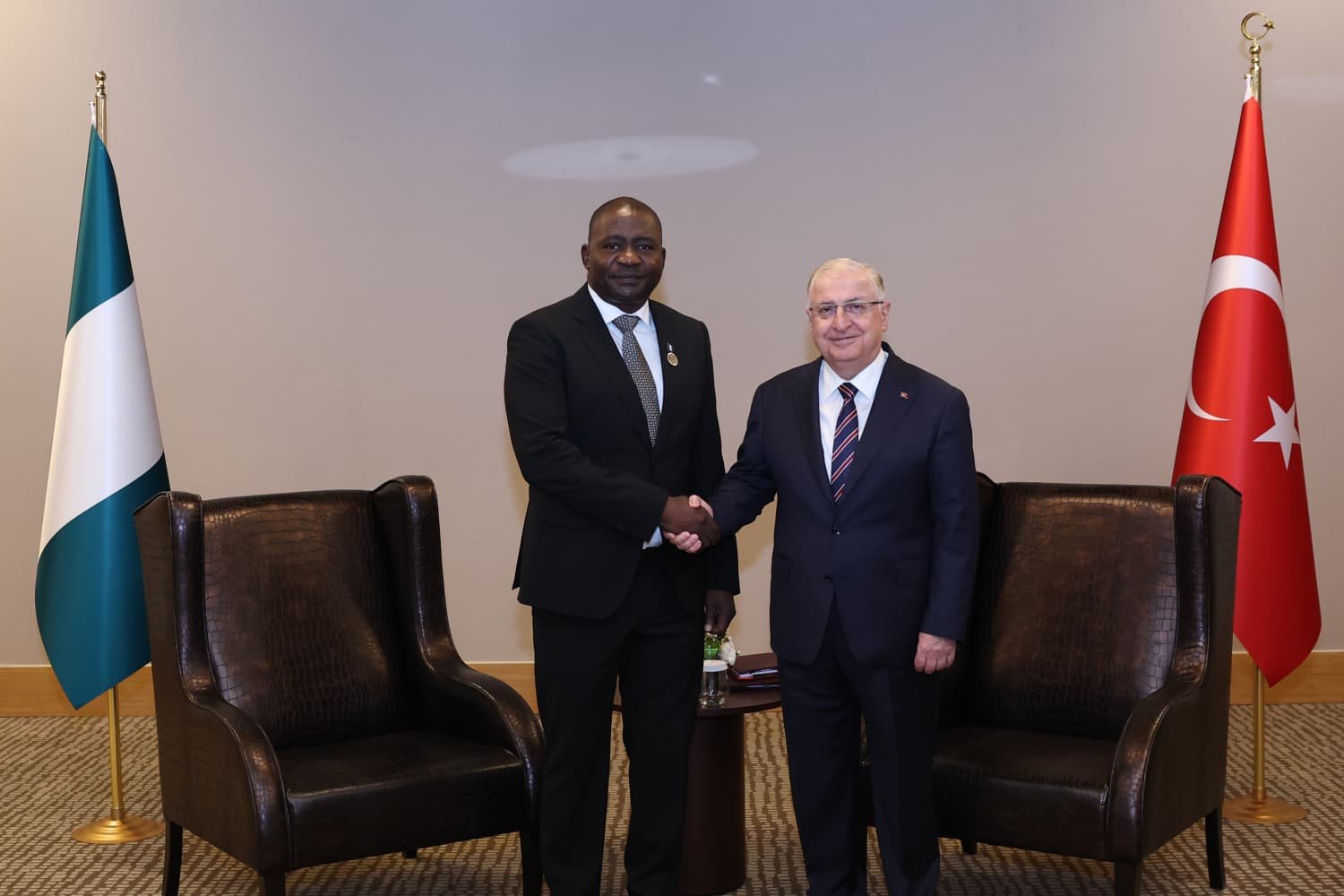
Nigeria and Türkiye have agreed on a comprehensive strategic defence partnership covering major training, technology transfer, and maritime plans following high-level bilateral talks at the Antalya Diplomacy Forum 2026. In a statement, the Chief Information Officer (CIO) of the Ministry of Defence, Queeneth Iheoma-Hart, disclosed that the Honourable Minister of Defence, General Christopher Gwabin Musa (Retd.), OFR, led a high-level Nigerian delegation to a productive meeting with the Turkish Minister of Defence. The delegation included the Chief of the Air Staff, the Chargé d’Affaires of the Nigerian Embassy, the Defence Adviser, and senior officials from the Ministry of Defence and the Nigerian Embassy in Türkiye.
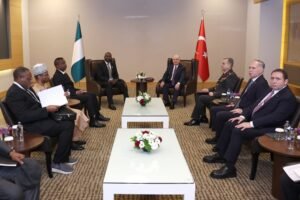
The meeting reaffirmed the longstanding and mutually beneficial relationship between both nations and produced a series of practical, outcome-driven agreements aimed at strengthening Nigeria’s defence capabilities and supporting the Renewed Hope Agenda of President Bola Ahmed Tinubu, GCFR. Key outcomes included training and capacity development, with Türkiye proposing structured, scalable training programmes for Nigerian armed forces in areas including Special Forces operations, counterterrorism, intelligence integration, counter-drone and counter-IED operations, and UN pre-deployment training. Immediate deployment of an initial cohort to Türkiye was agreed, alongside Turkish language instruction and participation in field training exercises. Both parties agreed to establish a major military training facility in Nigeria as a long-term centre of excellence; Nigeria will provide a temporary training site and has identified a suitable coastal location for permanent infrastructure.
On defence industry and technology transfer, both sides committed to partnerships that include technology transfer, maintenance training and co-development opportunities, leveraging platforms such as IDEF 2026 to deepen institutional links and promote indigenous capability building. Regarding operational support and equipment, Türkiye expressed readiness to support Nigeria with advanced surveillance, unmanned aerial platforms, satellite-enabled monitoring, counter-drone and counter-IED systems, and specialised air and ground platforms including infantry fighting vehicles adapted to Nigeria’s operational environment. For border and internal security, both sides agreed to begin immediate technical engagements to define and implement integrated border management, enhanced intelligence sharing and coordinated responses to technologically sophisticated non-state threats.
Türkiye also offered to share best practices in reintegration programmes to support Nigeria’s management of surrendered combatants and long-term community reintegration under disarmament and rehabilitation. On air force and aviation support, commitments were made to strengthen maintenance systems, supply chains, lifecycle support and training to expand operational flight hours and enhance air readiness, including potential acquisition and sustained support for helicopters and unmanned systems. For naval cooperation, Nigerian naval representatives will engage Turkish counterparts to inspect and evaluate suitable naval platforms and pursue specialised maritime training to enhance maritime domain awareness and operational effectiveness. Both sides agreed a phased, practical implementation approach for infrastructure, with Nigeria to make available appropriate land, preferably coastal, for training and operational facilities to support the agreed programmes.
“The outcomes of this engagement mark a significant step forward in Nigeria–Türkiye defence relations,” said General Musa. “We are committed to delivering tangible, measurable results that strengthen our national security and advance the Renewed Hope Agenda. Nigeria looks forward to timely implementation of the initiatives agreed in Antalya.” Queeneth Iheoma-Hart further noted that proposals and agreements from the meeting will be formally documented and processed through appropriate channels for timely implementation. Iheoma-Hart added that immediate actions include commencement of initial training deployments, technical exchanges on border surveillance, and planning for the development of temporary and permanent training facilities in Nigeria.