General News
Osinbajo Storms Bayelsa, Backs Diri’s Projects in Show of Cross-Party Alignment

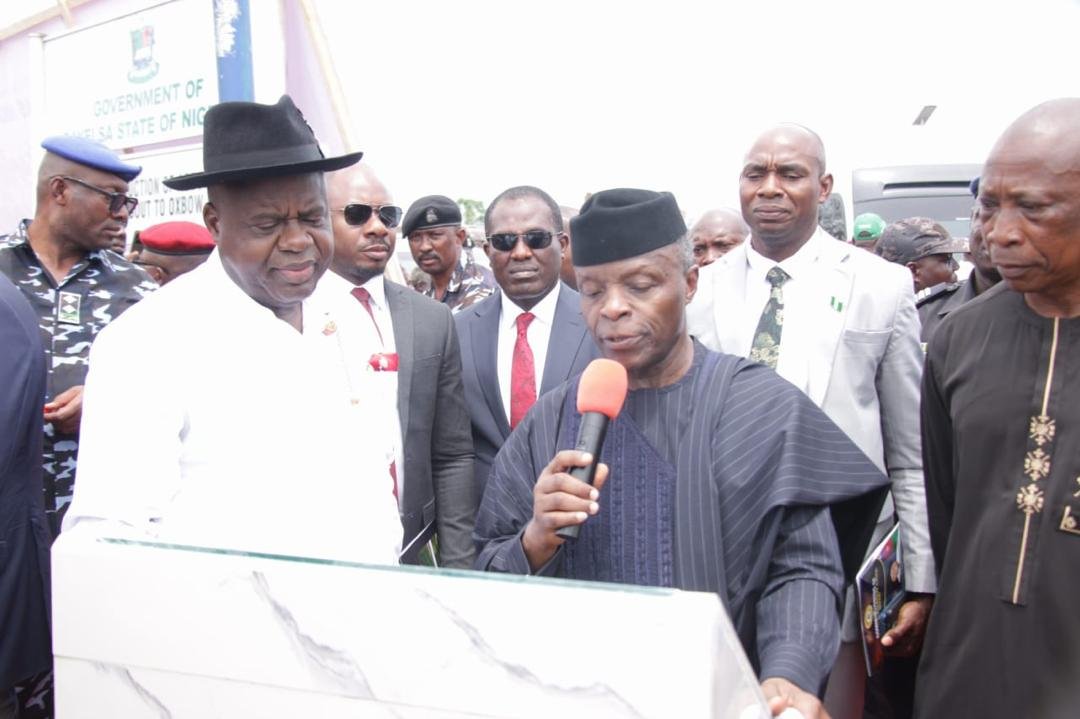
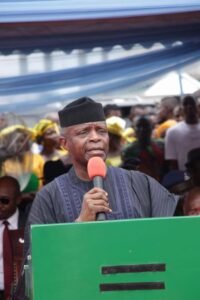
Former Vice President Yemi Osinbajo on Monday stepped into Bayelsa’s political space, commissioning key infrastructure projects and openly praising Governor Douye Diri in what observers see as a notable moment of cross-party alignment.
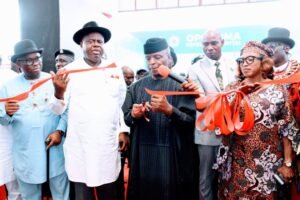
Osinbajo, a leading figure in the All Progressives Congress (APC), was in the oil-rich state to inaugurate the Agbura–Oxbow Lake Road and the Oporoma Referral Hospital in Southern Ijaw Local Government Area.
At the event, he commended the Diri administration, which belongs to the opposition Peoples Democratic Party (PDP), for delivering what he described as impactful infrastructure despite the challenging riverine terrain.
“This is clearly a transformational project,” Osinbajo said of the road, noting that it would open up remote communities, improve access to key institutions, and stimulate economic activity across the state.

His remarks and presence have sparked political interpretations, given Nigeria’s often sharply divided party lines. Analysts say the visit signals a rare bipartisan gesture, especially at a time when political actors are beginning to position ahead of future electoral contests.
Osinbajo also reflected on his earlier visit to the state in 2022, when he flagged off the Angiama–Oporoma Bridge project, admitting he had been uncertain about its feasibility due to the difficult terrain. He expressed satisfaction that the project had since been successfully executed.
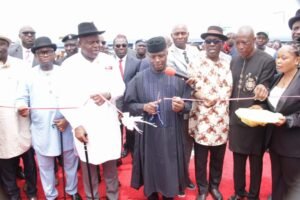
Governor Diri, in his response, described the projects as part of a broader effort to connect isolated communities and drive inclusive development. He added that the infrastructure had already generated employment for local youths and would enhance healthcare access in underserved areas.
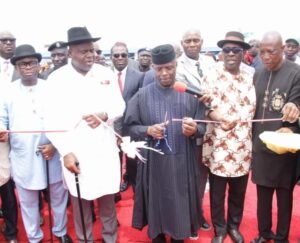
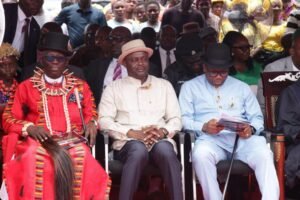
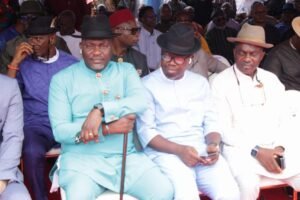
The commissioning drew government officials, community leaders, and residents, with many hailing the projects as long-awaited interventions in the riverine region.
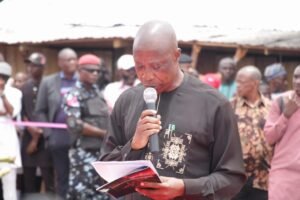
Beyond the infrastructure, however, Osinbajo’s visit is likely to resonate politically, reinforcing conversations around cooperation across party lines and the evolving dynamics of Nigeria’s political landscape.