General News
PRESIDENT TINUBU RETURNS TO ABUJA AFTER AQABA PROCESS COUNTER-TERRORISM MEETING IN ROME

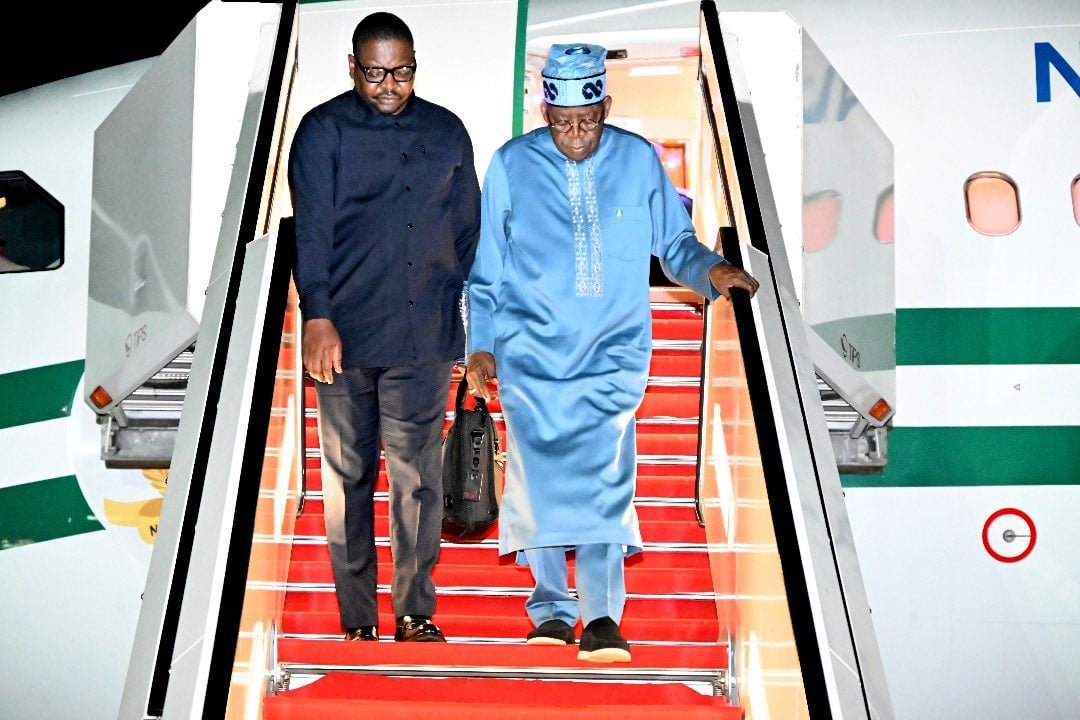
President Bola Tinubu has returned to Abuja after participating in the Aqaba Process Heads of State and Government-level Meeting in Rome, Italy. The meeting aimed to enhance regional and international collaboration against terrorism and violent extremism, with a focus on West Africa.
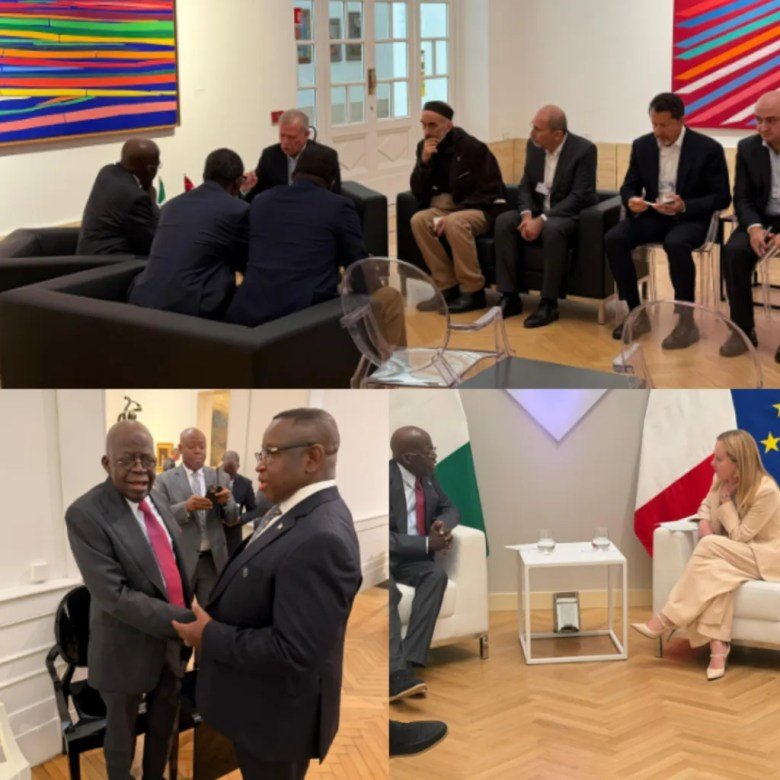
In a statement, Special Adviser to the President on Information and Strategy, Bayo Onanuga, confirmed the President’s return and detailed the proceedings. Onanuga stated that the Aqaba Process is a counter-terrorism initiative launched by His Majesty King Abdullah II of Jordan in 2015 and is co-chaired by the Hashemite Kingdom of Jordan and the Government of Italy. The high-level meeting was held on Wednesday, October 15, at the National Gallery of Modern and Contemporary Art in Rome and included attendance from numerous heads of State and Government, such as King Abdullah II of Jordan, Italian Prime Minister Giorgia Meloni, and the Presidents of Nigeria, Chad, Paraguay, Sierra Leone, and Togo. Other participants included Azouz Nasri, President of Algeria’s Upper House, delegations from Côte d’Ivoire, Kazakhstan, Mauritania, Senegal, and Uzbekistan, special envoys, and security experts.
Onanuga noted that the meeting was conducted behind closed doors to facilitate candid discussions. On the sidelines of the event, President Tinubu engaged in bilateral meetings with Italian Prime Minister Giorgia Meloni and U.S. President Donald Trump’s Senior Adviser on Arab and African Affairs, Massad Boulos. Additionally, the President met with the Vatican’s Secretary of State, Cardinal Pietro Parolin, to address religious harmony in Nigeria and counter disinformation campaigns that inaccurately depict the country as intolerant of religious diversity. Onanuga emphasized that the Aqaba Process has convened 33 meetings since 2015, spanning from Heads of State summits to technical expert sessions, and is built on three core pillars: prevention, coordination, and closing operational gaps in counterterrorism efforts.