
International
Student-Led Anti-Government Protest Turns Violent in Albania as Demonstrators Demand PM’s Resignation

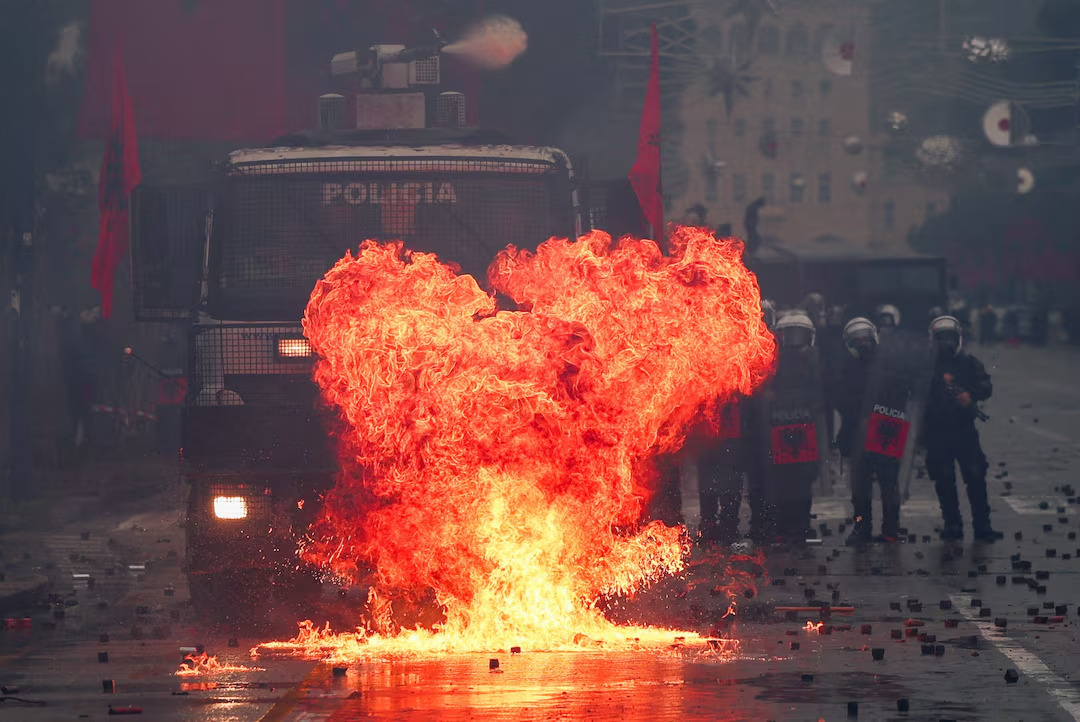
Violence erupted in Albania’s capital, Tirana, on Saturday as thousands of students and other demonstrators took to the streets demanding the resignation of Prime Minister Edi Rama, escalating months of anti-government protests.
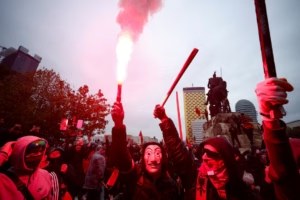
The demonstrations, which coincided with Albania’s 114th Independence Day, saw protesters throw stones and petrol bombs at riot police, while some masked demonstrators attempted to smash windows and damage government buildings.
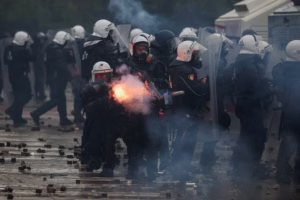
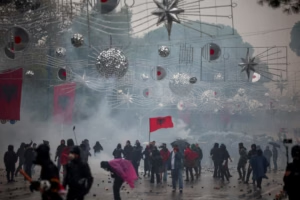
Security forces responded with tear gas, water cannon and rubber bullets to disperse the crowds as clashes spread across several streets in the capital.
The rally was part of a growing protest movement that has increasingly challenged Rama’s government, with demonstrators accusing the administration of corruption, failing to provide adequate educational opportunities and allowing living conditions to deteriorate.
Protesters gathered at Skanderbeg Square, Tirana’s main public square, chanting for the prime minister’s resignation. Some travelled from other parts of Albania and abroad to participate in the demonstration.
One banner displayed during the rally carried the message, “Albania is not for sale”, reflecting opposition to a controversial luxury tourism development on the country’s southern coast linked to an investment firm founded by Jared Kushner, US President Donald Trump’s son-in-law.
The development initially triggered months of demonstrations in May, with critics raising concerns about its environmental impact and the alleged influence of powerful business interests.
The protests later expanded into a student-led movement in September, with young demonstrators demanding improvements in education, better university facilities, reduced financial burdens and greater employment opportunities.
The demonstrations have since developed into a broader campaign against the government, with protesters increasingly calling for Rama to step down.
The prime minister, who has been in power since 2013 and secured a fourth term last year, faces growing public dissatisfaction over allegations of corruption, unemployment and economic hardship.
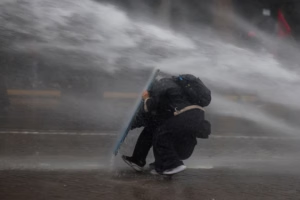
Some demonstrators have also criticised the country’s established political parties, arguing that they have failed to address the needs of ordinary citizens.
A 33-year-old protester, Arian Lleshi, who travelled from the United Kingdom to attend Saturday’s demonstration, said Albanians had suffered for too long and were increasingly scattered across Europe and other parts of the world in search of better opportunities.
Student demonstrator Juna Vasili also called for a fundamental change to the political system, saying the protesters had gathered to demand their rights and an improvement in living conditions.
Rama’s administration has rejected allegations of corruption and called for dialogue with protesters over their concerns.
The government has also introduced measures, including cheaper fuel and additional financial support for poorer households, in an attempt to ease public frustration.
Rama has defended the controversial coastal development, describing it as legal and promising that environmental protections would be maintained.
However, the latest violence highlights the growing difficulties facing his administration as public anger spreads beyond the original student demands.
The unrest also comes as Albania continues its efforts to join the European Union by 2030, with concerns over corruption, governance and the rule of law remaining important issues in the country’s European integration process.