
General News
“The Military Destroyed Education in Nigeria’ Says Femi Osofisan

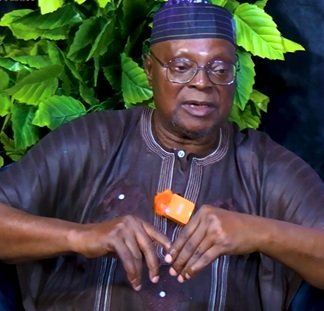
Renowned playwright, scholar and Emeritus Professor of Theatre Arts, Prof. Femi Osofisan, has blamed decades of military rule for what he described as the steady decline of Nigeria’s education system, arguing that the country’s universities and intellectual culture have never fully recovered from the era.
Speaking in an exclusive interview with PrimeStarNews to mark his 80th birthday, Osofisan said the military deliberately weakened universities because they were centres of intellectual opposition and democratic activism.
“The military destroyed education so that it could humiliate the universities because they were its major opposition,” he said.
The celebrated dramatist argued that before military rule, Nigerian universities retained their brightest graduates as lecturers, helping to sustain academic excellence.
According to him, the situation changed after the military took power, as poor funding and declining welfare forced many of the country’s best minds to seek opportunities abroad.
“In our days at the university, the best students were retained as teachers. By the time we came out, the military had taken over, and the best students never looked at the university. That has not changed. Up till now, nobody wants to teach in the university because they don’t want to be poor,” he said.
Osofisan maintained that the challenges confronting the education sector are rooted in structural problems that go beyond policy reforms.
Asked whether recent education reforms under President Bola Ahmed Tinubu could reverse the trend, the literary icon described the measures as insufficient, insisting that Nigeria must first redefine the purpose of education.
“These are cosmetic changes. What is the basis of education? What do we want to produce? Is it just about producing people who can operate machines? What about developing their minds?” he asked.
He also stressed the need for a change in national orientation, saying Africans must overcome the colonial mindset that portrays them as perpetual consumers rather than innovators.
Reflecting on Nigeria’s political evolution, Osofisan argued that many of the country’s post-independence challenges stemmed from colonial structures that were never fundamentally reformed.
He added that although democratic governance has brought some improvements, the country is still grappling with institutions and political attitudes inherited from military rule.
The award-winning playwright also expressed concern about the rapid advancement of artificial intelligence, warning that while the technology offers enormous benefits, it also poses ethical challenges that could diminish human creativity and empathy if left unchecked.
Despite revealing that he is living with Parkinson’s disease, Osofisan said he remains committed to writing and contributing to society, noting that literature continues to play a vital role in preserving humanity in an increasingly technology-driven world.
The distinguished scholar made the remarks during an exclusive interview with PrimeStarNews as part of activities marking his 80th birthday, where he reflected on his life, career, Nigeria’s education system and the country’s future.