Featured
The Strike That Never Ended

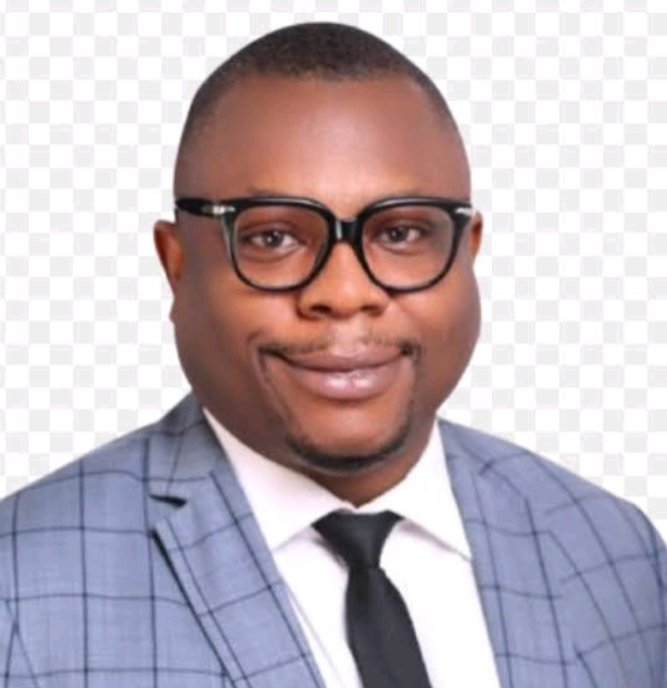
By Lemmy Ughegbe, Ph.D
Nigeria never tires of proclaiming the importance of education.
Yet its universities remain trapped in disputes that should have been settled years ago.
Four years after the strike that paralysed public universities for eight months, the Academic Staff Union of Universities (ASUU) and the Federal Government are again staring at the possibility of another shutdown.
At the centre of the quarrel is an unresolved salary dispute that has become a symbol of the country’s inability to sustain industrial harmony in its tertiary institutions.
The issue is three and a half months of salaries withheld from lecturers after the 2022 strike.
At its National Executive Council meeting at the University of Abuja on 13 and 14 November 2026, ASUU renewed its demand for payment and warned that continued refusal could trigger another crisis.
Branches are reportedly consulting members on possible industrial action.
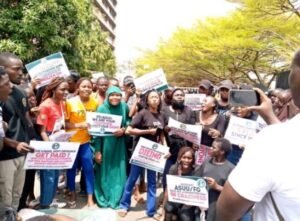
The dispute began under former President Muhammadu Buhari, whose administration invoked the principle of No Work, No Pay during the prolonged strike. About seven and a half months of salaries were withheld.
In October 2023, President Bola Ahmed Tinubu approved payment of four months, leaving the balance outstanding.
The union says the money still owed has since lost more than half its value to devaluation.
ASUU argues that the continued withholding amounts to unjust punishment, because lecturers later made extraordinary efforts to recover lost time.
Its president, Professor Chris Piwuna, says members gave up annual and research leave, took on heavier workloads and worked to restore disrupted academic calendars.
The government, for its part, has a legitimate interest in maintaining discipline in public employment and protecting public funds.
The principle that pay should ordinarily follow work is neither unreasonable nor peculiar to Nigeria.
Strikes carry consequences, and the state cannot abandon every lawful tool for managing disputes.
But legality and wisdom are not always the same thing.
A government may have the authority to enforce a policy and still be obliged to ask whether continuing to enforce it serves the wider public interest.
That distinction matters greatly in education, where the cost of industrial disputes extends far beyond employer and employee.
Students lose time, parents pay more, research suffers and universities struggle to keep predictable calendars.
The 2022 strike did considerable damage. Students who should have graduated were left in limbo, while families already battling economic hardship saw their plans thrown into disarray.
Another nationwide shutdown would deepen those wounds.
Yet it would be intellectually dishonest to place the entire blame on lecturers.
ASUU’s disputes with successive governments have consistently centred on poor funding, decaying infrastructure, staff welfare, institutional autonomy and the implementation of negotiated agreements.
These concerns cannot be dismissed simply because the union’s methods sometimes impose hardship on students.
Equally, ASUU must accept that prolonged strikes, however justified, can undermine the very institutions its members seek to protect.
Repeated interruptions erode public confidence in Nigerian universities and push families who can afford it towards private institutions or universities abroad.
The result is an increasingly unequal system in which the children of ordinary Nigerians bear the heaviest cost of instability.
There is also the matter of political promises. Before taking office, President Tinubu expressed sympathy for lecturers affected by the 2022 dispute.
His approval of four months’ salaries showed a willingness to soften the rigid stance of the previous administration.
That concession, however, also raised expectations that the remaining disagreement would be resolved through genuine engagement.
ASUU now says efforts to secure further intervention through the President’s Chief of Staff, Femi Gbajabiamila, and the Minister of Education, Dr Tunji Alausa, have failed.
Government officials reportedly insist the outstanding salaries will not be paid in full.
If that is the administration’s final position, it should explain its reasoning openly and explore alternatives capable of preserving industrial peace.
This dispute must not degenerate into another contest of institutional pride.
Government should resist the temptation to treat every union demand as insubordination.
ASUU should accept that strikes must remain a last resort.
Both sides carry responsibilities beyond their immediate interests.
The Federal Government should open structured negotiations with clear objectives, timelines and verifiable commitments.
Where financial obligations are acknowledged, realistic payment plans should be considered.
Where the disagreement turns on legal interpretation, the appropriate mechanisms should be used to settle it authoritatively.
The union, in turn, should show flexibility in pursuing legitimate demands without needlessly jeopardising students’ futures.
The wider problem is the absence of a durable framework for preventing recurring university disputes.
Agreements are negotiated, implementation becomes contentious, grievances pile up and strikes return as the main instrument of pressure.
Even the renegotiated agreement concluded in December 2025, meant to end a dispute dating back to 2009, is already the subject of complaints over implementation.
This cycle is neither sustainable nor worthy of a country that needs world-class human capital for economic transformation.
Nigeria cannot hope to compete in science, technology, medicine, engineering and innovation while treating university stability as an occasional administrative concern.
Our universities need predictable funding, accountable governance, adequate research support and pay that reflects the value of academic work.
Above all, they need a government and a workforce capable of settling disagreements without repeatedly sacrificing the future of students.
The unfinished business of 2022 is therefore bigger than three and a half months of withheld salaries.
It is the unfinished business of building a university system where agreements are honoured, grievances are addressed promptly and learning is shielded from recurring conflict.
If another strike grows out of this dispute, the greatest indictment will not be that government and lecturers disagreed.
It will be that, four years on, they still could not find a lasting solution.
Dr Lemmy Ughegbe, FIMC, CMC
Email: lemmyughegbeofficial@gmail.com
WhatsApp ONLY: +2348069716645