
General News
Tinubu Challenges NLNG to End Gas Flaring, Cut Energy Costs for Nigerians

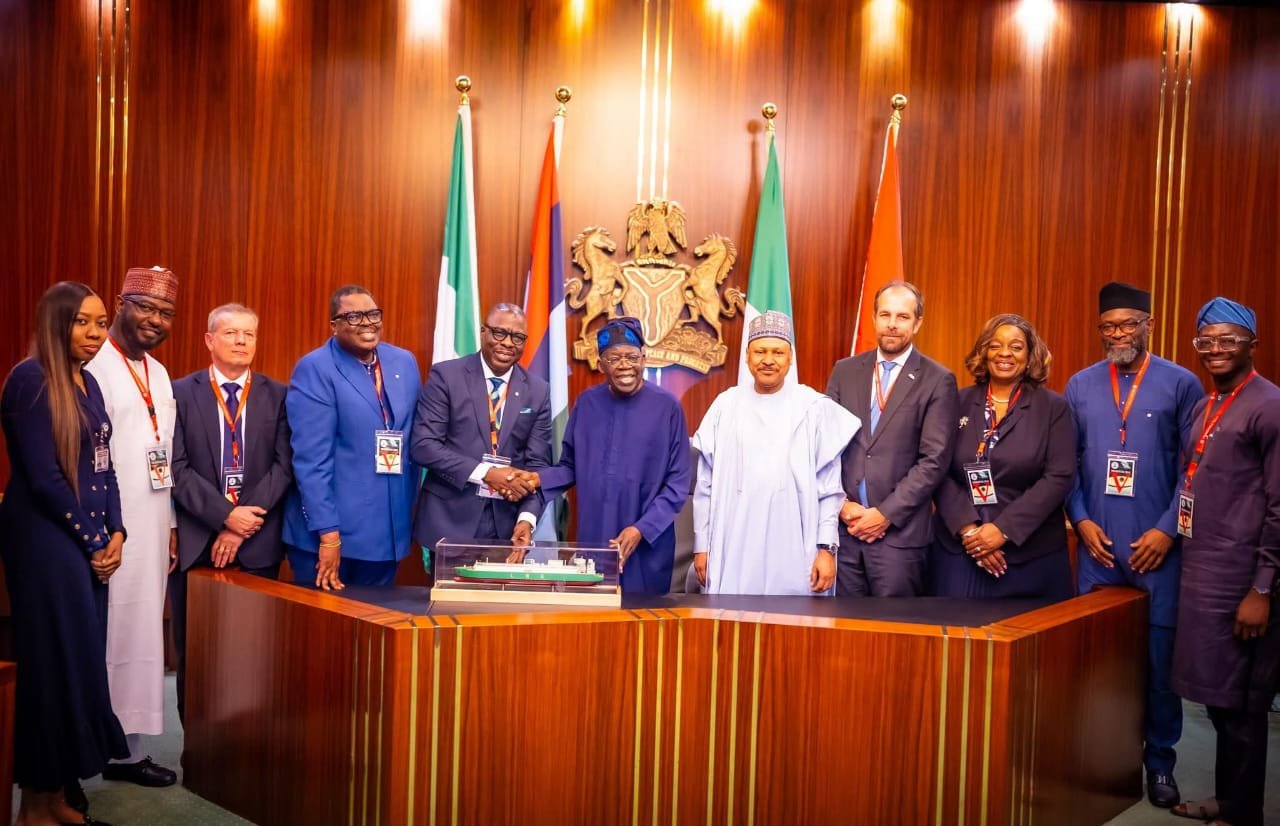
President Bola Ahmed Tinubu has challenged the Nigeria Liquefied Natural Gas Limited (NLNG) to move beyond increasing export revenues and focus more aggressively on converting Nigeria’s gas resources into tangible economic benefits for Nigerians.
Tinubu made the call on Wednesday when he received the NLNG Board and management, led by its Managing Director and Chief Executive Officer, Adeleye Falade, at the State House, Abuja.
The President said Nigeria could no longer afford to allow valuable gas resources to be wasted through flaring when they could be harnessed for domestic energy needs, industrial development and economic growth.
He specifically urged NLNG to intensify efforts to eliminate gas flaring and convert what he described as a potential environmental liability into an economic asset for consumers.
«“My major concern is the domestic utilisation, where you must be able to take out the flaring and convert potential environmental liability to what could be strategically and economically beneficial to the consumers in the country,” Tinubu said.»
While commending NLNG for improving its capacity and generating stronger returns on investment, the President said the Federal Government was prepared to provide incentives where necessary to support further expansion.

“I enjoy the teamwork and the way the NLNG is going, and you all, as team leaders, are giving value to what was the initial objective of the company,” he said.
Tinubu also called for greater domestication of Nigeria’s energy resources and pricing mechanisms that would allow ordinary Nigerians to feel the benefits of the country’s vast gas reserves.
He said natural resources would remain of little value to the economy if they were not extracted and deployed to serve citizens.
The President’s position comes as NLNG moves to expand its production capacity and strengthen its position in the global liquefied natural gas market.
NLNG Generates $150bn Since Inception
Briefing the President, Falade disclosed that NLNG has generated more than $150 billion since its inception, with its shareholders, including Nigeria, receiving about $47 billion in dividends.
Nigeria holds a 49 per cent stake in the company.
Falade said NLNG had previously operated at about 60 per cent capacity because inadequate crude oil production prevented the company from fully utilising its six available production trains.
However, increased oil production has enabled the company to raise its operations to five trains, with further improvements expected.
He said the company was also keen to inaugurate Train Seven, which is expected to increase NLNG’s production capacity by 35 per cent.
According to Falade, Nigeria currently accounts for about five per cent of the global LNG market.
He also disclosed that all of NLNG’s liquefied petroleum gas (LPG), commonly known as cooking gas, is currently being directed to the domestic market.
Fiscal Stability Attracting Investment
The NLNG chief executive said the company’s shareholders had commended the stability in Nigeria’s fiscal environment, which he said was helping to attract additional investment into the oil and gas sector.
He also commended security agencies and industry regulators for contributing to the stability currently being experienced in the sector.
Falade further disclosed that the Bonny-Bodo Road and Bridge project, financed by NLNG, has been completed and is awaiting official commissioning.
The project is expected to improve connectivity for communities in the Bonny area.
The NLNG delegation included Deputy Managing Director Olakunle Osobu; Board Director and Managing Director of TotalEnergies EP Nigeria Limited, Matthieu Bouyer; Board Director and Managing Director of Nigeria Agip Exploration, Maurizio Pinna; and General Manager, External Relations and Sustainable Development, Sophia Horsfall.
Others were Manager, Government Relations and Regulatory Compliance, Abdul Umar; Head, Government Relations, Tonbrafa Nanaghan; and Senior Government Relations Adviser, Rufai Mohammed Lawal.
Minister of Information and National Orientation Mohammed Idris, Special Adviser to the President on Information and Strategy Bayo Onanuga, and Senior Special Assistant to the President on Energy Transition Yasmin Mohammed also attended the meeting.