
World News
Trump Says Saudi Arabia Must Normalize Relations With Israel to Secure Nuclear Pact

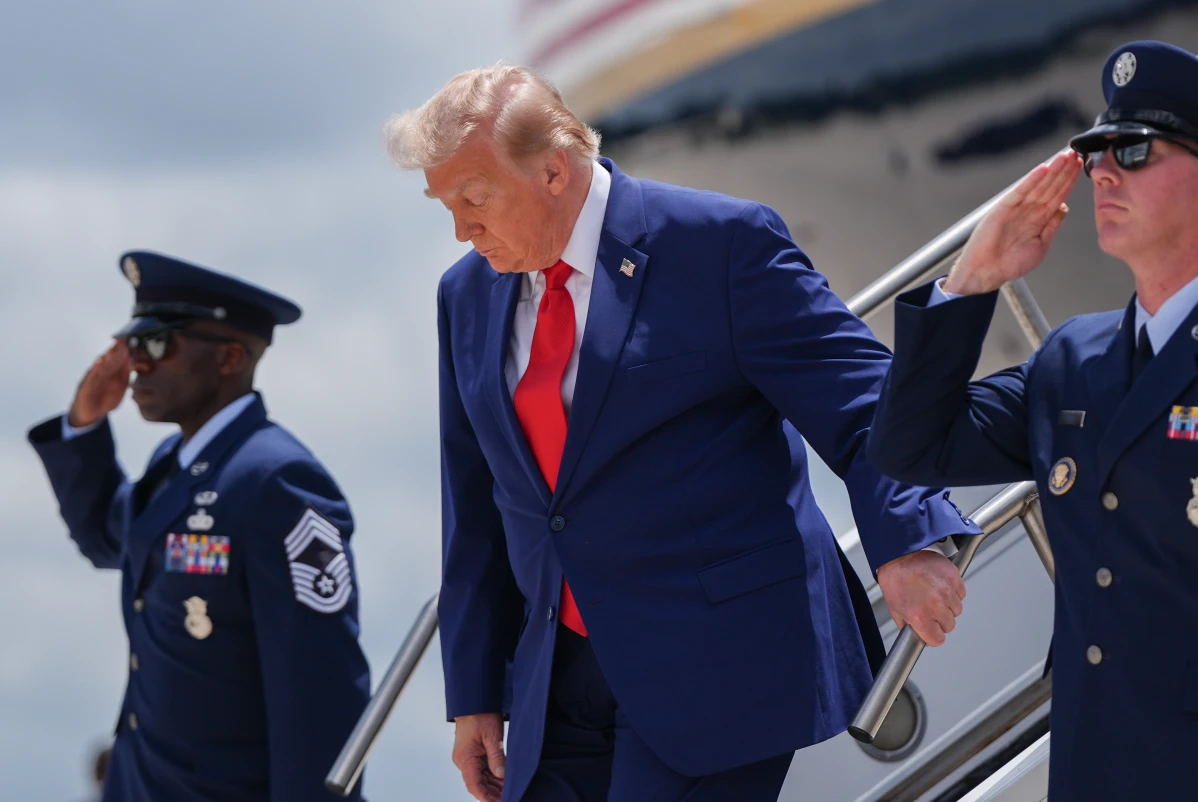
U.S. President Donald Trump has declared that a landmark civilian nuclear agreement between the United States and Saudi Arabia will only move forward if the Gulf kingdom agrees to normalize diplomatic relations with Israel through the Abraham Accords, adding a major political condition to one of Washington’s most significant strategic agreements in the Middle East in recent years.
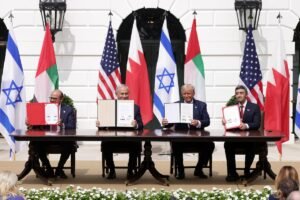
Speaking during a White House briefing on Thursday, Trump said Saudi Arabia’s participation in the U.S.-backed civilian nuclear program is “totally subject” to the kingdom establishing formal diplomatic ties with Israel. The president described normalization as an essential component of broader regional stability and a key objective of his administration’s Middle East policy.
The announcement follows the signing of a 30-year U.S.-Saudi civilian nuclear cooperation agreement that would allow American companies to help Saudi Arabia develop nuclear energy infrastructure. The deal is intended to diversify the kingdom’s energy mix while strengthening U.S. influence in the region amid growing competition from China and Russia.
However, Trump’s remarks appear to add a diplomatic requirement that has complicated the outlook for the agreement. Saudi Arabia has repeatedly maintained that it will not normalize relations with Israel unless there is meaningful progress toward the creation of an independent Palestinian state. Saudi Crown Prince Mohammed bin Salman has consistently linked any future recognition of Israel to a credible pathway toward Palestinian statehood, a position that remains at odds with the current Israeli government’s stance.
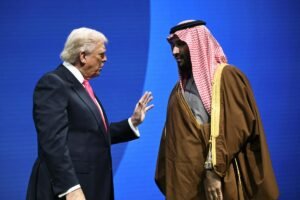
The proposed agreement is also attracting scrutiny over its nuclear provisions. Unlike previous U.S. nuclear cooperation agreements with some allies, the Saudi pact reportedly does not require Riyadh to adopt the International Atomic Energy Agency’s Additional Protocol, which provides inspectors with expanded powers to monitor nuclear activities. Non-proliferation experts and several lawmakers have warned that the absence of stronger safeguards could raise concerns about future nuclear weapons risks, despite the administration’s insistence that the program is strictly civilian.
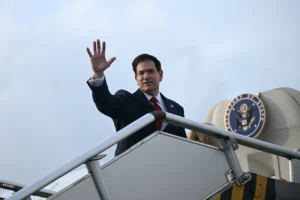
Secretary of State Marco Rubio and Energy Secretary Chris Wright have defended the agreement, arguing that partnering with the United States is preferable to allowing rival powers to dominate Saudi Arabia’s nuclear development. Administration officials also contend that U.S. oversight and technology would offer stronger safety and security standards than alternative partnerships.
Israeli Prime Minister Benjamin Netanyahu welcomed the prospect of Saudi Arabia joining the Abraham Accords, describing expanded Arab-Israeli normalization as an important step toward regional security. However, he did not directly address Trump’s new condition or the details of the nuclear agreement.
Analysts say the proposal arrives at a particularly delicate moment, with tensions across the Middle East remaining elevated following the ongoing U.S.-Iran conflict, Houthi attacks on shipping in the Red Sea, and continued instability surrounding Gaza. They argue that securing Saudi-Israeli normalization could significantly reshape the regional balance of power, but acknowledge that the Palestinian issue remains the principal obstacle to any breakthrough.
The agreement will now face congressional review in Washington, where lawmakers are expected to closely examine both its nuclear safeguards and its geopolitical implications. While the Trump administration hopes to finalize the accord before the end of the president’s term, opposition from non-proliferation advocates and uncertainty over Saudi-Israeli normalization mean the path forward remains far from certain.