
World News
US Proposes New Tariffs on China, EU, Brazil and Other Trading Partners Over Subsidised Production

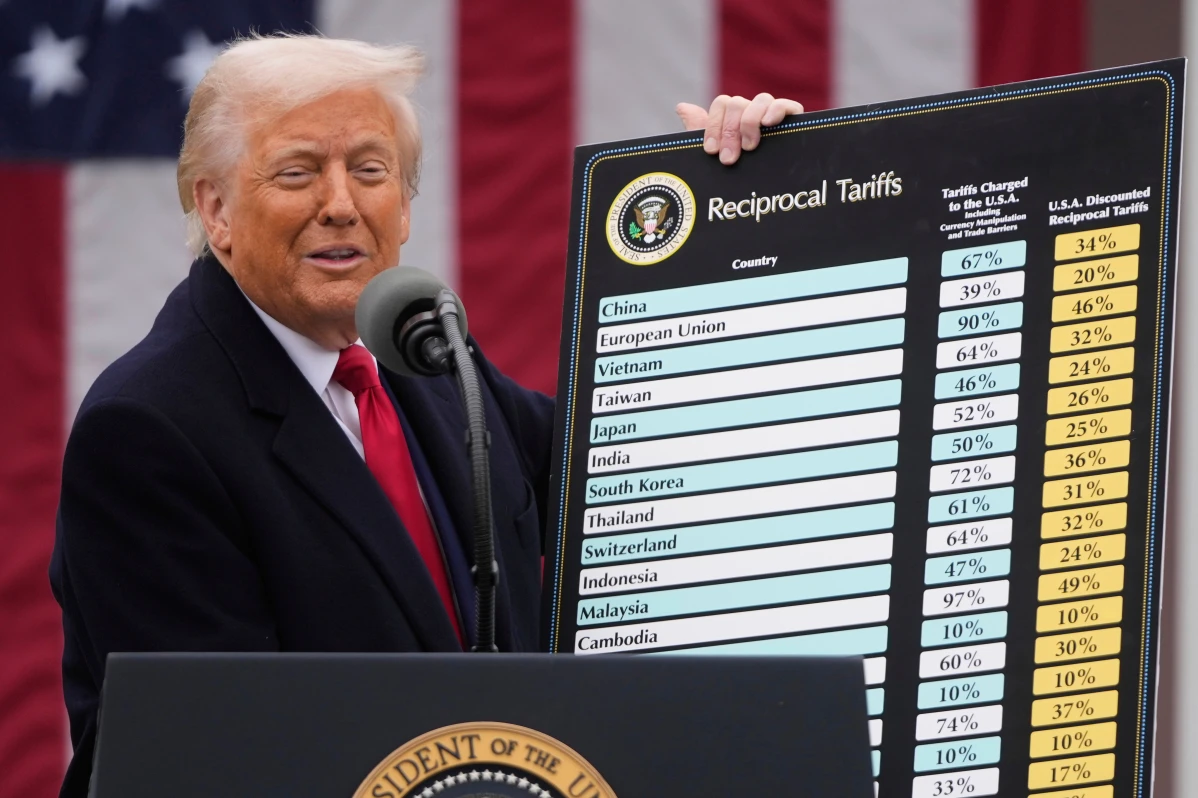
The United States government has proposed fresh tariffs on imports from China, the European Union (EU), Brazil and several other trading partners, accusing foreign governments of supporting excessive industrial production through subsidies and trade policies that disadvantage American manufacturers.
The proposed measures, announced on Wednesday, November 25, by the administration of President Donald Trump, followed an eight-month investigation into the manufacturing practices of major trading partners under Section 301 of the Trade Act of 1974.
The United States Trade Representative’s (USTR) office said the investigation found that certain economies were contributing to structural excess production in manufacturing sectors, creating an influx of goods that could undermine domestic industries in the United States.
The proposed tariffs cover imports from 14 trading partners: China, Bangladesh, Cambodia, the European Union, India, Indonesia, Japan, South Korea, Malaysia, Singapore, Switzerland, Taiwan, Thailand and Vietnam.
China faces one of the highest proposed increases, with an additional 20 per cent tariff on certain goods. The measure could bring the total tariff rate on some Chinese imports to 45 per cent when combined with existing duties.
Vietnam is also facing a proposed 20 per cent rate, while tariffs on products from other affected trading partners are expected to range between 10 and 18 per cent.
Brazil was separately singled out after trade negotiations with Washington reportedly stalled. The US is proposing higher import taxes on raw and refined sugar, alongside a new 10 per cent tariff on aircraft imports, a move that could affect Embraer, Brazil’s largest aircraft manufacturer.
The administration said the measures are intended to protect American industries from foreign production practices it considers unfair and encourage the return of manufacturing activities to the United States.
The legal basis for the proposed duties is Section 301, which allows Washington to investigate and take action against foreign trade practices considered unreasonable, discriminatory or harmful to US commerce.
The proposals also come as the Trump administration seeks to recover tariff revenue lost after the US Supreme Court ruled in February that the president could not use emergency economic powers to impose broad tariffs without congressional authority.
US Trade Representative Jamieson Greer said the administration had discussed the proposals with affected trading partners and did not expect the measures to take effect immediately.

He indicated that implementation was unlikely to begin before several months, giving countries time to respond and engage with Washington.
China, however, rejected the US justification for the proposed tariffs. Foreign Ministry spokesperson Guo Jiakun described the claim of industrial overcapacity as a false narrative and urged Washington to resolve trade disagreements through dialogue.
He warned that a tariff war or broader trade conflict would serve the interests of neither country.
The latest proposal adds to tensions over international trade as Washington seeks to strengthen domestic manufacturing and reduce its dependence on foreign production. It also raises the possibility of further disagreements with key economic partners, including China, the EU and Japan.
Although the proposed duties are targeted at specific products, their eventual implementation could affect manufacturers, exporters and international supply chains, particularly if affected countries consider retaliatory measures.
The administration has said the new tariffs would not be added on top of separate duties already imposed on automobiles, steel, aluminium and certain other products under different trade laws.