
World News
ESA Launches Two Earth-Observation Satellites Into Orbit to Monitor Planet

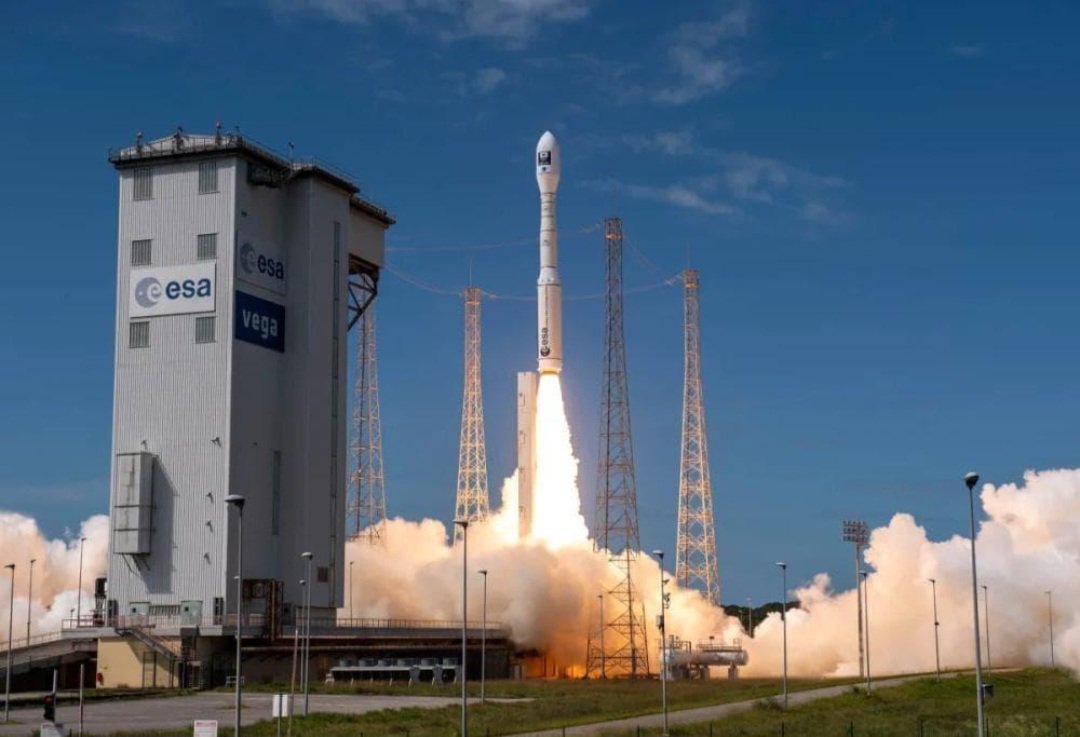
The European Space Agency (ESA) has successfully launched two Earth-observation satellites into orbit aboard a Vega-C rocket, in a mission designed to provide scientists with new data on the health of the planet.


The FLEX (Fluorescence Explorer) satellite and the Copernicus Sentinel-3C satellite lifted off from Europe’s Spaceport in Kourou, French Guiana, at 03:21 Central European Summer Time on Tuesday, September 15. The mission was designated VV30.
The two spacecraft were deployed as planned at an altitude of about 820 kilometres above Earth, with both satellites operating independently less than two hours after liftoff.
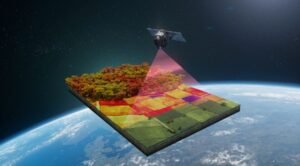
FLEX is designed to study vegetation by detecting the faint fluorescence emitted by plants during photosynthesis. Scientists will use the data to better understand plant health, productivity and how vegetation responds to environmental changes and climate pressures.
The mission is particularly significant because FLEX will provide measurements of photosynthetic activity on a global scale, offering researchers another way to examine how vegetation interacts with Earth’s carbon cycle and changing climate.
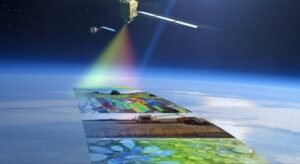
Sentinel-3C, meanwhile, is the third satellite in the Copernicus Sentinel-3 series. It will monitor Earth’s oceans, land, ice and atmosphere, collecting measurements that can support weather forecasting, climate research and environmental monitoring.
The satellite will measure factors including ocean and land-surface conditions and help provide near-real-time information for ocean and weather services.
ESA said the two satellites will work in complementary ways, with FLEX focusing on vegetation fluorescence while Sentinel-3C provides broader observations of Earth’s surface and atmosphere. The satellites are also intended to operate in the same orbital plane.
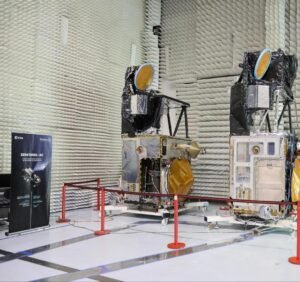
The Vega-C rocket, operated by Italy’s Avio, carried the spacecraft from Europe’s Spaceport in French Guiana. The mission represents another step in Europe’s efforts to strengthen its independent space capabilities and expand its ability to observe and understand changes taking place on Earth.
The successful launch adds to Europe’s growing Earth-observation infrastructure, providing data expected to benefit climate scientists, farmers, environmental agencies, meteorologists and policymakers.