
World News
Zelensky Slams ‘Strange’ Trump-Putin Friendship, Compares It to Hitler-Era Ties

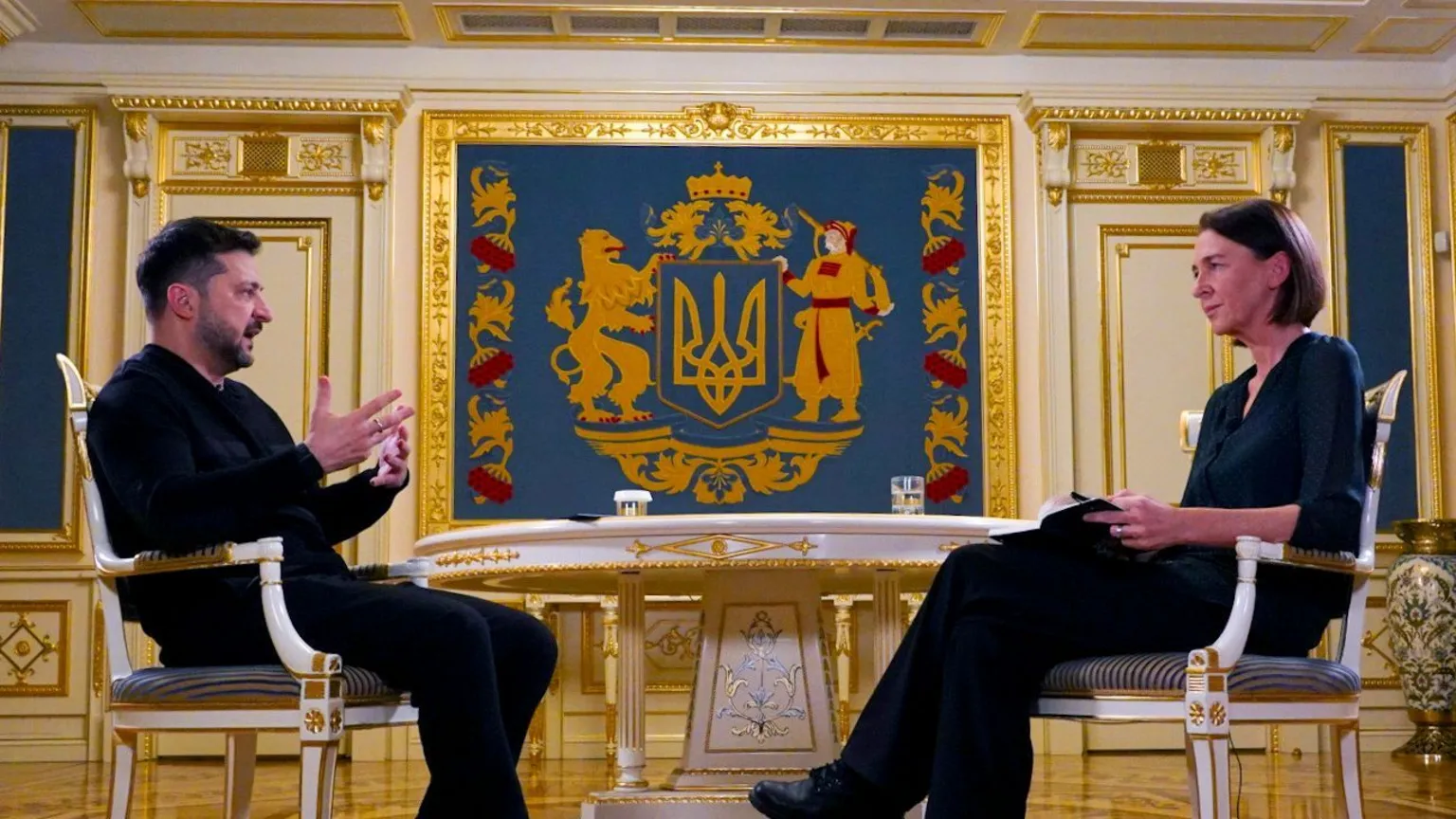
Ukrainian President Volodymyr Zelensky has criticised US President Donald Trump’s friendly relationship with Russian President Vladimir Putin, describing it as “strange” and comparing the idea of treating the Russian leader as a friend to having considered Adolf Hitler a friend during World War II.
Zelensky made the remarks in an interview with the BBC’s Eastern Europe correspondent, Sarah Rainsford, at his office in Kyiv, broadcast on Friday, November 27, 2026.
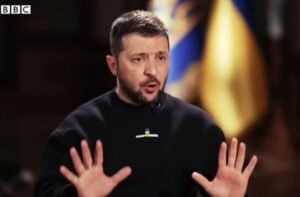
Responding to Trump’s repeated description of Putin as his friend, Zelensky said the Russian president could not be considered a friend because of Russia’s invasion of Ukraine and the resulting loss of lives.
“He’s an aggressor, and a killer. He can’t be a friend. Just cannot be,” Zelensky said.
He added that describing Putin as a friend was comparable to someone calling Hitler a good friend during the Second World War.
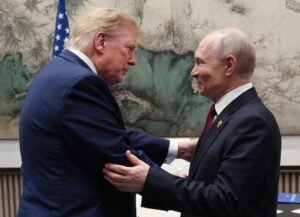
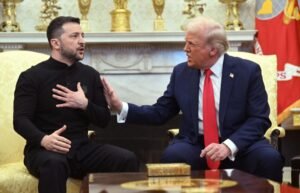
The Ukrainian leader’s comments followed Trump’s meeting with Putin at a summit in China on November 19, where the American president publicly referred to the Russian leader as his friend.
Trump later shared a photograph of the two leaders shaking hands on his Truth Social platform, accompanied by the caption “My Friend”.
The remarks have further exposed the uneasy relationship between Washington and Kyiv, which has experienced several periods of tension since Trump returned to the White House.
Beyond questioning Trump’s relationship with Putin, Zelensky expressed frustration over what he described as insufficient American pressure on Moscow to end the war.
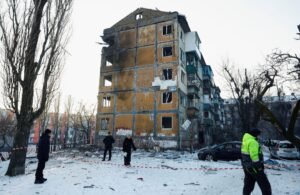
He also criticised delays in the delivery of Patriot air-defence missiles, warning that the shortage was costing Ukrainian lives as Russian forces continued launching ballistic missiles and drones against Ukrainian cities.
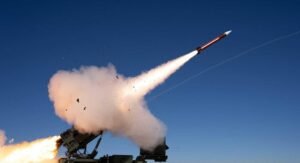
According to Zelensky, Washington’s increasing focus on military support for countries in the Middle East was affecting Ukraine’s access to essential defensive equipment.
“It’s a pity they made a focus on Middle East and they help them more,” he told the BBC, adding that the shortage of interceptor missiles had serious consequences for civilians.
Zelensky also raised concerns about difficulties involving Starlink satellite communications and its military version, Starshield, which Ukrainian forces rely on for communications and battlefield operations.
He said restrictions affecting the systems in occupied Ukrainian territories had created difficulties for Ukrainian military units, adding that it remained unclear whether the decisions were being made by SpaceX or through political channels.
The interview also addressed Ukraine’s long-range military operations against Russian targets, including a recent strike that sank a Russian naval vessel docked in Libya.
Defending the operation, Zelensky described the vessel as a legitimate military target, while acknowledging that such attacks were dangerous.
He said Ukrainian forces did not carry out strikes without coordinating with their partners but declined to provide further details.
His comments came after Italian Prime Minister Giorgia Meloni warned that the war must not spread into the Mediterranean, expressing concern over the implications of the attack for regional security.
On the prospects of ending the conflict, Zelensky said recent US-mediated peace negotiations in Abu Dhabi had produced little visible progress.
He indicated that discussions were expected to resume in December but expressed uncertainty over whether European representatives would participate in the next round.
Meanwhile, Russia has continued its attacks on Ukrainian infrastructure, including energy facilities, bridges and other strategic locations, raising concerns about the country’s ability to withstand another difficult winter.
Zelensky maintained that Ukraine would continue defending its capital despite the mounting pressure, insisting that abandoning Kyiv was not an option.
The interview highlights growing differences between the Ukrainian leadership and the Trump administration over relations with Moscow, military assistance and the direction of negotiations aimed at ending Russia’s invasion.