
Business
Dangote Refinery Surpasses Design Capacity, Reaches 700,000 Barrels Per Day

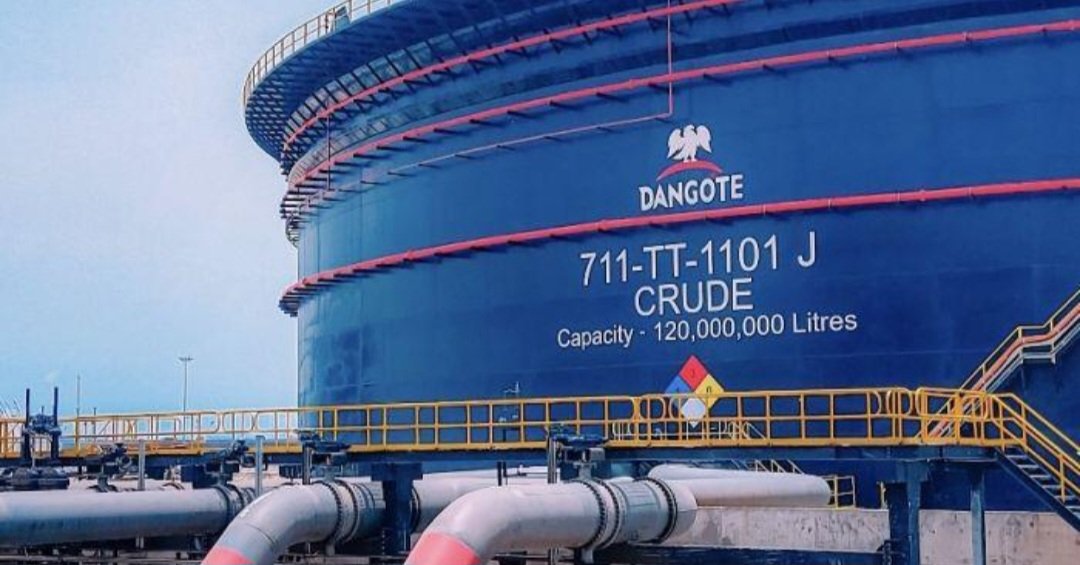
The Dangote Petroleum Refinery and Petrochemicals has achieved a major operational milestone by increasing its crude oil processing capacity to 700,000 barrels per day (bpd), exceeding its official nameplate capacity of 650,000 bpd.
The achievement was recorded during a performance test conducted by the refinery’s process licensors, highlighting the facility’s growing efficiency and reinforcing its status as the world’s largest single-train petroleum refinery.
Speaking on the development, Vice President for Oil and Gas at Dangote Industries Limited, Devakumar Edwin, described the increase as part of the company’s broader strategy to significantly expand production capacity. He disclosed that plans are underway to more than double the refinery’s capacity to 1.4 million bpd within the next 30 months, a move that could position the facility as the largest refinery globally.
According to Edwin, the expansion will further strengthen Nigeria’s energy security by reducing dependence on imported refined petroleum products while enhancing the country’s role as a major regional export hub.
Owned by billionaire industrialist Aliko Dangote, the refinery began fuel production in 2024 and has steadily increased output across a range of products, including petrol, diesel, aviation fuel and other refined petroleum products. Since commencing operations, the facility has expanded its footprint in both domestic and international markets, supplying fuel to several African countries and exporting products to destinations across Europe, including the United Kingdom, France, Spain, Italy and the Netherlands.
The refinery has also supplied gasoline to the United States and jet fuel to Saudi Arabia, further establishing its presence in global energy markets.
Industry observers note that the refinery has become an increasingly important player in ensuring fuel stability across Africa, particularly amid ongoing disruptions in global energy supply chains linked to tensions in the Middle East. As a result, several African nations have turned to the refinery as a reliable source of petroleum products.
Its growing international profile received another boost in April when S&P Global Commodities reported that the Dangote Refinery had become the world’s largest exporter of jet fuel.
Beyond its international reach, the refinery has played a significant role in supporting Nigeria’s economy by reducing the country’s reliance on imported fuel, conserving foreign exchange and promoting local value addition in the oil and gas sector.
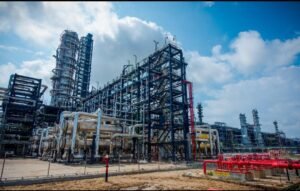
The increase in production capacity has also attracted greater interest from global crude oil suppliers and commodity traders, with the refinery sourcing feedstock from both domestic and international producers to meet rising demand.
Looking ahead, Dangote has reiterated plans to transform the facility into the world’s largest refinery by 2028 through an expansion that would increase processing capacity to 1.4 million barrels per day. The proposed growth is expected to generate jobs, stimulate industrial development and improve Nigeria’s trade balance.
The refinery is also expected to support downstream manufacturing industries through the supply of liquefied petroleum gas (LPG), polypropylene and other industrial feedstocks used in the production of packaging materials and consumer goods. Future plans also include the production of Linear Alkylbenzene (LAB), a key raw material used in detergent manufacturing.