Africa
Tinubu Pushes Industrialisation, Regional Trade as ECOWAS Inaugurates New Headquarters in Abuja

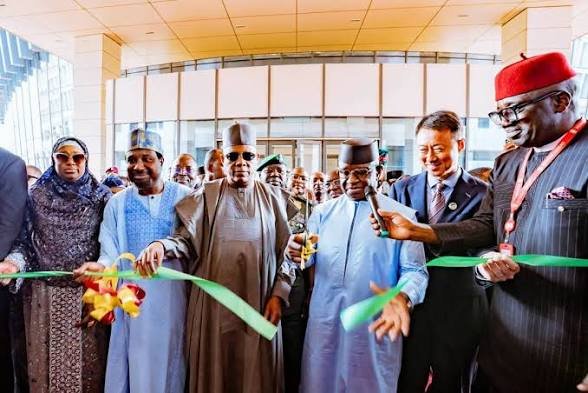
President Bola Ahmed Tinubu has called on West African leaders to accelerate industrialisation, deepen regional trade and strengthen economic integration, saying the future of the Economic Community of West African States (ECOWAS) depends on building a production-driven economy capable of delivering sustainable development.
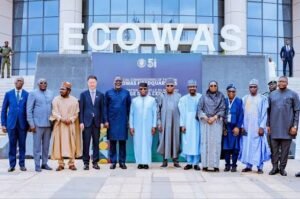
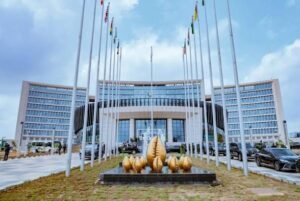
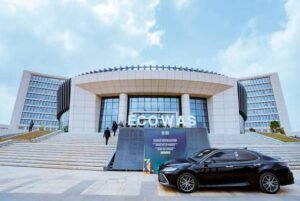
Speaking through Vice President Kashim Shettima at the inauguration of the new ECOWAS headquarters in Abuja on Thursday, Tinubu described the iconic complex, known as the “Eye of Africa,” as a symbol of renewal, resilience and confidence in the future of the regional bloc.
He said the new headquarters represents more than a physical structure, describing it as a renewed commitment by member states to the ideals of regional integration, peace, solidarity and shared prosperity that have guided ECOWAS for over five decades.
The President commended the regional body for its contributions to peacebuilding, democratic governance, economic cooperation and the free movement of people, goods and services across West Africa.
However, he noted that the region faces mounting challenges, including terrorism, violent extremism, economic instability, food insecurity, climate change, public health threats and rising youth unemployment, which require stronger regional collaboration.
Tinubu urged member states to move beyond rhetoric and reposition West Africa from a consumer market to a productive industrial economy.
He said greater investment in manufacturing, innovation, regional value chains and intra-African trade would enable ECOWAS countries to create jobs, boost competitiveness and achieve long-term economic growth.
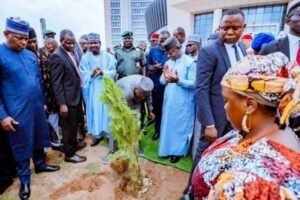
According to him, sustainable development in the region depends on producing more goods locally rather than relying heavily on imports.
The President also addressed the recent withdrawal of three member states from ECOWAS, stressing that regional integration should extend beyond economic cooperation to encompass collective security, political stability and the welfare of citizens.
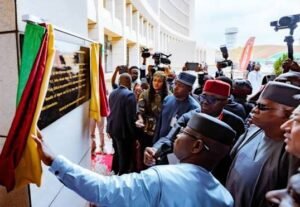
While expressing optimism about the future of the bloc, he said the doors of ECOWAS should remain open for continued dialogue and reconciliation with countries that have exited the organisation.
Tinubu commended the Chairman of the ECOWAS Authority of Heads of State and Government, President Julius Maada Bio of Sierra Leone, for steering the organisation through a challenging period.
He also praised the President of the ECOWAS Commission, Dr. Omar Touray, for successfully delivering the headquarters project and expressed appreciation to the Government of China for financing its construction.
In his remarks, President Bio described the new headquarters as a renewed commitment to serving more than 450 million people across West Africa.
He acknowledged Nigeria’s longstanding leadership role and financial support to ECOWAS, describing the country as “a great anchor” of the regional organisation.
Also speaking, Dr. Touray said the new headquarters would strengthen coordination and cooperation among member states, while China’s Ambassador to Nigeria and ECOWAS, Yu Dunhai, described the project as a testament to China’s enduring support for Africa’s regional integration and development aspirations.