
International
French Wildfire Creates ‘Monster Cloud,’ Unleashing Lightning That Ignites More Fires

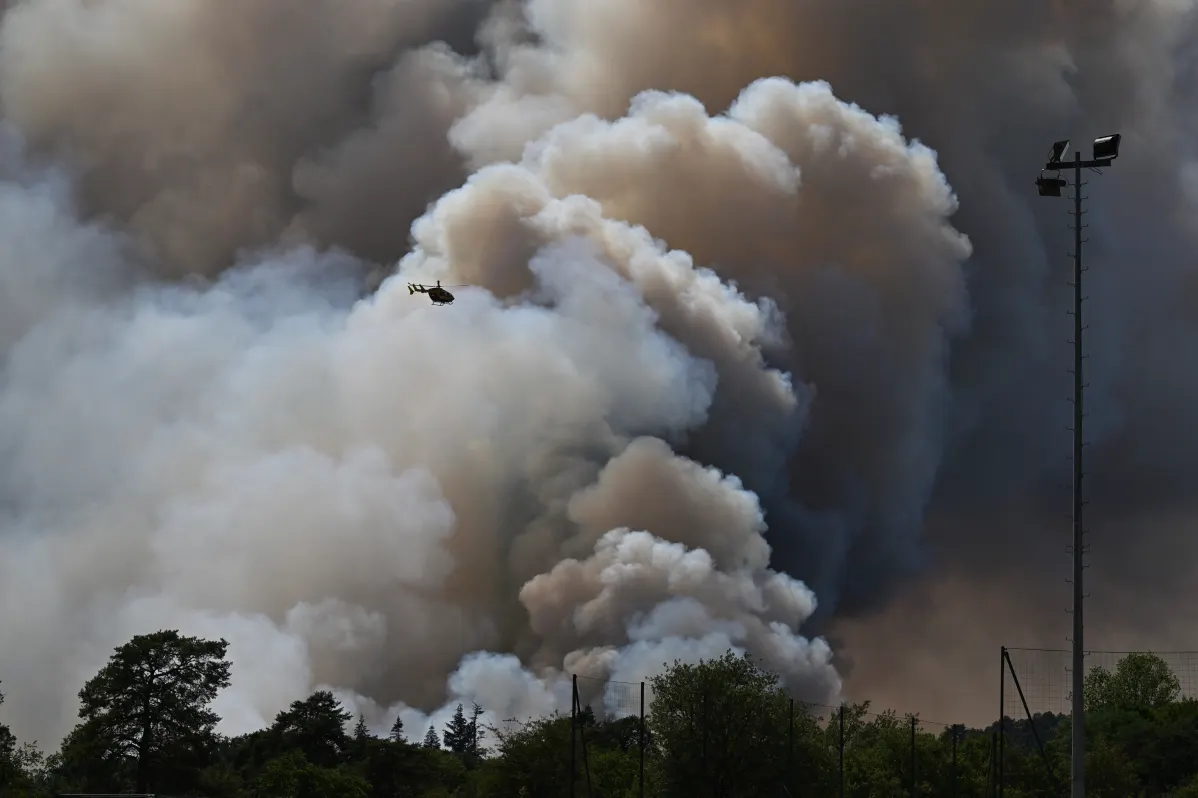
A massive wildfire in southwestern France has generated an extraordinary weather phenomenon that scientists say is almost unprecedented in Europe. The blaze created a towering pyrocumulonimbus; commonly known as a “fire cloud” or “monster cloud” that produced lightning strikes and violent winds, igniting fresh fires and dramatically complicating firefighting efforts. The event is the first recorded occurrence of its kind in France and has raised fresh concerns about the growing intensity of wildfires linked to extreme heat and climate change.


The wildfire, which erupted near Saumos in the Gironde region on 22 July, has burned more than 420 square kilometres (162 square miles) of forest and scrubland. Authorities say more than 240 homes have been destroyed or damaged, while around 220,000 residents have been forced to evacuate as flames spread rapidly across the countryside.
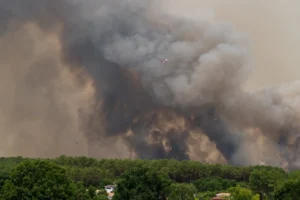
Meteorologists explained that the intense heat from the inferno forced smoke, ash and superheated air thousands of metres into the atmosphere, where they mixed with cooler, moisture-rich air to form a giant thunderstorm. Instead of helping extinguish the blaze, the storm generated lightning that struck dry vegetation beyond the fire zone, igniting new fires. The cloud also produced powerful and erratic winds that rapidly changed the fire’s direction, making conditions extremely dangerous for firefighters.
Experts describe the phenomenon as a pyrocumulonimbus (pyroCb) cloud, a rare type of fire-generated thunderstorm previously associated mainly with catastrophic wildfires in countries such as the United States, Canada and Australia. Officials from France’s National Firefighters Federation said they had never before documented such an event in the country, underscoring the exceptional nature of the current wildfire season.
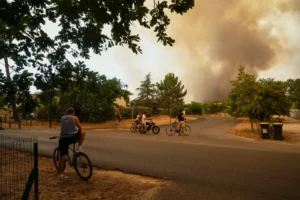
Fire crews have struggled to contain the blaze as conventional firefighting methods become less effective against fires capable of generating their own weather systems. Hundreds of firefighters, assisted by water-bombing aircraft and emergency personnel from across Europe, have been deployed to protect communities and critical infrastructure. Authorities warned that strong winds, soaring temperatures and prolonged drought continue to create conditions favourable for further fire outbreaks.
Scientists say the appearance of fire clouds in France reflects a worrying shift in Europe’s wildfire landscape. Southern Europe has experienced repeated heatwaves and below-average rainfall in recent years, leaving forests exceptionally dry and vulnerable to fast-moving fires. Researchers involved in the European Union-funded ROSETTA project are studying these extreme events to better understand how fire-generated storms develop and how emergency agencies can respond more effectively.
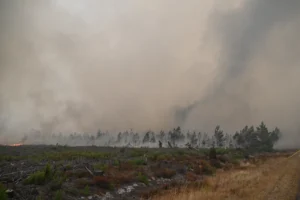
Climate researchers caution that while pyrocumulonimbus clouds remain relatively rare, they may become more frequent as global temperatures rise and wildfire seasons grow longer and more intense. Such storms can inject smoke high into the atmosphere, disrupt aviation, create dangerous turbulence and spread embers and lightning over vast distances, greatly increasing the risk of additional fires.
As firefighters continue battling the Gironde blaze, French authorities remain on high alert for further flare-ups caused by lightning and shifting winds. Officials have urged residents in affected areas to follow evacuation orders and avoid entering fire zones, warning that the wildfire is no longer being driven solely by weather, it is creating its own.