
Opinion
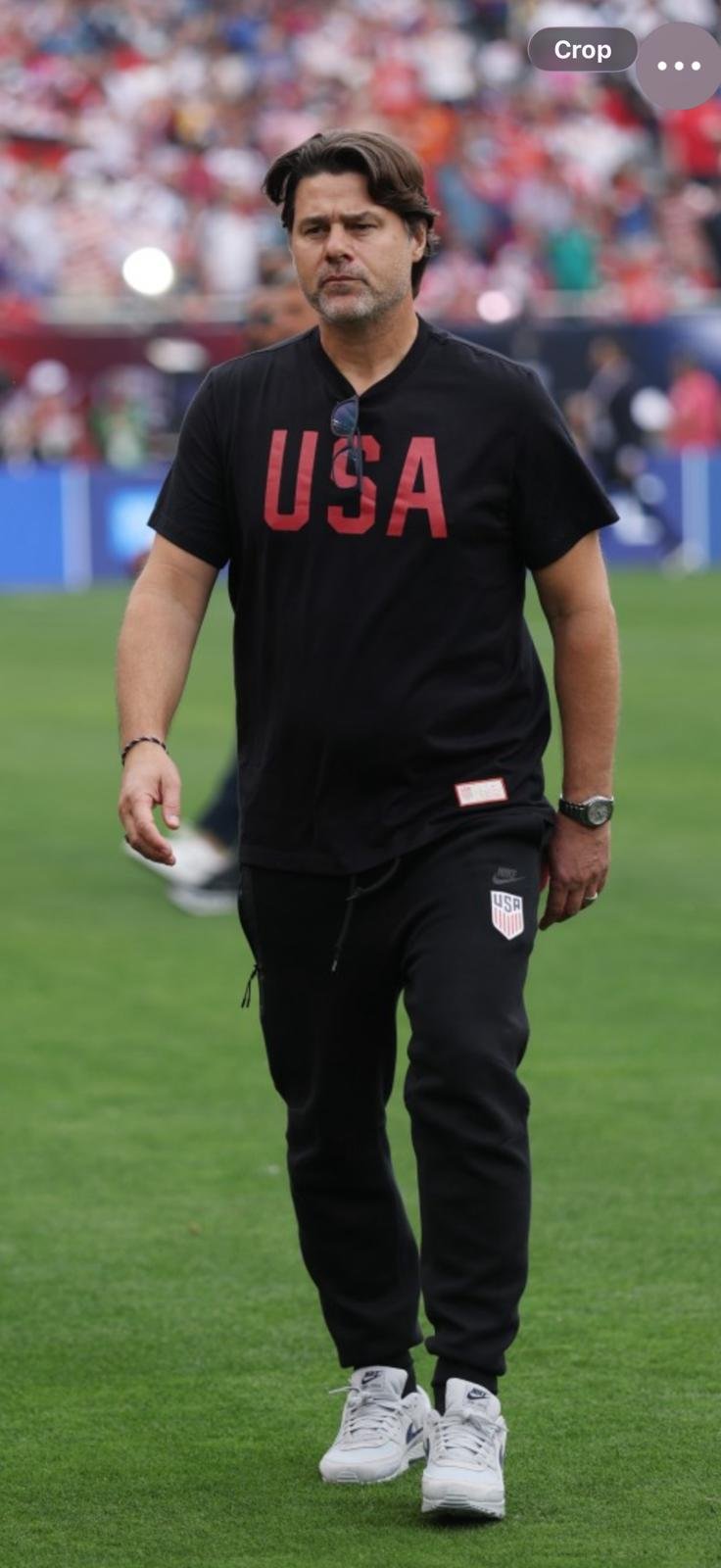
🥇WORLD CUP 2030: Decision Made—USMNT Commits to Head Coach Mauricio Pochettino. Where Does Nigeria Stand?

By Paul Lucky Okoku
Every FIFA World Cup leaves football nations with difficult questions to answer.
Some choose change.
Others choose continuity.
The important thing is that leadership evaluates the evidence, makes a decision, communicates it clearly, and moves forward.
The United States has done exactly that.
On June 26, 2026, even before the FIFA World Cup had concluded, U.S. Soccer formally offered Mauricio Pochettino a contract extension through the 2030 FIFA World Cup cycle. Rather than reacting emotionally to one result, the federation chose to evaluate the tournament as a whole before reaching its final decision. Following that review, Pochettino officially signed the extension on August 3, 2026, confirming that he will lead the United States into the next World Cup cycle.
Whether every supporter agrees with the decision is almost beside the point.
The important point is this:
A decision has been made.
The direction has been established.
The planning for 2030 has already begun.
That naturally raises an important question.
Where does Nigeria stand?
As discussions continue about the future of the Super Eagles, reports indicate that Eric Chelle is expected to continue as head coach and may also assume responsibility for the Olympic (U-23) team.
There are compelling arguments in support of such an arrangement.
A single football philosophy can improve continuity.
Young players can transition more naturally into the senior national team.
The technical direction becomes more consistent across different age groups.
Those are genuine advantages.
There are also legitimate questions.
Can one coach successfully manage both the Super Eagles and the Olympic team?
Will the additional responsibilities strengthen long-term planning, or could they become a distraction during critical periods?
Would separate leadership allow each team to receive greater focus?
These are reasonable questions.
Reasonable people may reach different conclusions.
Football history reminds us that coaching decisions are rarely judged at the moment they are made.
They are judged by their results.
The United States experienced that reality during the World Cup.
For much of the tournament, Mauricio Pochettino’s team played attractive, disciplined football that raised expectations across the country. Many observers believed the Americans had the quality to reach at least the semi-finals.
Then came the disappointment.
One match changed the conversation.
One of the major debates centered on Pochettino’s handling of striker Folarin Balogun following his suspension. Some believed Balogun should have started. Others supported the manager’s tactical decision.
The truth is that football rarely provides certainty.
Had Balogun started and the United States still lost, criticism would simply have shifted elsewhere.
Had he started and the United States won, the same decision might have been celebrated as managerial brilliance.
We simply do not know.
That uncertainty is precisely why coaches are appointed—to make difficult decisions under pressure and accept responsibility for the outcome.
U.S. Soccer evaluated the bigger picture rather than allowing one disappointing evening to define the entire project.
That decision may ultimately prove correct.
It may prove incorrect.
Only time will tell.
But leadership accepted the responsibility to decide.
That is perhaps the most important lesson.
As Nigeria prepares for another World Cup cycle, supporters are naturally asking what direction the country intends to take.
What is the long-term vision?
How will success be measured?
What role will youth development play?
How does the Olympic team fit into the broader strategy?
How will progress be communicated to stakeholders throughout the four-year journey?
These questions are not about criticism.
They are about clarity.
Every successful football nation develops its own pathway.
Nigeria’s pathway does not have to mirror that of the United States, Germany, Italy, or any other country.
But every football nation benefits from clearly communicating its vision, making timely decisions, and maintaining confidence in the direction it has chosen.
The road to the 2030 FIFA World Cup has already begun.
Every decision made today will influence where Nigeria stands tomorrow.
The opportunity now is not simply to prepare for qualification.
It is to prepare with purpose.
The road to the 2030 FIFA World Cup starts today.
Share Note
If this article resonates with you, and you believe Nigeria’s football future deserves thoughtful planning, constructive dialogue, and a clearly communicated roadmap, please share it.
Meaningful conversations today can help shape better decisions tomorrow.
The journey to 2030 has already begun.