
World News
Taiwan slams China’s Taiwan Strait traffic order during Typhoon Dolphin as ‘ridiculous’

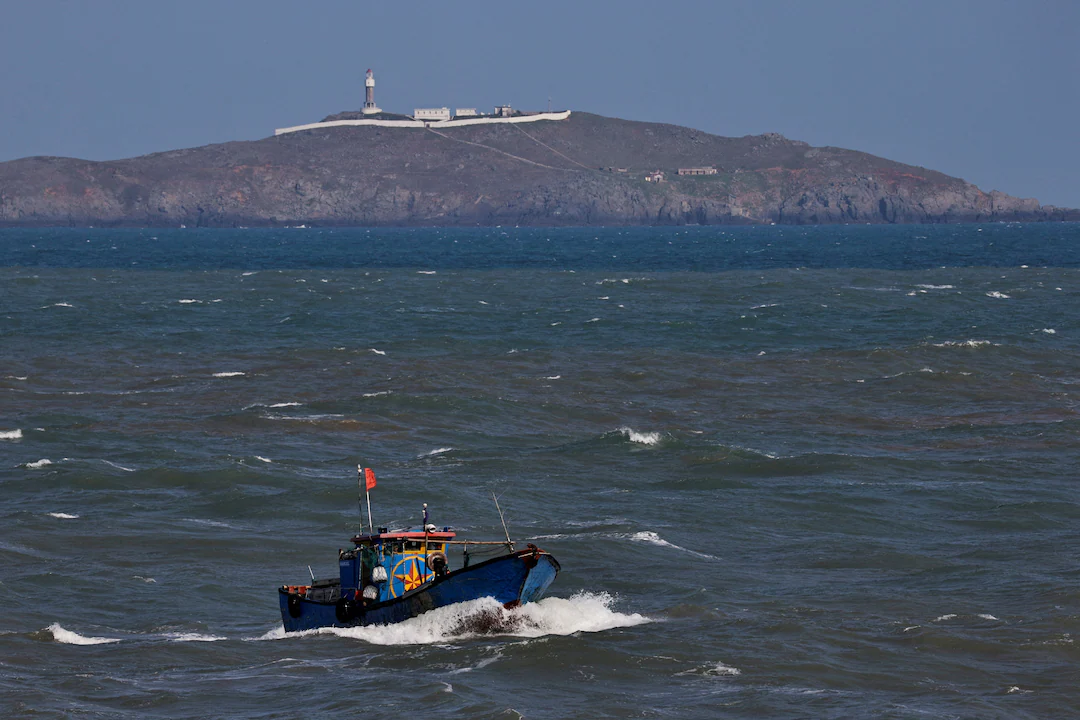
Taiwan has sharply criticised China’s attempt to impose traffic-control measures on vessels transiting the Taiwan Strait as Typhoon Dolphin approaches, accusing Beijing of overstepping its authority in international waters and violating established maritime norms.
Taipei’s response has added another layer of tension to already strained cross-Strait relations, with the dispute emerging as both sides prepare for the impact of a powerful typhoon.
According to reports, Chinese authorities announced on Wednesday that, because of the approaching Typhoon Dolphin, vessels heading north through the southern entrance of the Taiwan Strait would be required to follow traffic-control measures.

Chinese state media said the measures were intended to protect maritime safety as the typhoon moved toward the region. Vessels were instructed to comply with requirements, seek safe waters in which to shelter from the storm and follow directions from maritime-management authorities.
The announcement was framed by Beijing as a safety measure linked to the severe weather rather than a military action.
However, the location of the proposed controls immediately made the announcement politically sensitive because the Taiwan Strait is a major international shipping corridor and is at the centre of the longstanding sovereignty dispute between Beijing and Taipei.

Taiwan’s Mainland Affairs Council described the Chinese announcement in unusually strong terms, calling it “utterly ridiculous” and accusing Chinese authorities of disregarding international rules.
Taipei argued that China has no right to restrict access to international waters in the Taiwan Strait and said Taiwan’s affairs should not be subject to interference from Beijing.
The dispute reflects the fundamentally different positions held by the two governments.
Beijing regards Taiwan as part of China and claims sovereignty over the island and surrounding waters. Taiwan operates as a self-governing democracy and rejects Beijing’s sovereignty claims, maintaining that its future should be determined by its own people. The United States and Taiwan also reject Beijing’s claim that it can unilaterally control the entire Taiwan Strait.

Taiwan’s Coast Guard Administration said it had not detected unusual movements by Chinese vessels in connection with the announcement.
It also said shipping companies had not reported being subjected to abnormal broadcast interference.
Nevertheless, the Coast Guard advised merchant and cargo ships transiting the area to disregard any Chinese broadcast demands they might receive and to report such incidents to Taiwan authorities. It said it would take necessary measures to safeguard freedom and safety of navigation.
The response is significant because it shows that Taipei is treating the Chinese directive not simply as a weather-related navigation warning, but also as an issue involving jurisdiction and maritime authority.
The confrontation comes as Typhoon Dolphin moves through the western Pacific toward eastern China.
The storm struck Japan’s southern Okinawa region on Saturday, with the Japan Meteorological Agency reporting sustained winds of about 162 km/h and gusts of up to 216 km/h. Five elderly people suffered non-life-threatening injuries in Okinawa, while about 14,000 buildings temporarily lost power.
The typhoon is expected to move toward China’s eastern coast, with forecasts pointing to a possible landfall between Zhoushan in Zhejiang province and Fuding in Fujian province.
Chinese authorities have already taken extensive precautions. Zhejiang raised its coastal typhoon alert to its highest level, ports were closed and 162 passenger ferry routes were suspended. Operations at Ningbo Lishe International Airport were also scheduled to halt, while Shanghai’s Yangshan port had been cleared of vessels.
Forecasters warned that parts of eastern Zhejiang could receive more than 600 millimetres of rain, while strong winds and heavy rainfall could affect eastern China, including Shanghai and surrounding provinces, through August 12.
Taiwan itself is taking precautions against the storm.
The island cancelled 63 international flights because of Typhoon Dolphin, while heavy rainfall was expected in northern areas over the weekend. Authorities had not ordered evacuations as of Saturday, according to the latest reports.
Taiwan’s maritime and aviation sectors have already experienced disruptions, highlighting the practical importance of the weather-related restrictions.

The Taiwan Strait, which separates Taiwan from mainland China, is one of Asia’s most strategically important waterways and a major route for commercial shipping.
Its status is particularly sensitive because Beijing regards Taiwan as part of its territory, while Taipei rejects Chinese sovereignty over the island. The waterway is also regularly used by international commercial and military vessels.
China’s military operates in and around the strait on a frequent basis, while Taiwan has increased surveillance and patrols amid concerns about Chinese military and maritime pressure.
Earlier this year, Taiwan accused China of increasing maritime activity around the island, including the use of Chinese research vessels and other government ships. Taiwanese officials have argued that such activities can also have security implications because information gathered in waters around Taiwan could potentially be useful for military planning.
The immediate issue is maritime safety during a powerful storm. But the argument between Beijing and Taipei demonstrates how even routine safety measures can become politically charged in the Taiwan Strait.
For Beijing, controlling shipping during dangerous weather can be presented as a legitimate maritime-safety responsibility. For Taipei, accepting such instructions from China could imply recognition of a Chinese authority over waters that Taiwan considers subject to international navigation.
The disagreement therefore goes beyond Typhoon Dolphin. It touches on the much larger question of who has the authority to regulate shipping through the strategically important waterway.
For now, Taiwan says it has seen no unusual Chinese vessel movements associated with the directive. But the Coast Guard’s warning to ships to report Chinese broadcast demands shows that Taipei is closely monitoring the situation.
With Typhoon Dolphin expected to move toward China’s coast, authorities on both sides face the immediate challenge of protecting vessels and coastal communities while avoiding a new maritime confrontation.