
World News
Trump Rejects Iran’s War Reparations Demand as Hormuz Standoff Deepens

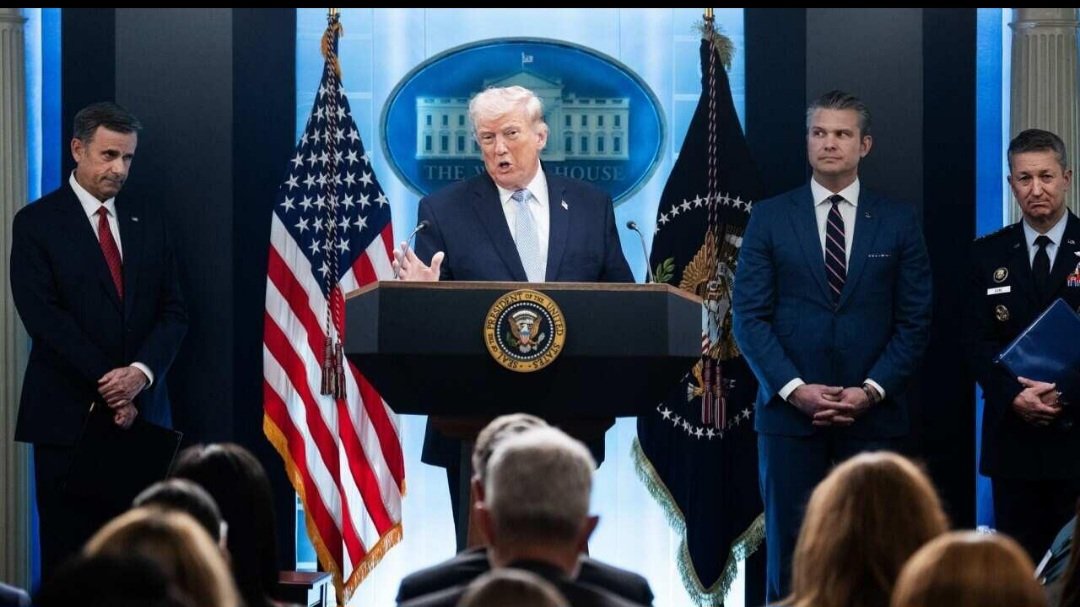
US President Donald Trump has rejected Iran’s demand for compensation over damage caused by the US and Israeli military campaign, instead saying Tehran should pay compensation for Americans killed or seriously wounded in conflicts involving Iran-backed groups.
The exchange came as diplomatic efforts to end the conflict and reopen the Strait of Hormuz appeared increasingly uncertain, with Tehran insisting that the strategic waterway will not fully reopen until Washington meets a series of conditions.
Iran has demanded an end to the US blockade of its ports, the lifting of economic sanctions, the release of frozen Iranian assets and compensation for damage caused during the conflict. Iranian Foreign Ministry spokesman Esmail Baghaei said the United States must stop what Tehran described as its “illegal and destructive actions.”
Trump responded by saying he would seek compensation from Iran for people he said had been killed or seriously wounded by Iranian-backed militants and in other conflicts.
He also said his representatives had been instructed to include the compensation demand in future negotiations.
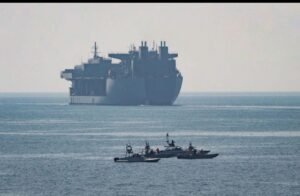
The dispute over reparations has emerged alongside a larger standoff over the Strait of Hormuz, one of the world’s most important energy shipping routes.
Iran has linked the full reopening of the waterway to Washington meeting its conditions, while negotiations involving Oman have been focused on establishing safer shipping arrangements.
The waterway carried roughly one-fifth of the world’s traded oil supplies before the war, making its continued closure a major concern for energy markets and governments worldwide.
Reuters reported that Iran and Oman were working toward an agreement on shipping lanes, but Tehran has made clear that such an arrangement would not automatically mean unrestricted reopening of the strait.
The impasse threatens to prolong the economic consequences of the conflict, particularly for countries dependent on Middle Eastern oil and gas exports.
Meanwhile, Iranian President Masoud Pezeshkian said the country’s new Supreme Leader, Ayatollah Mojtaba Khamenei, had called for unity as Iran faces mounting economic pressure.
Pezeshkian said he held a nearly seven-hour meeting with Khamenei during which they discussed the country’s economy, employment, housing and the impact of US sanctions.
He said Khamenei’s main message was the need to prevent divisions within Iran.
The meeting was reportedly only the second time Pezeshkian had met the new supreme leader since Khamenei assumed the position in March following the US-Israeli strike that killed his father, Ayatollah Ali Khamenei.
Iran has also appointed former Revolutionary Guard commander Mohsen Rezaei as head of the country’s Supreme National Security Council.

Rezaei, 71, previously commanded the Islamic Revolutionary Guard Corps from 1981 to 1997, including during the Iran-Iraq War.
He replaces Mohammad Bagher Zolghadr, who is expected to become a political adviser to the supreme leader.
The appointment comes as Tehran attempts to balance military pressure, economic hardship and negotiations with Washington.
Elsewhere in the region, Israel’s military declared the Christian-majority town of Taybeh in the occupied West Bank a closed military zone.
The measure is intended to prevent Israeli settlers and other non-residents from entering the town, which has faced reports of arson, vandalism and incursions onto Palestinian-owned property.
Israeli authorities said Palestinian residents and journalists would be allowed to remain in the area unless troops determine their presence poses a security threat.
The development comes amid continued concerns over settler violence and tensions across the occupied West Bank.
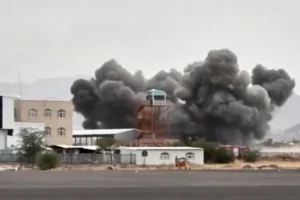
In Yemen, an attack by Iran-backed Houthi rebels on the Red Sea port town of Mokha killed seven people and injured 30, according to Yemen’s internationally recognised government.
The casualties reportedly included four military personnel and three civilians.

The Houthis said a 13-year-old child was killed and another child injured in subsequent fighting near Taiz, although the competing accounts could not be independently verified.
The fighting has renewed concerns about maritime security in the Red Sea and the Bab el-Mandeb Strait, another crucial shipping route connecting the Middle East with global markets.
The latest developments underline the difficulty of reaching a comprehensive settlement between Washington and Tehran.
Iran wants guarantees against further military action, sanctions relief, access to frozen assets and compensation, while the Trump administration has its own demands and has now introduced compensation claims against Tehran.
With the Strait of Hormuz remaining at the centre of the dispute, any prolonged closure could continue to affect global energy prices and international shipping.
For now, negotiations remain fragile, with both sides publicly maintaining hard-line positions while regional actors attempt to find a pathway toward de-escalation.