
World News
Trump Orders Pentagon to Scale Back US-South Korea Military Exercises

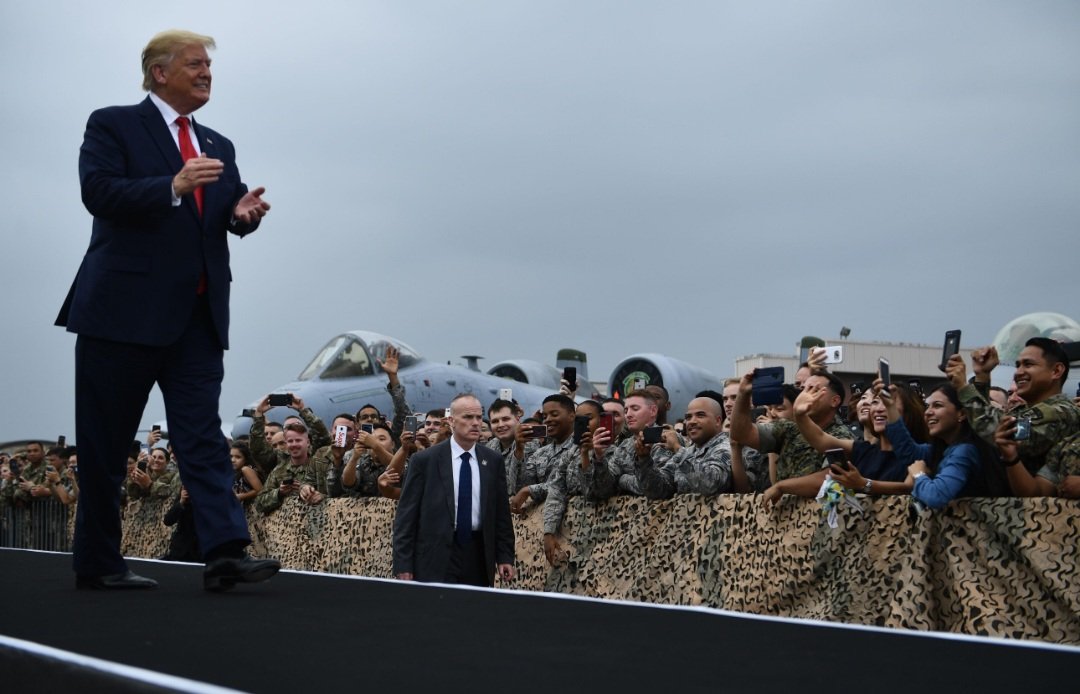
US President Donald Trump has directed the Pentagon to substantially scale back joint military exercises with South Korea, just as the allies began their annual Ulchi Freedom Shield drills amid renewed tensions on the Korean Peninsula.
Trump said the exercises were expensive and argued that they send an “inappropriate and hostile” signal to North Korea, pointing to what he described as his good relationship with North Korean leader Kim Jong Un.
The president also linked his decision to South Korea’s refusal to participate in US efforts concerning Iran. Trump said he had recently asked South Korean President Lee Jae Myung whether Seoul would join Washington in the “denuclearization” of Iran, but that South Korea declined.
The order came shortly before the start of the Ulchi Freedom Shield, an annual US-South Korean exercise designed to strengthen the allies’ ability to respond to threats from North Korea.
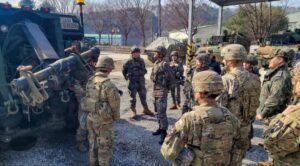
Despite Trump’s directive, South Korea’s Joint Chiefs of Staff confirmed that the exercises began on Monday as scheduled and are expected to run until August 27. About 18,000 South Korean troops are taking part.
The drills include live, virtual, constructive and field-based training, with this year’s exercises incorporating scenarios involving drones, GPS disruption, cyberattacks and other emerging battlefield threats. US officials have said the training reflects lessons from recent conflicts, including the experience gained by North Korean troops deployed to fight alongside Russian forces in Ukraine.
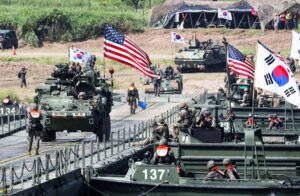
Pyongyang has repeatedly described major US-South Korean military exercises as preparations for an invasion. North Korea condemned this year’s drills as particularly provocative and warned that it would strengthen its nuclear deterrent in response.
The criticism comes after North Korea recently resumed ballistic missile testing. South Korea, the United States and Japan detected a short-range ballistic missile launch last week, marking the North’s first such test since late June.
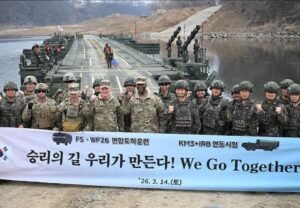
The decision to reduce the exercises could therefore have wider implications for deterrence on the Korean Peninsula. Analysts cited by Reuters suggested Trump’s move may be aimed partly at creating an opening for renewed engagement with Pyongyang, although questions remain over whether reducing the drills would produce any meaningful response from Kim’s government.
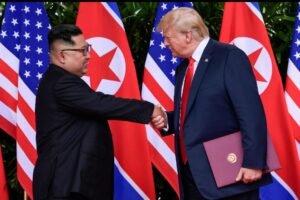
Trump has previously criticized US-South Korean military exercises as costly and provocative. Following his 2018 summit with Kim in Singapore, he announced the suspension of major joint drills, saying the move would save the United States money.
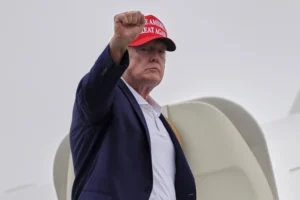
The exercises were later resumed after diplomatic efforts with North Korea stalled. Trump’s latest directive represents another significant shift in the US approach to military preparedness on the Korean Peninsula, particularly at a time when North Korea is expanding its nuclear and missile capabilities.
The Pentagon has not provided detailed information on how the reduction will be implemented, leaving uncertainty over whether future exercises will be smaller, shorter or rely more heavily on computer simulations. Reuters reported that the drills have already shifted in recent years away from some live-fire activities toward simulated missile, cyber and other scenarios.
The move is also likely to fuel debate in Washington and Seoul over the balance between Trump’s pursuit of diplomacy with Pyongyang and the need to maintain military readiness against a nuclear-armed North Korea.