
World News
EU Set to Propose Under-15 Ban on Social Media and AI Chatbots


The European Union is preparing to propose sweeping new restrictions that would prevent children under 15 from accessing social media platforms, AI chatbots, video-sharing services and online games, as Brussels steps up efforts to protect children from potential online harm.


The proposal, expected to be formally presented this week as part of the EU Kids Act, would establish different levels of access depending on a child’s age. Under the plan reported by Reuters, children under three would have no access to the targeted services, while those aged three to 12 would be limited to child-friendly services with parental controls.
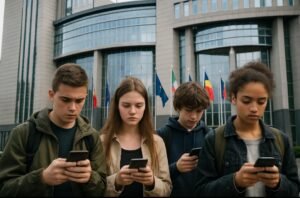
Children aged 13 and 14 could be allowed access to introductory accounts under strict parental supervision, while teenagers would generally be permitted to have their own accounts from the age of 15.
The proposed rules would potentially affect some of the world’s biggest digital platforms, including Facebook, Instagram, TikTok and YouTube, as well as AI chatbot services such as ChatGPT.
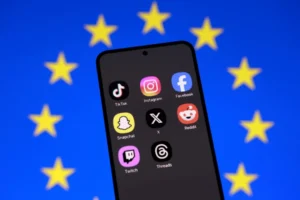
The European Commission is also expected to require technology companies to strengthen age-verification systems, provide parental controls and reporting mechanisms, and take steps to prevent children from being exposed to harmful or addictive content.

Platforms could also be required to pay a supervisory fee to help fund enforcement of the new rules.
The initiative comes amid growing concerns across Europe and elsewhere about the effects of social media and emerging AI technologies on children. European lawmakers and governments have increasingly called for stronger protections against addictive platform designs, harmful content, exploitation and other online risks.

French President Emmanuel Macron has been among the strongest supporters of a Europe-wide minimum age for social media. He recently urged European Commission President Ursula von der Leyen to introduce an EU-wide ban on social media access for under-15s after France’s own attempt to introduce similar restrictions ran into legal obstacles.
However, the proposed EU approach appears more graduated than the blanket restrictions advocated by some European leaders, with access potentially increasing as children get older.

The European Parliament is also considering its own measures on the impact of social media and the wider online environment on young people, with a vote scheduled for September 17.
The proposal is not yet law. After the European Commission presents its legislation, it would have to go through negotiations involving EU member states and the European Parliament before it could become binding across the bloc.

If adopted, the measures would represent one of Europe’s most significant attempts yet to regulate children’s access to social media and artificial intelligence, potentially forcing major technology companies to redesign how young users access their services.