
World News
EU Proposes New Restrictions on Social Media and AI Tools for Children

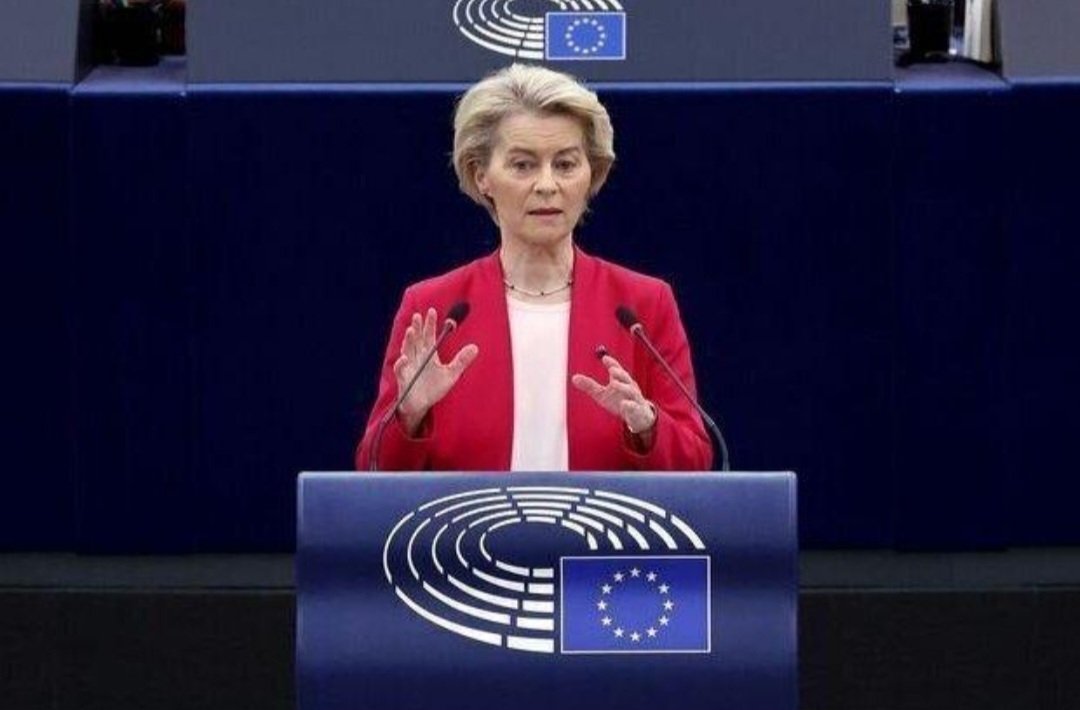
The European Commission has proposed new EU-wide rules aimed at protecting children from harmful online content and potentially addictive digital services, including social media platforms, video-sharing sites, online games and AI chatbots.


The proposal, known as the EU KIDS Act, was adopted on Thursday, September 17, as Brussels seeks to establish common rules for children’s access to digital services across the 27-member bloc.

Under the proposal, children under 13 would be prohibited from opening social media accounts, while those aged 13 and 14 would only be able to use such accounts under parental supervision. Young people would be able to create independent social-media accounts from the age of 15.
The proposal also seeks to impose stricter safety requirements on digital services used by children. Platforms would have to demonstrate that their services are safe and age-appropriate rather than leaving parents and children to bear the responsibility of navigating potentially harmful features.
European Commission President Ursula von der Leyen said the proposal would put parents “back in the driving seat” and require platforms to demonstrate that their products are safe by design.

The proposed rules extend beyond conventional social-media platforms.
The Commission wants AI chatbots and AI companion services used by minors to operate under stronger safeguards. The proposal requires such services to be designed with children’s safety in mind, while AI companions and chatbots would face additional compliance requirements before being made available to children.
The Commission’s proposal comes amid growing concerns in Europe about the effect of online services on children, particularly features designed to keep users engaged for longer periods.

Under the KIDS Act, services aimed at minors would have to address features such as infinite scrolling, autoplay, reward mechanisms, unsolicited contact from strangers and other potentially addictive design practices.
The rules would also introduce stronger parental controls and safer default settings.
The proposed legislation would place greater responsibility on technology companies to demonstrate compliance.

For very large online platforms, the Commission says providers would have to submit compliance plans and have them independently audited. Companies that breach the proposed rules could face fines of up to 6 per cent of their worldwide annual turnover.
The initiative follows growing pressure across Europe for tighter restrictions on children’s access to social media.

The European Parliament had previously called for a harmonised European digital age limit, including a default age of 16 for access to social-media platforms without parental consent and a lower threshold below which children would not be permitted to access social media.
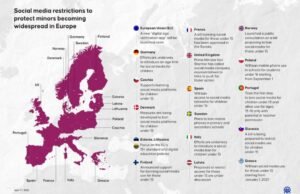
The Commission’s current proposal takes a graduated approach, with 13 as the minimum age for independent social-media accounts set at 15, while children aged 13 and 14 would have parent-supervised access.
The KIDS Act is a legislative proposal and does not immediately impose these restrictions across the European Union.
It will now go through the EU’s legislative process, involving the European Parliament and member states before it can become binding law.

The Commission said the objective is to create a common framework across the EU rather than leaving individual countries to develop widely different rules for protecting children online.
The debate is likely to continue over how age verification should work, how children’s privacy can be protected and how restrictions can be enforced without unnecessarily limiting young people’s access to useful digital services.