
World News
Carney Welcomes EU Proposal to Make Canada First ‘Associate Member’

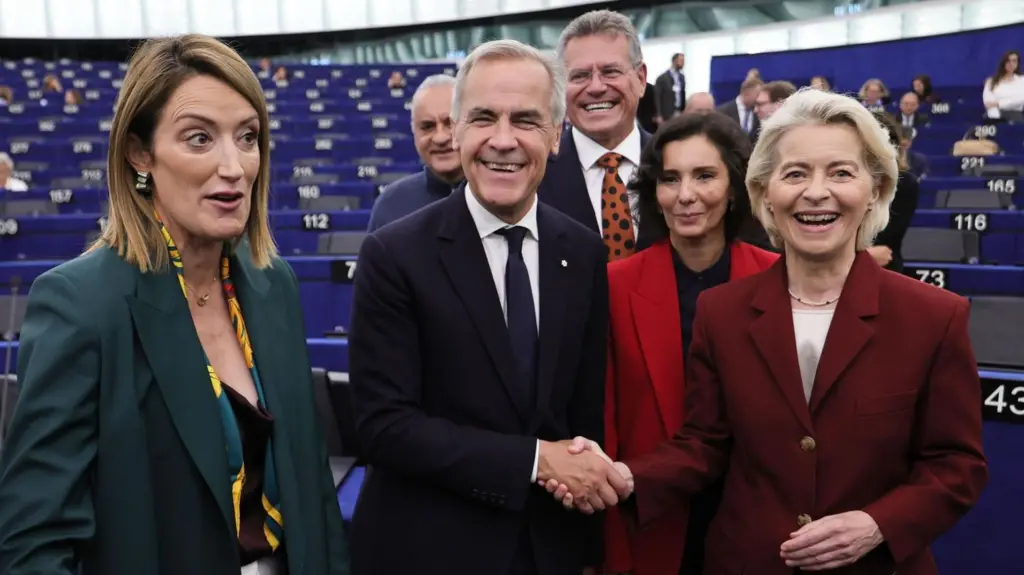
Canadian Prime Minister Mark Carney has welcomed a proposal for Canada to become the European Union’s first “associate member”, describing closer ties between Ottawa and Brussels as a positive initiative.


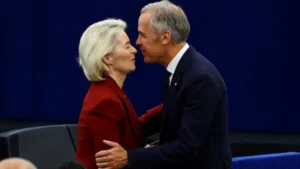
Speaking to the European Parliament in Strasbourg on Thursday, Carney said Canada and Europe would be “stronger together” and should deepen cooperation in areas including trade, defence, critical minerals, artificial intelligence and energy security.
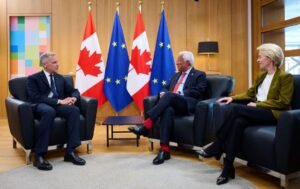
The proposal was put forward by European Commission President Ursula von der Leyen during her State of the European Union address on Wednesday. If pursued, it would create a new form of relationship between the EU and a non-member country, as “associate membership” is not currently an established category under EU treaties.
Carney stressed that Canada was not seeking full EU membership and would not surrender its sovereignty. He said the precise name and structure of any new arrangement were less important than what the partnership would deliver for Canadians and Europeans.
The Canadian leader said a deeper relationship could involve cooperation on critical minerals, defence industrial capacity, artificial intelligence, computing, energy security, space and financial services. He also proposed greater opportunities for young Canadians and Europeans to live, work and study on either side of the Atlantic.
The proposal has already drawn criticism from US President Donald Trump, who described the idea as potentially a “hostile act” and threatened further tariffs or restrictions on trade with Europe if Washington determined the arrangement was hostile to US interests.
The European Commission has rejected that characterisation, saying closer EU-Canada cooperation is intended to strengthen both sides rather than target another country.
Carney, meanwhile, said Canada would decide independently which international partnerships it wanted to pursue.
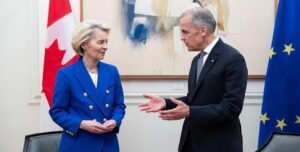
“No one is going to dictate our culture or with whom we can strike agreements internationally,” he told reporters in Strasbourg.
Despite the political enthusiasm surrounding the proposal, significant questions remain about what “associate membership” would actually mean.

The EU has never previously used the status, and member states would have to agree on the terms. Some European officials have welcomed closer cooperation with Canada while expressing reservations about the terminology and the legal framework.
The EU and Canada are expected to discuss the future relationship further at a summit in Montreal in October, where the details of any enhanced partnership could become clearer.
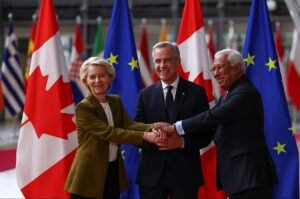
Canada already has a major trade relationship with the EU through the Comprehensive Economic and Trade Agreement (CETA), while both sides have been seeking closer cooperation on security and strategic industries.
Carney’s push for stronger European ties comes as Canada’s relationship with the United States faces increased trade and political tensions, prompting Ottawa to pursue greater diversification of its international economic and strategic partnerships.