
World News
Conservative Coalition Takes Slim Lead in New Zealand Election as Final Outcome Remains Uncertain

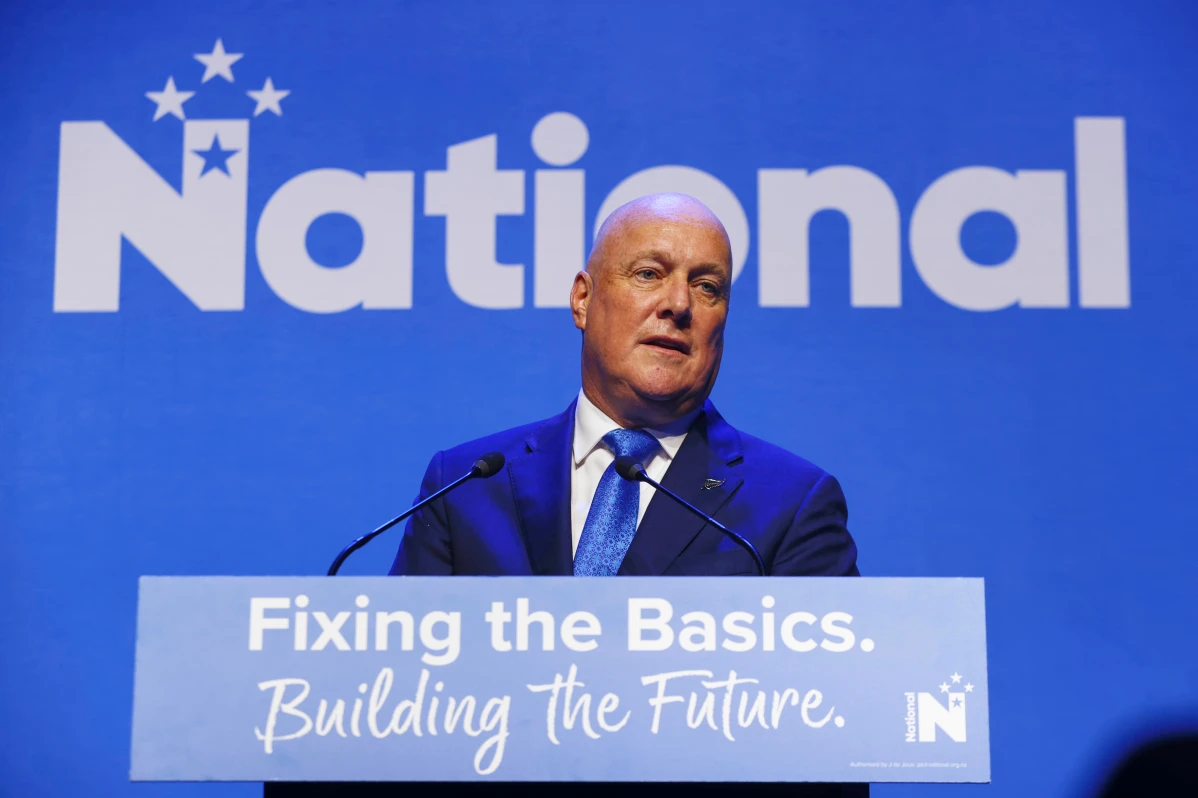
New Zealand’s incumbent centre-right coalition has secured a narrow lead in the country’s general election, but the final outcome remains uncertain as authorities await the counting of special votes.
With more than 95 per cent of votes counted, Prime Minister Christopher Luxon’s National Party and its coalition partners, ACT New Zealand and New Zealand First, appeared set to secure 67 seats in the 130-seat parliament, just one seat above the 66 required for a governing majority.
The opposition bloc, led by former Prime Minister Chris Hipkins and the Labour Party, was projected to hold 56 seats, including 35 for Labour, 16 for the Greens and five for Te Pāti Māori.

Despite the apparent advantage, Luxon stopped short of declaring victory, acknowledging that the election was too close to call and that the outstanding votes could alter the parliamentary balance.
The final count will include special votes, which cover ballots cast by New Zealanders living overseas and those voting outside their registered electorates. These votes have historically favoured left-leaning parties and could cost the conservative coalition its narrow majority.

The Electoral Commission is expected to release the official results on November 27, meaning the country could face several weeks of uncertainty before the next government is determined.
The election also highlighted the growing influence of smaller political parties, with the centrist Opportunity Party, led by political newcomer Qiulae Wong, appearing set to enter Parliament with seven seats after crossing the five per cent electoral threshold.

Wong has indicated that her party could negotiate with either political bloc if its support becomes necessary to form a government. However, Luxon has previously ruled out governing with Opportunity.
The closely contested election reflects growing public dissatisfaction over economic conditions, including the rising cost of living, unemployment and concerns about the country’s economic performance.
Both National and Labour secured less than 30 per cent of the party vote, while smaller parties made significant gains.

New Zealand operates a mixed-member proportional representation electoral system, under which voters cast separate ballots for a political party and a local parliamentary representative. Parties generally need at least five per cent of the party vote or an electorate seat to enter Parliament.
The results leave Luxon’s coalition with a narrow advantage, but the final composition of Parliament and the formation of the next government will depend on the official count and subsequent political negotiations.