
International
German Leader Reshuffles Senior Posts to Counter Rising AfD Challenge

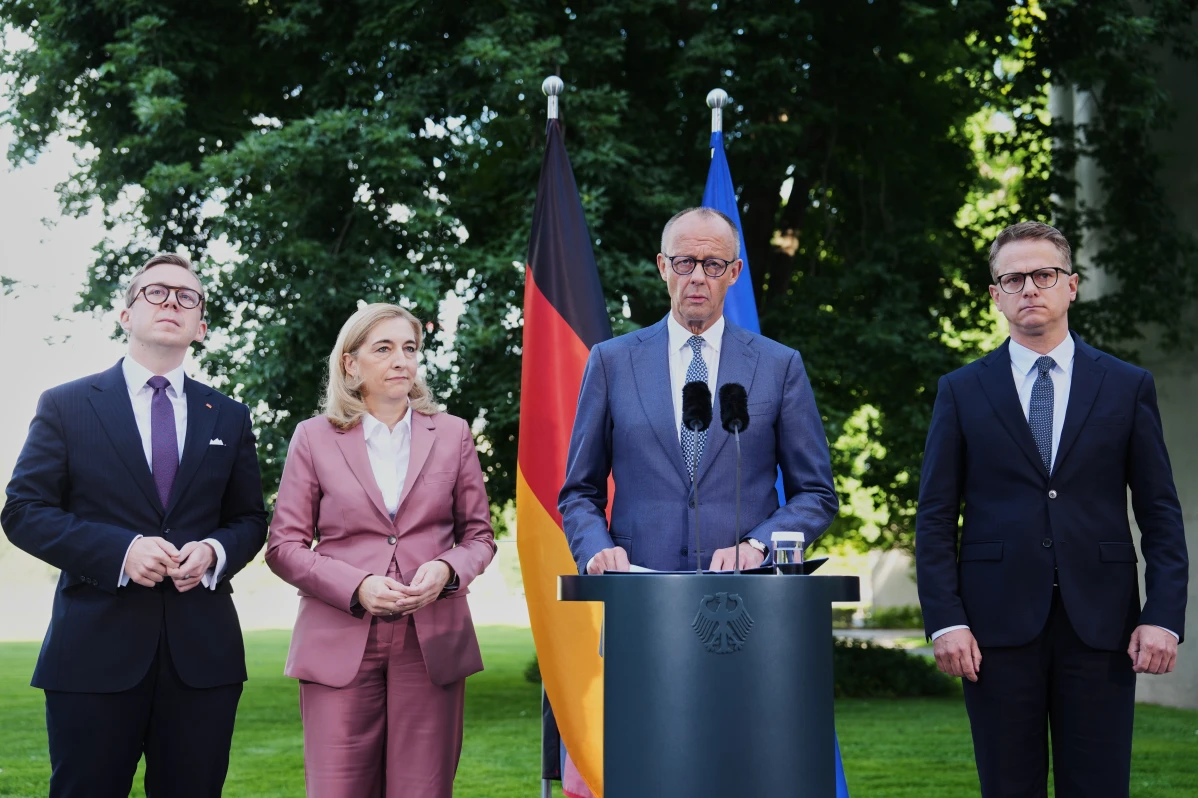
German Chancellor Friedrich Merz has announced a major reshuffle of senior government positions in an effort to revive his struggling administration and counter the growing popularity of the far-right Alternative for Germany (AfD) ahead of key regional elections later this year. The changes come as Merz faces declining approval ratings and mounting criticism over his coalition’s handling of the economy and public services.
The reshuffle was triggered by the resignation of Jens Spahn, a close Merz ally who stepped down as leader of the CDU/CSU parliamentary group following controversy surrounding his use of a surrogate mother in the United States, an issue that conflicted with his party’s long-standing opposition to surrogacy. His departure gave Merz an opportunity to reorganize his leadership team and project a renewed sense of direction.
As part of the overhaul, Thorsten Frei, who previously served as Merz’s chief of staff and one of his closest political confidants, will become the new leader of the CDU/CSU parliamentary group. Taking Frei’s place at the Chancellery is Nina Warken, who becomes the first woman to serve as head of the Chancellery, one of the most influential positions in the German government.
Merz also appointed Carsten Linnemann, the secretary-general of the Christian Democratic Union (CDU), as Germany’s new health minister. Linnemann replaces Warken and is expected to continue healthcare reforms aimed at addressing rising costs and improving the efficiency of Germany’s health insurance system.
Speaking in Berlin, Merz said the personnel changes were intended to create “a government that works with great vigor and pleasure” while reflecting the diversity of German society. He also indicated that additional cabinet changes could follow in the coming days as part of a broader effort to strengthen his administration.
The reshuffle comes at a politically sensitive moment. Merz’s coalition of the centre-right CDU/CSU bloc and the centre-left Social Democratic Party (SPD) has struggled to convince voters that it can revive Europe’s largest economy after years of sluggish growth. Public dissatisfaction has helped the AfD climb in opinion polls, with the party hoping to secure its first state governorship in elections scheduled for September.

Political analysts say the appointments are designed not only to improve government coordination but also to reassure voters that Merz remains firmly in control of his administration. The appointment of Warken, in particular, is viewed as an effort to modernise the government’s image while rewarding a minister who recently guided key healthcare legislation through parliament.
Despite the changes, Merz continues to face significant challenges, including slow economic growth, pressure to improve Germany’s ageing transport infrastructure and growing public frustration over the cost of living. Critics argue that personnel changes alone will not reverse the coalition’s fortunes unless they are accompanied by visible policy successes.
With crucial regional elections approaching, the effectiveness of the reshuffle will be closely watched both within Germany and across Europe. A strong showing by the AfD could reshape Germany’s political landscape and increase pressure on Merz to deliver tangible improvements in the months ahead.